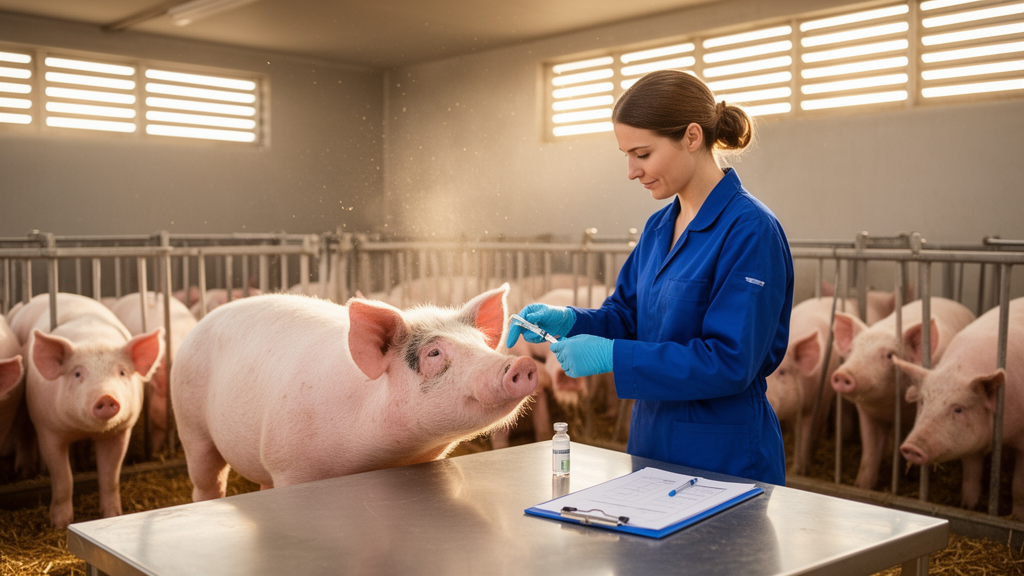
Porcine respiratory disease complex (PRDC), a multifactorial syndrome with a major economic impact on the global swine industry, remains difficult to prevent because its emergence and progression depend on interactions among infectious agents, environmental conditions and management practices.
According to the review, effective management requires a comprehensive, multifaceted approach that accounts for the high frequency of coinfections involving multiple pathogens and the overlapping, nonspecific clinical signs associated with respiratory disease. The authors recommend that control programs integrate external and internal biosecurity measures. For external biosecurity, the priority is preventing pathogen introduction through appropriate animal sourcing, quarantine and acclimation procedures, semen screening, pest control, and management of transport, personnel and fomites. Within farms, internal biosecurity should then limit pathogen transmission through appropriate pig flow and herd management, stocking density control, and optimization of environmental conditions.
Diagnosis is another central pillar. Because pathogen detection alone does not establish a pathogen’s role in disease, the review states that diagnosis should combine clinical, epidemiological, pathological and laboratory findings. Continued herd-level monitoring, supported by appropriate sampling and laboratory testing, is described as essential for identifying changes in pathogen circulation and for evaluating whether control measures are working.
Vaccination remains a cornerstone of PRDC prevention, the authors note, while emerging vaccine technologies and novel immunization strategies offer promising opportunities to improve protection against respiratory pathogens. Growing concerns about antimicrobial resistance have also intensified the search for alternatives to conventional antibiotics, including probiotics, essential oils and bacteriophages. These alternatives have shown encouraging potential, but the review emphasizes that they require further validation under field conditions before their practical value can be established.
Overall, the review concludes that successful PRDC prevention and control depend on recognizing the syndrome’s multifactorial nature and integrating biosecurity, vaccination, management practices, antimicrobial alternatives and effective monitoring systems. It also identifies a clear research gap: further studies conducted under commercial production conditions will be essential to determine the practical efficacy of emerging approaches and to facilitate their incorporation into comprehensive and sustainable PRDC control programs. Until such field-level evidence is available, the strategies summarized in the review reflect the current evidence base rather than proven outcomes for the newer technologies, and the authors frame their conclusions as a roadmap for future research needs rather than validated recommendations for the emerging interventions.
Subject of Research: Control and prevention strategies for porcine respiratory disease complex in swine
Article Title: Control and prevention strategies of porcine respiratory disease complex: current evidence and future directions
Article References: Pastor-Calonge, A. I., Mencía-Ares, Ó., Manzanares-Vigo, L., Cid-González, A., Gutiérrez-Martín, C. B., & Martínez-Martínez, S. (2026). Control and prevention strategies of porcine respiratory disease complex: current evidence and future directions. Frontiers in Veterinary Science, 13, 1992010. https://doi.org/10.3389/fvets.2026.1992010
Image Credits: AI Generated
DOI: 10.3389/fvets.2026.1992010
Keywords: porcine respiratory disease complex, swine health, biosecurity, vaccination, antimicrobial resistance, probiotics, essential oils, bacteriophages, herd monitoring, veterinary science, Control, prevention
News Source: Barbara Leach. (October 27, 2026). Biosecurity, vaccination and monitoring anchor swine respiratory disease control. Scienmag.