


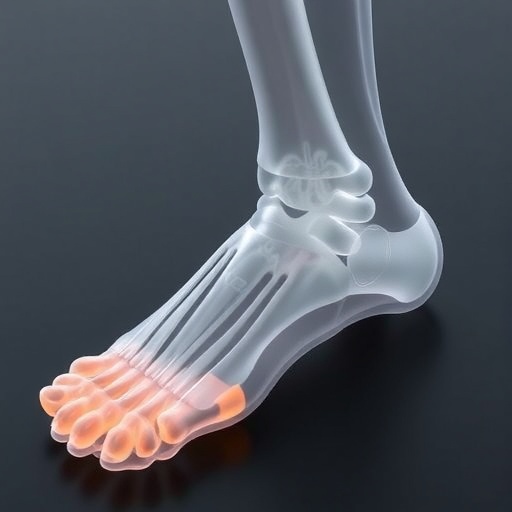
In recent years, the integration of 3D printing technology into the medical field has transformed various aspects of surgical procedures and patient care. One of the most significant advancements in this domain is the development of innovative constructs for orthopedic applications. A particularly noteworthy advancement is the creation of a 3D-printed tibiotalocalcaneal nail designed for ankle joint fusion. This groundbreaking project, spearheaded by researchers led by Wong, K., Huang, SF., and Yeh, S.HH., demonstrates the potential of tailored biomechanical devices to enhance surgical outcomes and improve recovery times for patients.
The tibiotalocalcaneal nail serves as a vital internal fixation device that stabilizes the ankle joint after surgery. Traditional methods for achieving ankle joint fusion involve the use of metal hardware that may not perfectly match the unique anatomy of each patient. However, the 3D-printing technique allows for customization of these surgical devices, leading to a more personalized approach in orthopedic surgery. The authors conducted extensive biomechanical studies to analyze the critical design considerations that influence the effectiveness and safety of these implants.
Biomechanics is the study of the mechanical principles applied to biological systems, particularly the human body. In the context of orthopedic devices, biomechanical considerations are crucial in ensuring that implants can withstand the loads and forces experienced during daily activities. The study discusses the importance of understanding the complex interactions between the nail, bone, and surrounding soft tissues during the healing process. Proper alignment and fixation of the nail are pivotal to provide adequate support and reduce the risk of complications.
One of the prominent advantages of using 3D printing in the fabrication of the tibiotalocalcaneal nail is the material selection. Researchers chose advanced bio-compatible materials that mimic the mechanical properties of human bone. This material selection is essential as it allows for enhanced load-sharing between the implant and the bone, ultimately promoting better integration and healing. The ability to 3D print these nails using materials with adjustable mechanical properties ensures that surgeons can tailor their choice based on individual patient requirements.
Another critical factor in the design of the tibiotalocalcaneal nail is its geometric features. The nail must possess specific characteristics, such as length, diameter, and surface texture, to facilitate optimal fixation and stabilization of the fusion site. The authors emphasize that variations in these design parameters can significantly impact the mechanical performance of the implant, thereby influencing clinical outcomes. By utilizing CAD (computer-aided design) software, researchers can rapidly prototype different geometric configurations and evaluate their biomechanical performance to identify the most effective design.
Moreover, the integration of advanced imaging techniques, such as CT scans and MRI, into the design process has revolutionized the way individualized orthopedic implants are developed. These imaging modalities allow for precise mapping of a patient’s unique anatomy, enabling the production of customized nails that closely match the complex bone morphology of each patient. Such advancements not only enhance the effectiveness of the implant but also minimize the risk of complications associated with poorly fitting devices.
Clinical trials are an essential step in determining the efficacy of any new medical innovation. Researchers are currently observing the performance of the 3D-printed tibiotalocalcaneal nails in a controlled clinical setting. Early results show promising outcomes, indicating not only improved fusion rates but also reduced healing times compared to traditional fixation methods. Ankle joint fusion procedures are notoriously challenging, and having a reliable, personalized fixation device can profoundly impact the patient’s recovery trajectory.
Patient-specific instrumentation is a growing trend in surgery that seeks to enhance precision and patient outcomes. By adopting a personalized approach, this methodology aligns well with the growing need for individualized treatment plans in modern medicine. This research highlights how 3D printing and biomechanical innovation can effectively lead to the development of devices that cater to each patient’s specific anatomical requirements and surgical needs.
Besides enhancing functional outcomes, the 3D-printed tibiotalocalcaneal nail carries the potential to reduce healthcare costs associated with joint surgeries. Traditional methods often require additional follow-up surgeries due to complications such as malunion or nonunion. The bespoke nature of the 3D-printed nails may lead to a decrease in revision surgeries, thus enabling health systems to allocate resources more effectively and provide better patient care overall.
The implications of this research extend beyond ankle joint fusion. The principles and techniques utilized in designing the tibiotalocalcaneal nail can be applied to other areas in orthopedics, opening avenues for innovation across various implant types. This research serves as a foundational model for future research efforts aimed at improving the biomechanical design of orthopedic implants, ultimately leading to better patient outcomes.
As this field continues to evolve, the significance of collaboration across different specialties will become increasingly apparent. Engineers, surgeons, and biomedical scientists must engage in partnerships to foster innovations that are clinically relevant and scientifically sound. This collaborative approach will prove indispensable in addressing the complex challenges faced in orthopedic surgery today.
In conclusion, the advent of 3D printing technology in the realm of orthopedic surgery represents a remarkable leap forward in improving patient outcomes. The tibiotalocalcaneal nail designed for ankle joint fusion exemplifies the potential of personalized medical solutions that cater to individual anatomical needs and promote better healing processes. Continued research and clinical application will undoubtedly pave the way for further advancements in this exciting intersection of technology and medicine.
Subject of Research: Development of a 3D-printed tibiotalocalcaneal nail for ankle joint fusion.
Article Title: Biomechanical design considerations of a 3D-printed tibiotalocalcaneal nail for ankle joint fusion.
Article References:
Wong, K., Huang, SF., Yeh, S.HH. et al. Biomechanical design considerations of a 3D-printed tibiotalocalcaneal nail for ankle joint fusion. 3D Print Med 11, 21 (2025). https://doi.org/10.1186/s41205-025-00268-9
Image Credits: AI Generated
DOI: https://doi.org/10.1186/s41205-025-00268-9
Keywords: 3D printing, orthopedic surgery, ankle joint fusion, biomechanical design, personalized medicine.
Tags: 3D printing in medicine3D-printed ankle fusion nailsadvancements in ankle surgery techniquesbiomechanics of orthopedic implantscustom implants for ankle joint fusionenhancing surgical outcomes with technologyinnovations in surgical fixation devicesmechanical principles in biological systemsorthopedic device safety and effectivenesspersonalized orthopedic surgery solutionsrecovery improvement through tailored devicestibiotalocalcaneal nail design



