• HOME
  • NEWS
  • EXPLORE
    • CAREER
      • Companies
      • Jobs
    • EVENTS
    • iGEM
      • News
      • Team
    • PHOTOS
    • VIDEO
    • WIKI
  • BLOG
  • COMMUNITY
    • FACEBOOK
    • INSTAGRAM
    • TWITTER
Wednesday, April 1, 2026
BIOENGINEER.ORG
No Result
View All Result
  • Login
  • HOME
  • NEWS
  • EXPLORE
    • CAREER
      • Companies
      • Jobs
        • Lecturer
        • PhD Studentship
        • Postdoc
        • Research Assistant
    • EVENTS
    • iGEM
      • News
      • Team
    • PHOTOS
    • VIDEO
    • WIKI
  • BLOG
  • COMMUNITY
    • FACEBOOK
    • INSTAGRAM
    • TWITTER
  • HOME
  • NEWS
  • EXPLORE
    • CAREER
      • Companies
      • Jobs
        • Lecturer
        • PhD Studentship
        • Postdoc
        • Research Assistant
    • EVENTS
    • iGEM
      • News
      • Team
    • PHOTOS
    • VIDEO
    • WIKI
  • BLOG
  • COMMUNITY
    • FACEBOOK
    • INSTAGRAM
    • TWITTER
No Result
View All Result
Bioengineer.org
No Result
View All Result
Home NEWS Science News Biology

Biologists from MSU discovered the carotenoid transfer between 2 proteins

Bioengineer by Bioengineer
September 6, 2017
in Biology
Reading Time: 2 mins read
0
Share on FacebookShare on TwitterShare on LinkedinShare on RedditShare on Telegram
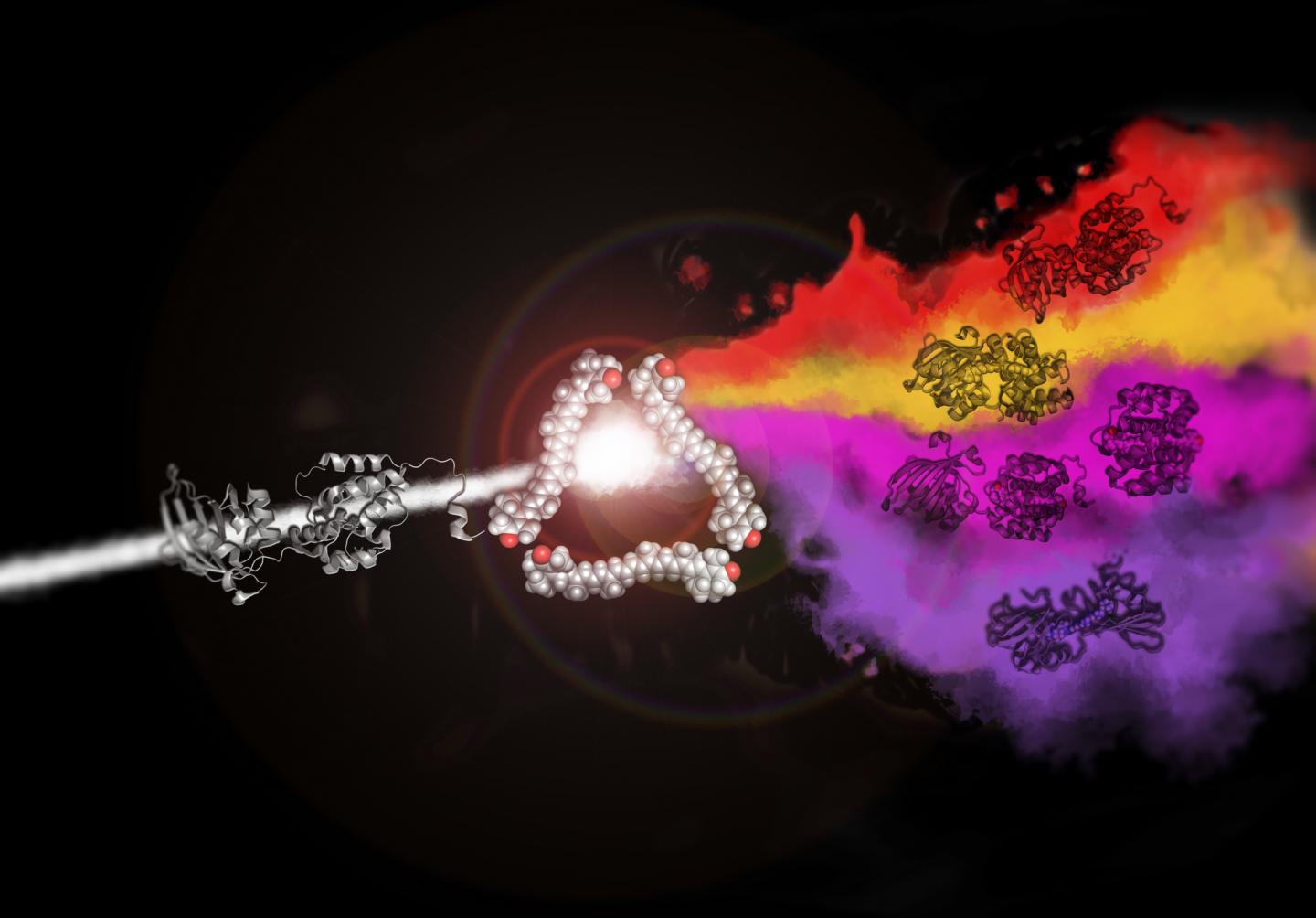
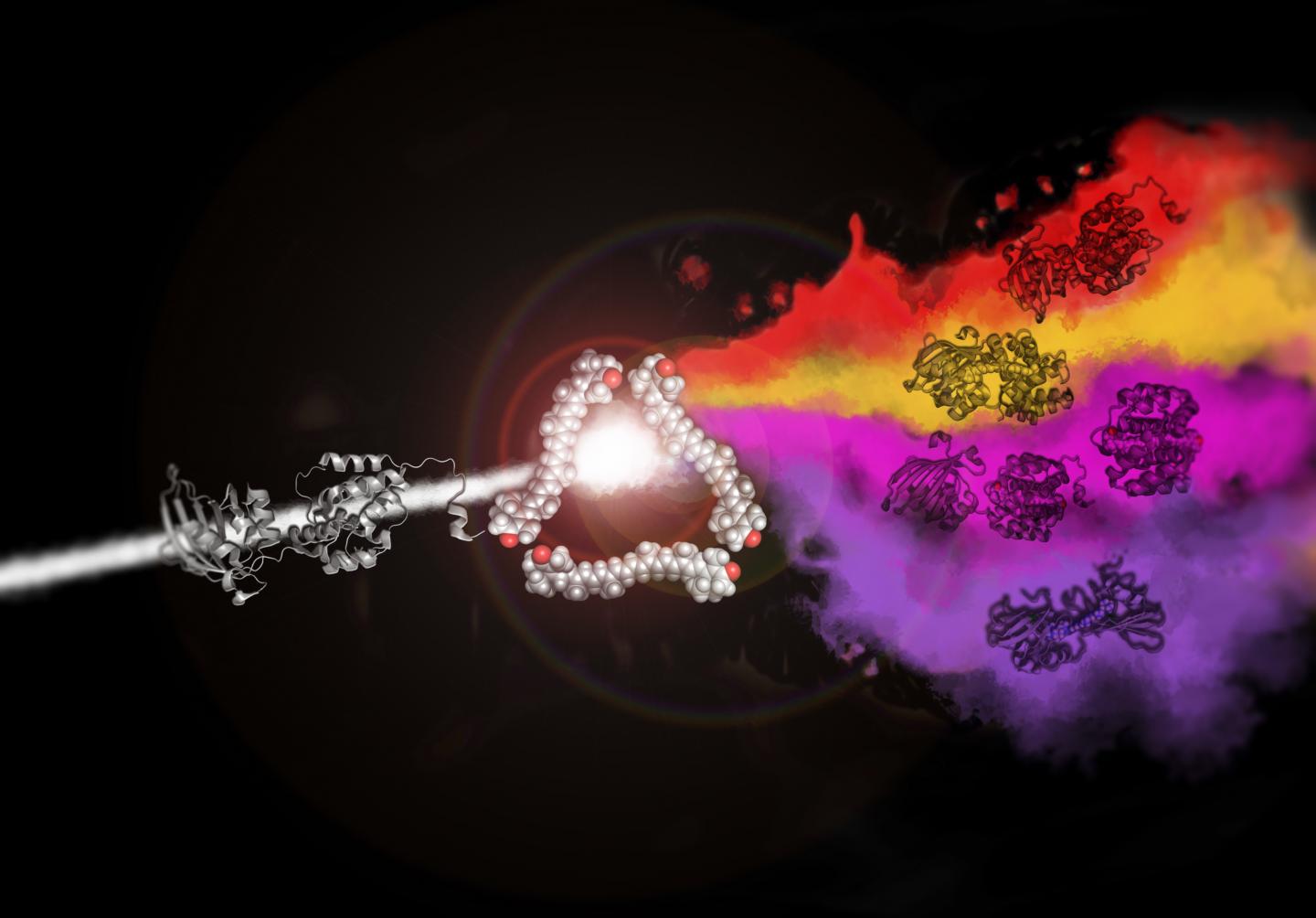
IMAGE

Credit: Eugene Maksimov

Specialists from the biological faculty of Moscow State University have studied the way the photoactive orange carotenoid protein (OCP) exchanges carotenoid with proteins of similar structure. The discovery will boost the development of OCP-based antioxidant drugs aimed at protecting healthy cells during cancer treatment. The paper was published in the Biophysical Journal.

The orange carotenoid protein (OCP) is a small water-soluble protein that serves as an excitation energy quencher in cyanobacteria: it reduces energy transfer in the photosynthetic apparatus under high light conditions. Cyanobacteria are one of the earliest organisms on the Earth capable of photosynthesis. Our planet owes them high concentration of oxygen in the atmosphere.

Under strong light orange carotenoid protein changes its structure and interacts with antennas to prevent formation of reactive oxygen species. Carotenoids are long hydrocarbon molecules with a large number of double bonds, which serve as photosensitive chromophores. The color of carotenoid depends on the protein state.

Previously, the biologists from the Moscow State University have described the structure and properties of the OCP domains which appeared to be capable of binding the carotenoid into a complex of bright violet color. One of the interesting and previously unknown properties of the orange carotenoid protein is the ability to transmit the carotenoid to other proteins with a similar structure. The mechanism of the process is described in the mentioned work published in the Biophysical Journal.

"We studied the interaction of carotenoid-containing violet C-domains of the OCP with a colorless apo form of the OCP. As a result of the interaction, the colorless apo form of the OCP became orange and photoactive (capable of changing its structure and color). The carotenoid transfer process simulates the process of assembling a photoactive protein from a protein matrix and a chromophore (carotenoid)," said Dr. Eugene Maksimov, senior researcher at the Laboratory of Biophotonics.

The discovered transfer reaction of a hydrophobic carotenoid molecule between two water-soluble proteins gives us several interesting opportunities. This mechanism will allow us create water-soluble protein complexes to deliver antioxidant carotenoid to cells that need protection from the reactive oxygen species: for example, to the healthy tissue during photodynamic cancer therapy. The photoactive properties of the complex will be useful in molecular thermometers: their color will show the difference in temperature between the parts of the cell.

###

Media Contact

Yana Khlyustova
[email protected]

http://www.msu.ru

Related Journal Article

http://dx.doi.org/10.1016/j.bpj.2017.06.002

Share12Tweet8Share2ShareShareShare2

Related Posts

Do Your Genes Influence How Lifestyle Choices Affect Aging?

Do Your Genes Influence How Lifestyle Choices Affect Aging?

April 1, 2026
Combining Single-Cell Multiomics Unlocks Precise Identification of Rare Cell Types and States

Combining Single-Cell Multiomics Unlocks Precise Identification of Rare Cell Types and States

March 31, 2026

Genetically Engineered Marmosets Pave the Way for Advancements in Human Deafness Research

March 31, 2026

How Great Hammerhead Sharks Outsmart Ocean Temperature Swings: Insights from FIU Researchers

March 31, 2026
Please login to join discussion

POPULAR NEWS

  • blank

    Revolutionary AI Model Enhances Precision in Detecting Food Contamination

    96 shares
    Share 38 Tweet 24
  • Imagine a Social Media Feed That Challenges Your Views Instead of Reinforcing Them

    1006 shares
    Share 398 Tweet 249
  • Promising Outcomes from First Clinical Trials of Gene Regulation in Epilepsy

    51 shares
    Share 20 Tweet 13
  • Popular Anti-Aging Compound Linked to Damage in Corpus Callosum, Study Finds

    43 shares
    Share 17 Tweet 11

About

We bring you the latest biotechnology news from best research centers and universities around the world. Check our website.

Follow us

Recent News

KIST-IAE Collaborative Team Surpasses Performance Limits in Lithium-Air Batteries with Innovative Two-Dimensional Catalyst

Brain Metastases Show Unique Macrophage Spatial Patterns

PRSS56 Drives and Treats Human High Myopia

Subscribe to Blog via Email

Enter your email address to subscribe to this blog and receive notifications of new posts by email.

Join 78 other subscribers
  • Contact Us

Bioengineer.org © Copyright 2023 All Rights Reserved.

Welcome Back!

Login to your account below

Forgotten Password?

Retrieve your password

Please enter your username or email address to reset your password.

Log In
No Result
View All Result
  • Homepages
    • Home Page 1
    • Home Page 2
  • News
  • National
  • Business
  • Health
  • Lifestyle
  • Science

Bioengineer.org © Copyright 2023 All Rights Reserved.