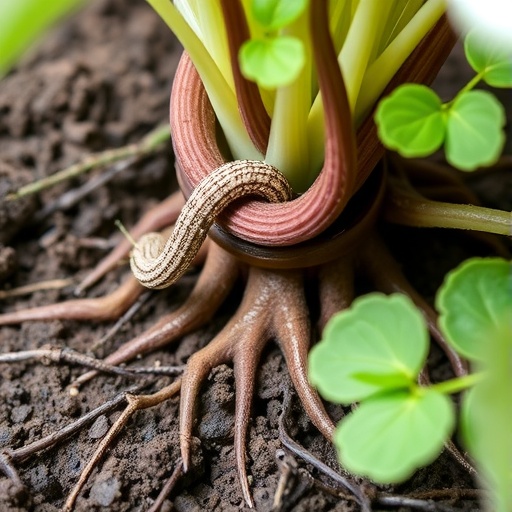
In recent years, the quest for sustainable agricultural practices has grown exponentially as the implications of traditional farming methods on the environment and food security continue to surface. One of the latest studies highlights the potential of an intriguing fungus, Purpureocillium lilacinum, as an effective bioagent for promoting plant growth and combating the detrimental effects of root-knot nematodes. This research, directed by scientists Nakano, Asghar, and Kataoka, reveals the promising benefits of this naturally occurring microorganism, showcasing its dual role as a biopesticide and plant growth promoter.
The foundation of this groundbreaking study lies in the isolation of Purpureocillium lilacinum from a common weed. This exploration into the wild show the diverse capabilities of fungi, not just as decomposers, but as essential players in agricultural ecosystems. By utilizing a weed, the researchers tapped into the concept of “weeds as resources”, shifting conventional perceptions of unwanted plants. This finding invites a wider discussion on how overlooked species can be harnessed for enhanced agricultural output, pushing the boundaries of our understanding of biodiversity.
Root-knot nematodes, notorious pests that affect a wide range of crops globally, present a significant challenge to farmers due to the stunted growth and reduced yields they cause. These microscopic roundworms invade plant roots, leading to gall formations and nutrient absorption issues. The conventional response has often involved chemical pesticides, which pose significant health and environmental risks. This study proposes a more ecologically sound alternative through the utilization of Purpureocillium lilacinum, a naturally occurring organism that presents fewer risks to beneficial organisms and human health.
The researchers conducted rigorous experiments to evaluate the efficacy of Purpureocillium lilacinum in not only promoting plant growth but also suppressing nematode populations. By applying the fungus to infected plants, they observed a marked increase in growth parameters, including root length and biomass production. This positive impact on growth can be attributed to the fungus’s ability to establish a symbiotic relationship with the host plants, enhancing nutrient uptake and overall plant health.
Moreover, the study elucidated the mechanisms behind the nematicidal properties of Purpureocillium lilacinum. Upon application, the fungus colonizes the plant roots and releases bioactive compounds that are toxic to nematodes, effectively reducing their population and mitigating the damage they cause. This biocontrol aspect not only aligns with sustainable agricultural practices but also enhances the resilience of crops against pest infestations, paving the way for a biological approach in pest management.
An impressive aspect of this research is its contributions to the broader discourse on integrated pest management (IPM). By integrating biological agents like Purpureocillium lilacinum into traditional farming practices, farmers can reduce their reliance on chemical pesticides, leading to improved soil health and increased biodiversity in agricultural ecosystems. This integration marks a significant step towards eco-friendly farming and highlights the necessity of research dedicated to exploring microbial solutions in agriculture.
This newfound understanding of Purpureocillium lilacinum also prompts questions about the future of agricultural sustainability. As global populations surge and food demand continues to escalate, innovative solutions that may seem unconventional today could become lifelines for farmers tomorrow. Embracing such fungal allies can be a pivotal strategy in addressing food security challenges without compromising environmental integrity.
It is essential to recognize the importance of promoting such biological methods within farming communities. Education and outreach will be crucial in ensuring that farmers not only understand the benefits of adopting biocontrol agents like Purpureocillium lilacinum but are also equipped with the necessary tools and knowledge to integrate them effectively into their farming systems. Cooperation among scientists, policymakers, and agricultural stakeholders will be vital in disseminating these innovations widely.
The findings of Nakano et al. also resonate with the global push towards regenerative agriculture, which focuses on practices that restore and enhance the health of ecosystems. By utilizing naturally occurring organisms, farmers can create more resilient agroecosystems that thrive without dependency on synthetic chemicals. This research taps into a larger narrative about rethinking our approaches to agriculture in the context of environmental sustainability, aligning with global efforts to combat climate change and promote biodiversity.
This study opens the door to further research endeavors aimed at expanding the application of Purpureocillium lilacinum. Future studies can explore its effectiveness against other plant pathogens and pests, as well as its potential in various crops and environmental conditions. The extent of its benefits indicates a significant area for exploration in microbial biocontrol, which showcases the unsung heroes of the microbial world in agriculture.
In summation, the work by Nakano, Asghar, and Kataoka is more than just a study; it represents a shift towards embracing biological solutions in agriculture. As we stand at a crossroads in agricultural practices, the focus on Purpureocillium lilacinum encapsulates the potential of utilizing nature to foster sustainability, health, and productivity in farming practices. This aligns with the larger goals of maintaining the ecological balance while ensuring food security for a growing global population, presenting a compelling case for the adoption of biocontrol methods in modern agriculture.
Indeed, as researchers continue to explore the multifaceted roles of fungi and other microorganisms in agroecosystems, we may find ourselves on the cusp of a new era in sustainable agriculture. The journey of Purpureocillium lilacinum from a simple weed to an effective ally in the fight against root-knot nematodes exemplifies the infinite possibilities that lie within nature’s own arsenal. By decreasing our dependence on synthetic inputs and harnessing the power of beneficial microorganisms, the agricultural landscape may very well transform into a more resilient model for the future.
As the scientific community continues to unravel these complex interactions, Purpureocillium lilacinum stands as a beacon of hope, encouraging us all to rethink the way we perceive pests and promote plant health. Ultimately, the synergy between scientific research and practical agricultural application will play a critical role in shaping the future of farming, ensuring a sustainable and bountiful approach towards feeding the world’s populations.
Subject of Research: Purpureocillium lilacinum as a growth promoter and biocontrol agent for root-knot nematodes.
Article Title: Plant growth promotion and biological control of root-knot nematodes by Purpureocillium lilacinum isolated from a weed.
Article References: Nakano, S., Asghar, W. & Kataoka, R. Plant growth promotion and biological control of root-knot nematodes by Purpureocillium lilacinum isolated from a weed. Discov. Plants 2, 371 (2025). https://doi.org/10.1007/s44372-025-00454-3
Image Credits: AI Generated
DOI: https://doi.org/10.1007/s44372-025-00454-3
Keywords: fungus, biocontrol, root-knot nematodes, sustainable agriculture, plant growth promotion, microbial solutions, ecological balance.
Tags: biodiversity in agricultural ecosystemsBiological control of nematodesbiopesticides for crop protectionenhancing crop yields with fungienvironmentally friendly farming techniquesharnessing weeds for agricultureinnovative approaches to pest managementmicrobial solutions for pest controlplant growth promotion using fungiPurpureocillium lilacinum benefitsroot-knot nematode management strategiessustainable agricultural practices