

• HOME
  • NEWS
  • EXPLORE
    • CAREER
      • Companies
      • Jobs
    • EVENTS
    • iGEM
      • News
      • Team
    • PHOTOS
    • VIDEO
    • WIKI
  • BLOG
  • COMMUNITY
    • FACEBOOK
    • INSTAGRAM
    • TWITTER
Tuesday, December 16, 2025
BIOENGINEER.ORG
No Result
View All Result
  • Login
  • HOME
  • NEWS
  • EXPLORE
    • CAREER
      • Companies
      • Jobs
        • Lecturer
        • PhD Studentship
        • Postdoc
        • Research Assistant
    • EVENTS
    • iGEM
      • News
      • Team
    • PHOTOS
    • VIDEO
    • WIKI
  • BLOG
  • COMMUNITY
    • FACEBOOK
    • INSTAGRAM
    • TWITTER
  • HOME
  • NEWS
  • EXPLORE
    • CAREER
      • Companies
      • Jobs
        • Lecturer
        • PhD Studentship
        • Postdoc
        • Research Assistant
    • EVENTS
    • iGEM
      • News
      • Team
    • PHOTOS
    • VIDEO
    • WIKI
  • BLOG
  • COMMUNITY
    • FACEBOOK
    • INSTAGRAM
    • TWITTER
No Result
View All Result
Bioengineer.org
No Result
View All Result
Home NEWS Science News Health

Biofilm formation may complicate some necrotizing soft tissue infections

Bioengineer by Bioengineer
July 7, 2016
in Health
Reading Time: 2 mins read
0
Share on FacebookShare on TwitterShare on LinkedinShare on RedditShare on Telegram

anna

Group A streptococcus (GAS) can cause a life-threatening necrotizing fasciitis, which spreads rapidly and destroys soft tissue. Treatment of these GAS necrotizing soft tissue infections (NSTI) typically requires intensive care along with surgical intervention and often amputation of the affected limb.

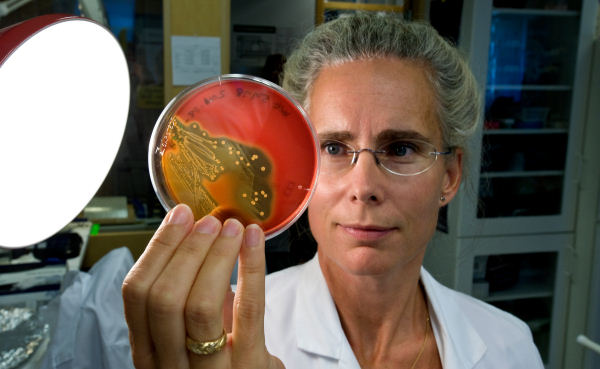
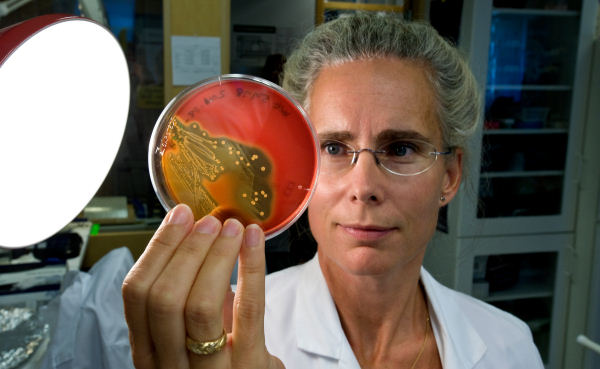
A new study in JCI Insight provides evidence that formation of biofilm, a collection of bacteria that adhere to a tissue surface, can be a complicating feature of GAS NSTI. A team led by Anna Norrby-Teglund and Nikolai Siemens of the Karolinska Institute identified a GAS NSTI patient that seemed to respond favorably to antibiotics and surgical cleaning of the wound. Despite a lack of GAS-associated symptoms, reexamination of the wound revealed the presence of a thick layer of biofilm. Further analysis of NSTI cases revealed the presence of biofilm in a third of those studied. Moreover, the presence of biofilm was associated with higher bacterial load, extensive inflammation, and more severe tissue damage compared to wound biopsies without biofilm. The results of this study indicate that biofilm should be considered as a complicating factor of NSTI. As biofilm formation improves pathogen persistence and responsiveness to antibiotics, further work should evaluate treatment protocols clear GAS biofilm at the site of infection.

###

TITLE:

Biofilm in group A streptococcal necrotizing soft tissue infections

AUTHOR CONTACT:

Anna Norrby-Teglund
Karolinska Institutet
Email: [email protected]

Or

Nikolai Siemens
Karolinska Institutet
Email: [email protected]

View this article at: http://insight.jci.org/articles/view/87882?key=e814cc9a37e2551b3514

JCI Insight is the newest publication from the American Society of Clinical Investigation, a nonprofit honor organization of physician-scientists. JCI Insight is dedicated to publishing a range of translational biomedical research with an emphasis on rigorous experimental methods and data reporting. All articles published in JCI Insight are freely available at the time of publication. For more information about JCI Insight and all of the latest articles go to http://www.insight.jci.org.

Media Contact

Corinne Williams
[email protected]
@jclinicalinvest

http://www.jci.org

The post Biofilm formation may complicate some necrotizing soft tissue infections appeared first on Scienmag.
Share12Tweet8Share2ShareShareShare2

Related Posts

Boosting Nurses’ Empowerment with NLP Techniques

December 16, 2025

Assessing Cognitive Impairment in Pediatric Cancer Patients

December 16, 2025

Evaluating Medications in Older Adults at Discharge

December 16, 2025

How Premed Curriculum Shapes Physician Specialty Choices

December 16, 2025
Please login to join discussion

POPULAR NEWS

  • Scientists Uncover Chameleon’s Telephone-Cord-Like Optic Nerves, A Feature Missed by Aristotle and Newton

    Scientists Uncover Chameleon’s Telephone-Cord-Like Optic Nerves, A Feature Missed by Aristotle and Newton

    122 shares
    Share 49 Tweet 31
  • Nurses’ Views on Online Learning: Effects on Performance

    70 shares
    Share 28 Tweet 18
  • NSF funds machine-learning research at UNO and UNL to study energy requirements of walking in older adults

    70 shares
    Share 28 Tweet 18
  • MoCK2 Kinase Shapes Mitochondrial Dynamics in Rice Fungal Pathogen

    72 shares
    Share 29 Tweet 18

About

We bring you the latest biotechnology news from best research centers and universities around the world. Check our website.

Follow us

Recent News

Gut Microbiota Depletion Eases Proteinuria in Nephrosis

Sumac, Linalool, Eugenol Fight Cutaneous Leishmaniasis

Unraveling Genetic Diversity in Pseudobagrus ussuriensis

Subscribe to Blog via Email

Enter your email address to subscribe to this blog and receive notifications of new posts by email.

Join 70 other subscribers
  • Contact Us

Bioengineer.org © Copyright 2023 All Rights Reserved.

Welcome Back!

Login to your account below

Forgotten Password?

Retrieve your password

Please enter your username or email address to reset your password.

Log In
No Result
View All Result
  • Homepages
    • Home Page 1
    • Home Page 2
  • News
  • National
  • Business
  • Health
  • Lifestyle
  • Science

Bioengineer.org © Copyright 2023 All Rights Reserved.
