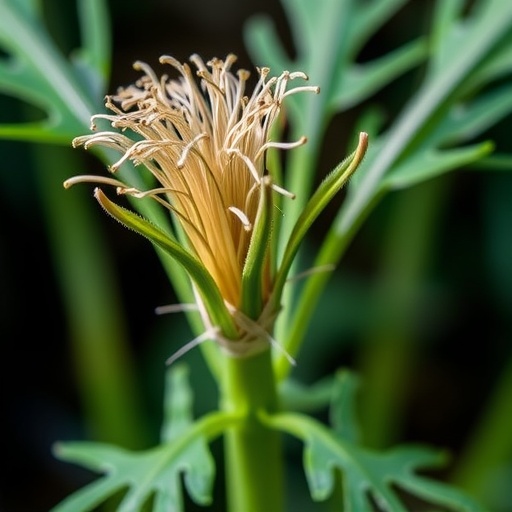
In a groundbreaking study set to revolutionize our understanding of plant-based nutrition and inflammation management, researchers have unveiled remarkable findings related to the bioaccessibility and anti-inflammatory potential of bound polyphenols present in the insoluble dietary fiber of burdock root (Arctium lappa L.). This investigation not only sheds light on the complex compositional characteristics of these bound polyphenols but also rigorously explores their therapeutic capabilities, presenting new horizons for functional food development.
The study, published in Food Science and Biotechnology in late 2025, meticulously examined the insoluble dietary fiber fraction of burdock root, highlighting this often-overlooked component as a reservoir of potent bioactive compounds. Traditionally, dietary fibers have been recognized primarily for their roles in digestive health and gut microbiota modulation; however, this research pivots the spotlight toward the bound polyphenols tightly linked to these fibers, which might hold the key to enhanced anti-inflammatory effects.
Bound polyphenols differ significantly from their free counterparts in that they are covalently attached to cell wall components, making their release and subsequent bioavailability within the human digestive system less straightforward. The research team employed sophisticated extraction and enzymatic digestion techniques to simulate gastrointestinal conditions, thereby accurately assessing the bioaccessibility of these compounds. This approach is critical for translating the in vitro potential of plant polyphenols into tangible health benefits.
Analytical assays revealed a rich diversity of polyphenolic compounds embedded within the insoluble fiber matrix of the burdock root. These included various flavonoids, phenolic acids, and complex tannins, all known for their robust antioxidant properties. The identification and quantification of these molecules were achieved through advanced chromatographic and spectrometric methods, providing insights into the molecular profile that governs their biological functions.
One of the study’s most compelling revelations is the enhanced stability of bound polyphenols during simulated gastrointestinal digestion, as opposed to free polyphenols which typically degrade rapidly. This increased stability implies that bound polyphenols are more likely to reach the colon intact, where they can exert localized anti-inflammatory effects or be metabolized by gut microbiota into other bioactive metabolites, amplifying their health benefits.
Furthermore, the team conducted rigorous anti-inflammatory activity assays using cell culture models representative of human immune responses. Fascinatingly, the bound polyphenols demonstrated significant suppression of key pro-inflammatory cytokines and mediators, suggesting a robust capacity to modulate inflammatory pathways. This is a promising indication that incorporating burdock-derived bound polyphenols into dietary regimes could mitigate chronic inflammation-related disorders such as arthritis, cardiovascular diseases, and neurodegenerative conditions.
The implications of these findings extend beyond simple dietary supplementation. They advocate for the valorization of plant insoluble dietary fibers, often discarded during food processing, as functional ingredients with considerable therapeutic potential. This aligns with the current global movement toward sustainable food systems and the utilization of agro-industrial by-products in health-promoting applications.
Moreover, the synergistic interaction between bound polyphenols and the insoluble fiber matrix might facilitate a prebiotic effect, fostering a healthier gut microbiome composition. Since gut dysbiosis is increasingly associated with systemic inflammatory states, the introduction of burdock root fibers into the diet could serve dual roles—direct anti-inflammatory action and indirect modulation via microbiota.
However, the authors caution that while in vitro results are immensely encouraging, in vivo studies are imperative to confirm bioavailability, metabolism, and clinical efficacy in humans. The complexity of human digestion and interindividual variability might influence the absorption and systemic distribution of these compounds.
Additionally, the study calls for future exploration into optimizing extraction processes that preserve the natural bound state of polyphenols while enhancing their bioaccessibility. This could involve enzymatic treatments or fermentation techniques tailored to unlock these compounds from the fiber matrix without compromising their structural integrity.
From a technological perspective, the ability to harness bound polyphenols from burdock root insoluble dietary fiber presents exciting opportunities for the food industry. Functional foods, nutraceuticals, and dietary supplements enriched with these bioactives could cater to health-conscious consumers seeking natural anti-inflammatory solutions.
The data also encourage a reevaluation of traditional herbal uses of burdock root, used historically in East Asian and Western folk medicine, by providing a molecular basis for its health-promoting effects. This bridge between ancient knowledge and modern scientific validation fosters a deeper appreciation and potential standardization of herbal therapies.
In an era where chronic inflammation is recognized as a common denominator in numerous non-communicable diseases, identifying natural compounds with anti-inflammatory properties is of paramount importance. This research elevates burdock root bound polyphenols as promising candidates in the arena of preventive nutrition.
Lastly, the study underscores the need for interdisciplinary collaboration, integrating food science, biochemistry, pharmacology, and clinical research, to unlock the full potential of plant-based dietary fibers as sources of medically relevant phytochemicals.
As researchers continue to unravel the complexities of plant polyphenol chemistry and their interactions with human biology, findings such as these place burdock root insoluble dietary fiber at the forefront of nutrition science, promising a future where diet-based interventions could significantly curb inflammation and improve public health globally.
Subject of Research: Bound polyphenols from burdock (Arctium lappa L.) root insoluble dietary fiber and their bioaccessibility and anti-inflammatory activity.
Article Title: Bioaccessibility, composition, and anti-inflammatory activity of bound polyphenols from burdock (Arctium lappa L.) root insoluble dietary fiber.
Article References:
Cui, J., He, Y., Zhao, N. et al. Bioaccessibility, composition, and anti-inflammatory activity of bound polyphenols from burdock (Arctium lappa L.) root insoluble dietary fiber. Food Sci Biotechnol (2025). https://doi.org/10.1007/s10068-025-02065-w
Image Credits: AI Generated
DOI: 10.1007/s10068-025-02065-w
Tags: anti-inflammatory properties of burdock rootArctium lappa health benefitsbioaccessibility of polyphenolsbound polyphenols in nutritiondietary fiber and inflammation managementfunctional food developmentgastrointestinal bioavailability studiesgut health and bioactive compoundsinsoluble dietary fiber researchplant-based nutrition advancementspolyphenol extraction techniquestherapeutic capabilities of burdock fiber