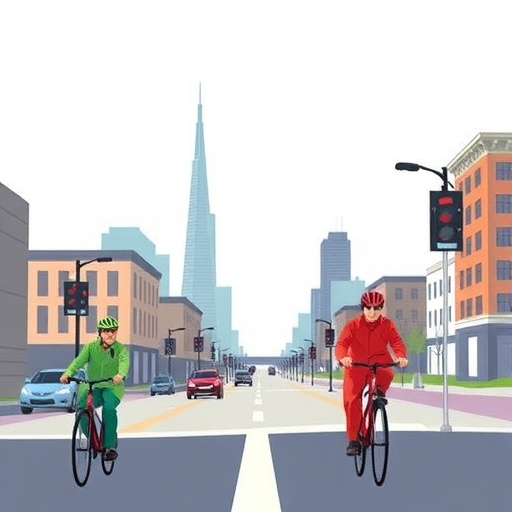
In the evolving urban landscapes of low- and middle-income countries (LMICs), bicycling has emerged not only as a mode of transportation but also as a symbol of shifting socio-political dynamics. Understanding the complex interplay between infrastructural development, socio-economic factors, and political will is crucial to grasping the current status and future prospects of bicycling in these rapidly changing urban environments. Recent research has shed light on how bicycles are transforming not just mobility, but also the politics inherent in urban planning and public space allocation in LMIC cities.
Historically, bicycling in these cities has often been relegated to the periphery of transportation planning, primarily viewed as a necessity for low-income populations rather than a strategic component of sustainable urban mobility. However, as cities grapple with escalating traffic congestion, air pollution, and climate change challenges, the bicycle has re-emerged as a viable, eco-friendly, and economically accessible transport option. This resurgence is occurring amidst complex social hierarchies and infrastructural deficits that complicate the adoption and normalization of bicycling within the urban fabric.
The core challenges facing bicycling in LMIC cities revolve around infrastructural inadequacies. Many cities lack dedicated cycling lanes or safe, continuous networks that can protect cyclists from the hazards of mixed traffic environments dominated by motorized vehicles. This infrastructural void not only compromises safety but also discourages potential cyclists, particularly women and children, from adopting biking as a primary mode of transport. The absence of supportive infrastructure underscores a broader issue: insufficient urban planning policies that prioritize non-motorized forms of mobility.
Political dynamics further complicate the status of bicycling in these cities. The allocation of public space frequently mirrors prevailing power structures and economic interests that favor motor vehicle use, often driven by political actors aligned with automotive and fossil fuel industries. In many instances, urban policies prioritize road expansions and mass transit developments over cycling infrastructure, reflecting entrenched priorities that marginalize cyclists. Moreover, political will to transform urban streetscapes to accommodate cyclists is frequently constrained by competing interests and limited fiscal resources.
Yet, despite these obstacles, there is a growing recognition of cycling’s potential to contribute to more inclusive and sustainable urban transportation systems in LMICs. Civil society movements and advocacy groups have increasingly mobilized to demand safer, more accessible infrastructure for cyclists. Their efforts underscore a broader attempt to democratize urban space, challenge car-centric paradigms, and reposition bicycling from an act of necessity for the poor to a mainstream, desirable mode of transport that benefits all socio-economic groups.
A technical examination of cycling infrastructure reveals that successful integration of bicycling into urban transit systems requires multifaceted interventions. Designing physically separated bike lanes, implementing traffic-calming measures, and establishing comprehensive bike-sharing programs are critical to creating a safe and user-friendly cycling environment. These interventions must be coupled with robust data collection mechanisms to monitor usage patterns, assess safety metrics, and guide iterative improvements in cycling infrastructure, tailored to the nuanced needs of diverse urban communities.
Moreover, urban planners and policymakers need to adopt a more holistic approach by incorporating cycling into broader transport master plans that explicitly link cycling infrastructure with public transit networks. Seamless intermodality, where cycling serves as a feeder mode to buses or metro systems, can significantly extend the reach and convenience of urban mobility options. Technological advancements, such as real-time bike availability apps and GPS-enabled route optimization for cyclists, enhance the efficiency and attractiveness of bicycling in these contexts.
Sociocultural factors also play a determinative role in cycling uptake in LMIC cities. In many societies, bicycles bear stigmas associated with low social status, inhibiting their wider acceptance. Gender disparities in cycling participation highlight additional layers of systemic barriers, including safety concerns, cultural norms, and inadequate provision of female-friendly cycling infrastructure. Addressing these sociocultural dimensions necessitates targeted interventions, such as community engagement programs, safety education campaigns, and the creation of inclusive cycling spaces that embolden marginalized groups to adopt biking.
The environmental benefits of widespread bicycle adoption in LMIC cities cannot be overstated. Compared to motorized vehicles, bicycles generate negligible greenhouse gas emissions and contribute minimal noise pollution, driving urban sustainability agendas amid escalating climate crises. Furthermore, increased cycling reduces traffic congestion and dependence on fossil fuels, aligning with global efforts to curb urban carbon footprints and improve air quality. Quantifying these environmental impacts with precision can aid policymakers in making stronger economic and social cases for investing in cycling infrastructure.
Financial constraints in many LMIC cities pose significant hurdles to large-scale infrastructural transformations. However, the cost-effectiveness of cycling infrastructure compared to motor vehicle-oriented projects offers compelling arguments for reallocation of limited public funds. For instance, creating protected bike lanes requires significantly lower investments than expanding highways or mass transit systems. Furthermore, the economic returns from improved public health, reduced traffic accidents, and enhanced mobility access contribute toward positive cost-benefit dynamics, underscoring cycling as a financially viable urban transport solution.
International development frameworks are gradually recognizing the strategic importance of non-motorized transport, including bicycling, within sustainable urban development goals. Multilateral agencies and donor organizations increasingly support projects that advance cycling infrastructure and education in LMIC cities. This global momentum catalyzes local initiatives, fostering knowledge transfer, capacity building, and funding opportunities crucial for scaling cycling-friendly urban policies. However, ensuring that international interventions are context-appropriate and participatory remains pivotal to their success and sustainability.
Data from recent case studies in diverse LMIC cities reveal promising trends. In cities where governments have embraced cycling infrastructure development, a significant uptick in cycling rates corresponds with safer streets and improved public perceptions of bicycling. Nevertheless, these successes require persistent political commitment and the incorporation of continuous feedback loops from the cycling community to adapt infrastructure and policies responsively. Iterative policy frameworks that incorporate stakeholder inputs and evidence-based adjustments serve as blueprints for other LMIC cities seeking to enhance bicycling environments.
Importantly, the political narrative around bicycling is evolving. Cycling is no longer merely framed as an impoverished individual’s transport mode but increasingly as an emblem of climate resilience, public health promotion, and urban equity. This reframing challenges traditional urban paradigms and encourages a shift in governance structures to embrace sustainable transport planning. Progressive municipal governments in LMIC cities are experimenting with policies such as car-free zones, cycling subsidies, and public awareness campaigns, marking a pivotal shift in urban political economies.
Technology also liberates new possibilities for cycling advocacy and infrastructure maintenance in LMIC cities. Mobile apps, geographic information systems (GIS), and data analytics facilitate more effective urban planning, allowing for real-time monitoring of cycling flows and identification of bottlenecks or safety hazards. Social media platforms expand outreach efforts, galvanizing community action and elevating bicycling visibility in public discourse. Integrating these technological tools with grassroots mobilization creates a powerful synergy for advancing cycling-friendly urban transformations.
Safety remains an imperative area requiring targeted attention to bolster cycling uptake. High rates of traffic injuries among cyclists in LMIC cities reflect inadequate road safety measures and motorist behaviors that disregard vulnerable road users. Addressing this crisis demands comprehensive strategies, including enforcement of traffic laws, rider education programs, infrastructure that physically separates cyclists from vehicles, and investment in lighting and signage. Improved safety measures not only protect cyclists but also enhance the broader perception of cycling as a secure travel choice.
Looking ahead, the trajectory of bicycling in LMIC cities hinges on the interplay between infrastructural upgrades, political advocacy, fiscal strategies, and cultural shifts. Building resilient, cycling-inclusive cities will require transformative thinking that transcends conventional automobile-dominated models to embrace multi-modal, equitable urban mobility systems. The ongoing research underscores that bicycling is at the nexus of transportation innovation, social justice, and environmental stewardship, offering LMIC urban centers a unique opportunity to reinvent their cities for more sustainable, livable futures.
Subject of Research: The status and political dynamics influencing bicycling infrastructure and adoption in low- and middle-income country cities.
Article Title: The status and politics of bicycling in the cities of low- and middle-income countries.
Article References:
Kannan, S.B., Goel, R., Agyemang, E. et al. The status and politics of bicycling in the cities of low- and middle-income countries. Nat Cities 3, 58–67 (2026). https://doi.org/10.1038/s44284-025-00367-y
Image Credits: AI Generated
DOI: January 2026
Tags: bicycling in low-income urban centerschallenges of cycling infrastructure in citiesclimate change and urban mobilitycycling as a symbol of changeeco-friendly transportation optionsimpact of urban planning on cyclingpromoting cycling in developing countriespublic space allocation for cyclistssocio-economic factors in urban cyclingsocio-political dynamics of transportationsustainable urban mobility solutionstraffic congestion and bicycling