In the rapidly evolving landscape of biomedical engineering, the promise of artificial intelligence (AI) to revolutionize diagnostic procedures has sparked considerable excitement. A cornerstone of this revolution is the use of computational models to predict molecular biomarkers directly from histological images, offering a non-invasive, efficient route to detect diseases and tailor treatments. However, a recent comprehensive study by Dawood, Branson, Tejpar, and colleagues, published in Nature Biomedical Engineering, underlines a critical cautionary tale: confounding factors and biases are pervasive and pose significant challenges to the reliability of these prediction models.
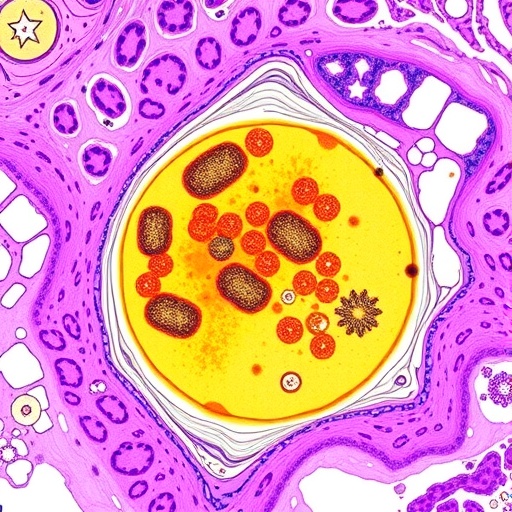
The allure of leveraging histological images—microscopic snapshots of diseased tissues—as a substrate for biomarker prediction is fundamentally linked to the potential for early and accurate diagnosis without additional costly or invasive procedures. These images, rich in cellular and architectural detail, theoretically contain embedded molecular signatures that AI algorithms can decode. Yet, despite impressive initial results, the practical translation of these technologies into clinical settings remains fraught with difficulties, notably stemming from hidden confounders in datasets and inherent biases in both data acquisition and algorithm training.
Dawood et al.’s investigation dives deep into the underbelly of digital pathology AI, revealing how extraneous variables—such as differences in staining protocols, image acquisition equipment, and sample preparation—can inadvertently influence model predictions. These external factors can masquerade as meaningful biological signals, thereby misleading AI models to make predictions based on technical rather than biological variability. The consequences are profound: patient diagnosis and treatment decisions might be affected by artifacts rather than true disease markers, undermining clinical trust and outcomes.
The study methodically analyzed a diverse range of histological datasets and AI algorithms to dissect the prevalence and impact of such confounders. Through rigorous statistical assessments and cross-validation procedures, the authors demonstrated that many state-of-the-art models could not reliably distinguish between genuine molecular biomarker presence and technical inconsistencies. This revelation signifies a pressing need for heightened scrutiny in model development pipelines and underscores the essential role of meticulous data curation.
An essential insight from the research pivots on the inherent complexity of tissue samples. Tumor heterogeneity, variations in sample preservation, and section thickness all contribute to image variability. When combined with the stochastic nature of staining intensity and color variation, these factors create a multifaceted confounding landscape. AI models, particularly those based on deep learning, may latch on to these subtle yet systematic variations, which are often imperceptible to human observers, thus leading to spurious correlations.
Moreover, the researchers emphasize that dataset bias extends beyond laboratory and technical idiosyncrasies. Clinical metadata, including patient demographics, treatment history, and disease subtypes, often have a non-uniform distribution across datasets. AI models inadvertently incorporating such epidemiological biases risk producing predictions that reflect population-level patterns rather than individual patient molecular status. This not only limits clinical utility but also threatens to propagate health disparities if models are deployed without proper consideration.
The authors propose a suite of methodological innovations aimed at mitigating these confounding influences. Among these are stringent batch effect correction algorithms, domain adaptation techniques, and inclusion of diverse multi-institutional datasets during training. These strategies collectively offer a pathway to robust model generalization that transcends local technical peculiarities. Yet, the study acknowledges that no single solution suffices; rather, a holistic and multidisciplinary approach involving pathologists, data scientists, and clinicians is paramount.
Intriguingly, the research also highlights some counterintuitive findings. For instance, increasing model complexity without proportional enhancement in data quality or diversity often exacerbates overfitting to confounding signals. Likewise, conventional performance metrics, such as accuracy or AUC (area under the ROC curve), may mask underlying confounder-driven biases, giving a false impression of predictive validity. This calls for the development and adoption of novel evaluation frameworks that specifically interrogate the susceptibility of models to confounding factors.
The paper serves as a clarion call for the biomedical AI community to prioritize transparency and interpretability. It advocates for open sharing of datasets, detailed reporting of preprocessing protocols, and standardized benchmarking. Such practices would enable independent verification of findings and facilitate collaborative refinement of models, ultimately accelerating their safe translation into clinical practice.
Importantly, the study’s ramifications extend beyond the immediate context of histology-based biomarker prediction. It serves as a paradigm case illustrating the broader challenges faced when deploying AI in healthcare—where the stakes are high, and subtle errors can lead to significant harm. The insights gained here resonate with other domains embracing AI, such as radiology, genomics, and electronic health record analysis.
Looking forward, the authors envision a future where enhanced imaging technologies, coupled with advanced computational methods, may overcome current limitations. Multimodal approaches integrating histological images with genomic, proteomic, and clinical data hold promise for more accurate and resilient biomarker identification. However, the journey to this future demands cautious optimism grounded in rigorous validation.
Furthermore, the study underscores the importance of involving diverse patient populations in research. Ensuring that training data reflect the broad spectrum of disease presentations and demographic variables is critical to developing equitable AI tools. This inclusivity not only improves model fairness but also enhances their generalizability across clinical settings worldwide.
Ultimately, the work by Dawood and colleagues represents a pivotal milestone in the responsible advancement of digital pathology AI. It shifts the narrative from unbridled enthusiasm about technological potential to a nuanced understanding of its complexities and pitfalls. By illuminating the pervasive nature of confounders and biases, it charts a roadmap toward building trustworthy, clinically meaningful AI systems.
The implications for clinical practice are profound. Pathologists and oncologists must remain vigilant, critically appraising AI outputs and advocating for integrated workflows that combine human expertise with machine intelligence. Regulatory bodies and healthcare institutions must develop guidelines encapsulating best practices for data handling and model evaluation to safeguard patient welfare.
In essence, this landmark study reinforces a fundamental truth in biomedical AI: technology is only as good as the data and principles that guide its development. As the field advances toward a future where AI becomes a cornerstone of personalized medicine, embracing complexity, transparency, and collaboration will be the keys to unlocking its full potential without compromising scientific rigor or patient safety.
Subject of Research:
The study focuses on the challenges and confounding factors present in predicting molecular biomarkers directly from histological images using AI-based computational models in biomedical engineering.
Article Title:
Confounding factors and biases abound when predicting molecular biomarkers from histological images.
Article References:
Dawood, M., Branson, K., Tejpar, S. et al. Confounding factors and biases abound when predicting molecular biomarkers from histological images. Nat. Biomed. Eng (2026). https://doi.org/10.1038/s41551-026-01616-8
Image Credits:
AI Generated
DOI:
https://doi.org/10.1038/s41551-026-01616-8
Tags: AI algorithm training biasesAI in histology diagnosticsbiases in computational pathologybiomedical engineering in diagnosticschallenges in AI clinical translationconfounding factors in AI modelsdigital pathology data acquisition issuesdigital pathology image analysishistological image biomarker extractionmolecular biomarker prediction challengesnon-invasive disease detectionvariability in staining protocols