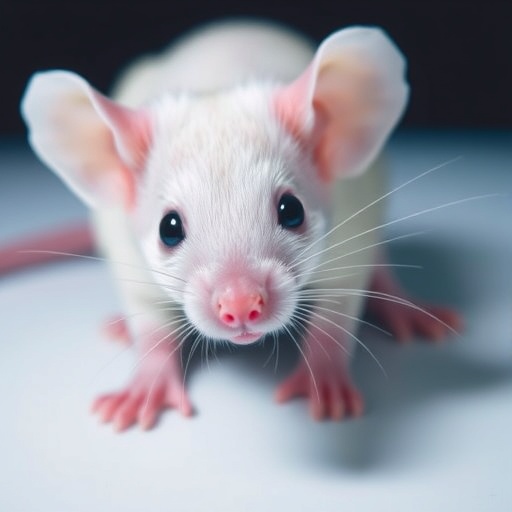
In the rapidly evolving field of genetics, the traditional reliance on a limited set of model organisms is increasingly being challenged. For decades, mice, frogs, zebrafish, fruit flies, roundworms, and yeast have dominated biological research due to their well-characterized genomes, ease of maintenance in laboratory settings, and robust scientific communities supporting their study. However, emerging research underscores the limitations of these conventional models, particularly in translating therapeutic outcomes from animals to humans and in addressing complex environmental and climate-related biological questions. More than 80% of drug candidates that show promise in mouse models ultimately fail in human trials, highlighting a critical gap in biomedical research that calls for a broader approach to studying life’s diversity.
The pioneering work of evolutionary biologists such as Jason Gallant at Michigan State University advocates a transformative paradigm shift: embracing Earth’s vast biodiversity as a rich repository of biological solutions. By integrating non-traditional organisms—electric eels, octopi, birds, sea sponges, and bacteria—into research, scientists can unearth novel mechanisms of disease resistance, metabolic innovation, and adaptive strategies shaped by hundreds of millions of years of evolution. These models bring unique physiological and biochemical traits that can directly inform biomedical innovation, environmental remediation, and biotechnology.
One striking example is the electric eel, whose nervous system proteins offer intriguing prospects for advancing neurobiology and prosthetic control technologies. Gallant’s Electric Fish Lab focuses on dissecting the molecular architecture of electric signal generation and neural communication in these fish, potentially informing next-generation neural interfaces. Similarly, octopuses, renowned for their complex nervous systems and problem-solving abilities, hold promise as models to understand neural plasticity and the interface between nervous systems and behavior—a frontier for both neuroscience and robotics.
Beyond nervous system studies, sea sponges have already yielded potent compounds that are clinically promising as anti-cancer and anti-inflammatory agents. These simple organisms possess an intricate chemical arsenal forged by evolutionary arms races spanning hundreds of millions of years. Their secondary metabolites provide templates for drug discovery that are difficult to replicate synthetically, underscoring the value of studying diverse taxa in natural product chemistry.
Birds, with their remarkable capacity for rapid adaptation to environmental stressors, present living laboratories for understanding evolutionary pressures and genetic mechanisms underpinning resilience. Investigations into avian genetics reveal insights into respiratory adaptations, metabolic tuning, and cognitive flexibility that can inform our understanding of biological responses to climate change. Meanwhile, bacteria capable of degrading plastic offer an extraordinary glimpse into bioremediation strategies, addressing a critical global pollution challenge by leveraging microbial metabolism.
Despite the evident promise of these and other unconventional models, embracing biodiversity within research is not without challenges. Maintaining and cultivating novel organisms in laboratory settings requires significant infrastructure and expertise, often lacking in traditional university environments structured around well-established model organisms. Furthermore, the physical segregation of research disciplines and funding streams creates silos that hinder interdisciplinary collaborations essential for these efforts.
Gallant emphasizes the need for comprehensive shifts not only in research practice but also in scientific training. Developing cross-disciplinary skillsets will enable the next generation of scientists to harness genomic tools, bioinformatics, and organismal biology across a broad evolutionary spectrum. The expansion of genetic databases to include diverse species will facilitate comparative studies that can pinpoint conserved and unique pathways relevant to health and disease.
Institutions like Michigan State University, through initiatives in ecology, evolution, and behavior, are fostering collaborative frameworks and shared resources designed to lower barriers to biodiversity research. Experts like Elise Zipkin highlight the importance of targeted investments in infrastructure—ranging from biorepositories to advanced imaging and sequencing platforms—that can catalyze transformative discoveries by integrating biological diversity with cutting-edge technology.
Central to this vision is a philosophical departure from viewing mice and other traditional models as the exclusive gold standards. Rather, they should remain vital components within a much larger toolkit that invites the rest of the living world into scientific inquiry. Effectively, this approach treats Earth’s biodiversity as a vast, dynamic library where each species contributes unique “volumes” of biological innovation that can directly address pressing medical, environmental, and technological problems.
The potential rewards extend beyond pure scientific understanding to practical applications with profound societal impact. Advances in neuroprosthetics inspired by octopus neurology could revolutionize treatments for paralysis. Discovery of novel antibiotics or anticancer agents from marine organisms may counteract antibiotic resistance and improve human health. Harnessing bacteria’s plastic-digesting enzymes can lead to scalable technologies to mitigate ocean pollution.
However, realizing these promises requires overcoming entrenched academic and funding obstacles. Siloed funding mechanisms often favor research on established model organisms with predictable outcomes, potentially stifling high-risk, high-reward exploratory research into less-studied species. To ensure sustainability, funding agencies, patent offices, and educational institutions must adopt forward-thinking policies facilitating biodiversity-based research ventures without marginalizing traditional models.
Jason Gallant’s call to action resounds with urgency: science must adapt and evolve in tandem with the explosive expansion of genetic tools and biodiversity knowledge. By inviting a more inclusive panel of life’s actors to the research stage, we can unlock innovative solutions that the conventional models alone cannot reveal. Indeed, ignoring the vast array of biological diversity is akin to ignoring a library filled with irreplaceable knowledge and opportunity.
Through ambitious interdisciplinary collaboration, robust infrastructure development, and visionary training programs, the scientific community has the unprecedented opportunity to advance discovery and innovation. The future of biology lies in viewing biodiversity not as a peripheral curiosity but as the foundational framework upon which solutions to humanity’s most critical challenges can be built. This integrative approach promises to push the boundaries of medicine, environmental science, and biotechnology into uncharted and transformative territories.
It is time to move beyond the mouse. By incorporating the extraordinary diversity of life—from bacteria engineered for environmental cleanup to the neurobiological wonders of electric fish—scientists will harness the full spectrum of evolutionary ingenuity. This ecological, evolutionary, and molecular renaissance heralds a new era in science, poised to deliver breakthroughs that are as diverse and dynamic as life itself.
Subject of Research: Embracing Earth’s biodiversity as a resource for biological solutions and research innovation.
Article Title: Biologists should embrace Earth’s biodiversity as a library of solutions
News Publication Date: 10-Nov-2025
Web References:
http://dx.doi.org/10.1038/s44358-025-00098-x
Image Credits: Michigan State University
Keywords: biodiversity, genetic models, electric eels, octopus neurobiology, marine sponges, bird adaptation, bacterial bioremediation, interdisciplinary research, evolutionary biology, neuroprosthetics, drug discovery, environmental science
Tags: alternative model organisms in geneticsbiodiversity in scientific researchbiomedical research challengesbiotechnology advancements through biodiversitydrug candidate failures in human trialsenvironmental impacts on geneticsevolutionary biology breakthroughsgenetic research innovationslimitations of traditional animal modelsmetabolic innovation in organismsnon-traditional organisms in medicinenovel disease resistance mechanisms