• HOME
  • NEWS
  • EXPLORE
    • CAREER
      • Companies
      • Jobs
    • EVENTS
    • iGEM
      • News
      • Team
    • PHOTOS
    • VIDEO
    • WIKI
  • BLOG
  • COMMUNITY
    • FACEBOOK
    • INSTAGRAM
    • TWITTER
Thursday, January 1, 2026
BIOENGINEER.ORG
No Result
View All Result
  • Login
  • HOME
  • NEWS
  • EXPLORE
    • CAREER
      • Companies
      • Jobs
        • Lecturer
        • PhD Studentship
        • Postdoc
        • Research Assistant
    • EVENTS
    • iGEM
      • News
      • Team
    • PHOTOS
    • VIDEO
    • WIKI
  • BLOG
  • COMMUNITY
    • FACEBOOK
    • INSTAGRAM
    • TWITTER
  • HOME
  • NEWS
  • EXPLORE
    • CAREER
      • Companies
      • Jobs
        • Lecturer
        • PhD Studentship
        • Postdoc
        • Research Assistant
    • EVENTS
    • iGEM
      • News
      • Team
    • PHOTOS
    • VIDEO
    • WIKI
  • BLOG
  • COMMUNITY
    • FACEBOOK
    • INSTAGRAM
    • TWITTER
No Result
View All Result
Bioengineer.org
No Result
View All Result
Home NEWS Science News Chemistry

Better understanding of nature’s nanomachines may help in design of future drugs

Bioengineer by Bioengineer
April 30, 2020
in Chemistry
Reading Time: 3 mins read
0
IMAGE
Share on FacebookShare on TwitterShare on LinkedinShare on RedditShare on Telegram

IMAGE

Credit: McGill University

Many of the drugs and medicines that we rely on today are natural products taken from microbes like bacteria and fungi. Within these microbes, the drugs are made by tiny natural machines – mega-enzymes known as nonribosomal peptide synthetases (NRPSs). A research team led by McGill University has gained a better understanding of the structures of NRPSs and the processes by which they work. This improved understanding of NRPSs could potentially allow bacteria and fungi to be leveraged for the production of desired new compounds and lead to the creation of new potent antibiotics, immunosuppressants and other modern drugs.

“NRPSs are really fantastic enzymes that take small molecules like amino acids or other similar sized building blocks and assemble them into natural, biologically active, potent compounds, many of which are drugs,” said Martin Schmeing, Associate Professor in the Department of Biochemistry at McGill University, and corresponding author on the article that was recently published in Nature Chemical Biology. “An NRPS works like a factory assembly line that consists of a series of robotic workstations. Each station has multi-step workflows and moving parts that allow it to add one building block substrate to the growing drug, elongating and modifying it, and then passing it off to the next little workstation, all on the same huge enzyme.”

Ultra-intensive light beam allows scientists to see proteins

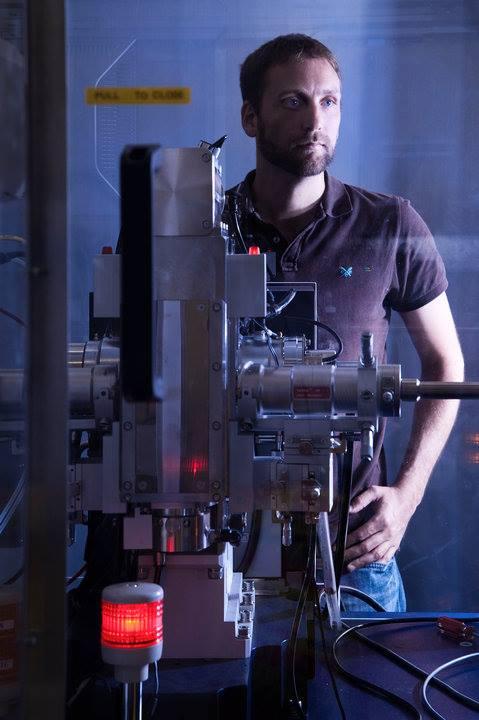
In their paper featured on the cover of the May 2020 issue of Nature Chemical Biology, the team reports visualizing an NRPS mechanical system by using the CMCF beamline at the Canadian Light Source (CLS). The CLS is a Canadian national lab that produces the ultra-intense beams of X-rays required to image proteins, as even mega-enzymes are too small to see with any light microscope.

“Scientists have long been excited about the potential of bioengineering NRPSs by identifying the order of building blocks and reorganizing the workstations in the enzyme to create new drugs, but the effort has rarely been successful,” said Schmeing. “This is the first time anyone has seen how these enzymes transform keto acids into a building block that can be put into a peptide drug. This helps us understand how the NRPSs can use so very many building blocks to make the many different compounds and therapeutics.”

###

To read Structural basis of keto acid utilization in nonribosomal depsipeptide synthesis in Nature Chemical Biology by Alonzo, D.A., Chiche-Lapierre, C., Tarry, M.J. et al.
doi.org/10.1038/s41589-020-0481-5

About McGill University

Founded in Montreal, Quebec, in 1821, McGill University is Canada’s top ranked medical doctoral university. McGill is consistently ranked as one of the top universities, both nationally and internationally. It is a world-renowned institution of higher learning with research activities spanning two campuses, 11 faculties, 13 professional schools, 300 programs of study and over 40,000 students, including more than 10,200 graduate students. McGill attracts students from over 150 countries around the world, its 12,800 international students making up 31% of the student body. Over half of McGill students claim a first language other than English, including approximately 19% of our students who say French is their mother tongue.

Contact:

Katherine Gombay

McGill Media Relations Office

1-514-717-2289

[email protected]

http://www.mcgill.ca/newsroom/

http://twitter.com/McGillU

Media Contact
Katherine Gombay
[email protected]

Original Source

https://www.mcgill.ca/newsroom/channels/news/better-understanding-natures-nanomachines-may-help-design-future-drugs-321979

Related Journal Article

http://dx.doi.org/10.1038/s41589-020-0481-5

Tags: BiochemistryBiologyBiomedical/Environmental/Chemical EngineeringCell BiologyMicrobiologyMolecular Biology
Share12Tweet8Share2ShareShareShare2

Related Posts

Cutting Electrolyte Reduction Boosts High-Energy Battery Performance

Cutting Electrolyte Reduction Boosts High-Energy Battery Performance

December 19, 2025
Microenvironment Shapes Gold-Catalysed CO2 Electroreduction

Microenvironment Shapes Gold-Catalysed CO2 Electroreduction

December 11, 2025

Photoswitchable Olefins Enable Controlled Polymerization

December 11, 2025

Cation Hydration Entropy Controls Chloride Ion Diffusion

December 10, 2025
Please login to join discussion

POPULAR NEWS

  • blank

    PTSD, Depression, Anxiety in Childhood Cancer Survivors, Parents

    105 shares
    Share 42 Tweet 26
  • NSF funds machine-learning research at UNO and UNL to study energy requirements of walking in older adults

    71 shares
    Share 28 Tweet 18
  • Exploring Audiology Accessibility in Johannesburg, South Africa

    52 shares
    Share 21 Tweet 13
  • SARS-CoV-2 Subvariants Affect Outcomes in Elderly Hip Fractures

    44 shares
    Share 18 Tweet 11

About

We bring you the latest biotechnology news from best research centers and universities around the world. Check our website.

Follow us

Recent News

Full-Parameter Modulated 3D Vectorial Vortex Arrays

Metabolic Classification of Gliomas Revealed by Multi-Omics

Gender Gaps in Macular Thickness and Cognitive Function

Subscribe to Blog via Email

Enter your email address to subscribe to this blog and receive notifications of new posts by email.

Join 71 other subscribers
  • Contact Us

Bioengineer.org © Copyright 2023 All Rights Reserved.

Welcome Back!

Login to your account below

Forgotten Password?

Retrieve your password

Please enter your username or email address to reset your password.

Log In
No Result
View All Result
  • Homepages
    • Home Page 1
    • Home Page 2
  • News
  • National
  • Business
  • Health
  • Lifestyle
  • Science

Bioengineer.org © Copyright 2023 All Rights Reserved.