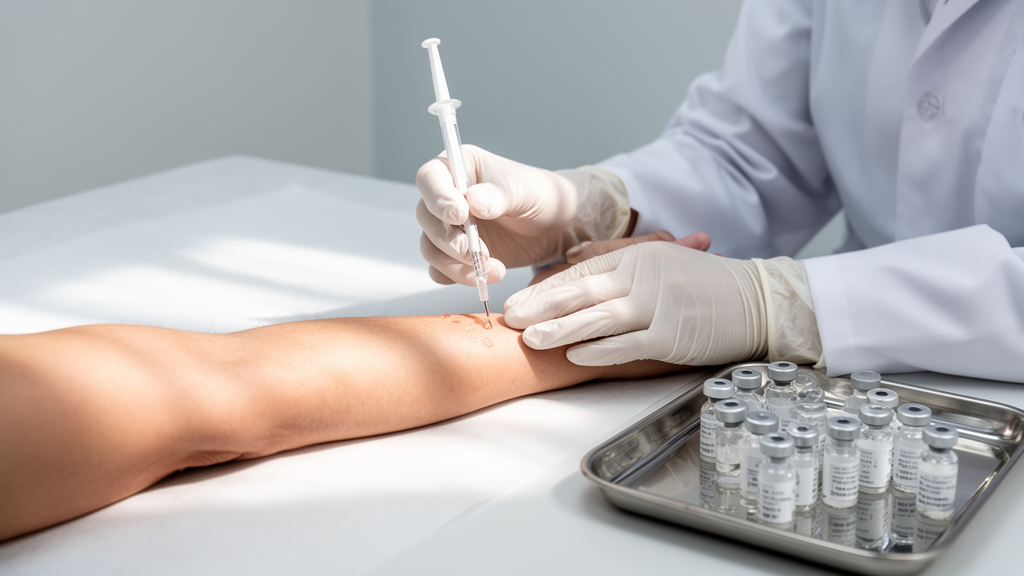
Systemic reactions during beta-lactam skin testing in adults with confirmed immediate hypersensitivity are infrequent but clinically significant, according to a seven-year ambispective study published in Allergy, Asthma & Clinical Immunology. The research team analyzed 216 adult patients who had confirmed immediate hypersensitivity reactions to beta-lactams, either through positive skin tests or positive drug challenge tests. Among this cohort, five patients experienced systemic reactions during the testing process, representing 2.3% of the entire group and 3.6% of those who had positive skin test results. All five reactions occurred after intradermal testing, specifically in patients whose initial skin prick tests had been negative.
Beta-lactam hypersensitivity is one of the most common drug allergies, and skin testing remains the primary diagnostic tool for identifying immediate hypersensitivity reactions. While generally considered safe, the procedure carries a risk of systemic reactions that must be carefully managed. The study, conducted between July 2018 and June 2025, combined retrospective data from 2018 to 2023 with prospective data from 2024 to 2025, using identical diagnostic procedures throughout. The participants had a mean age of 62 years, with a standard deviation of 15.9, and 67.1% of the cohort was female.
The diagnostic workflow involved sequential skin testing with specific beta-lactam extracts. Patients first underwent skin prick tests with benzylpenicilloyl polylysine extract, minor determinant mixture extract, freshly prepared penicillin G, the suspected culprit beta-lactam, and selected alternative beta-lactams based on clinical history. Skin prick tests were considered positive if the wheal diameter was at least 3 mm compared with the negative control. Only patients with negative skin prick test results proceeded to intradermal testing.
Among the 216 patients, 138 had positive skin test results, accounting for 63.9% of the cohort. Within this positive group, 9 patients had positive skin prick tests, while 129 had positive intradermal tests. The mean time elapsed from the index reaction to the skin test was 47.9 months, with a standard deviation of 117.8. The most frequently implicated beta-lactams were amoxicillin, which accounted for 43.5% of cases, followed by cephalosporins at 25.4%, and amoxicillin combined with penicillin at 14.5%. These distribution patterns highlight the predominance of aminopenicillins in beta-lactam hypersensitivity cases.
The five patients who experienced systemic reactions all had urticaria-angioedema as their index reaction, with none having a history of prior anaphylaxis. This finding is notable because it suggests that the severity of the initial reaction is not the sole determinant of risk during subsequent testing. Four of the five reactions were mild, characterized by generalized pruritus, erythema, and/or urticaria, while one patient experienced anaphylaxis. The anaphylactic reaction occurred 10 minutes after intradermal testing, whereas the mild reactions had an onset within 15 to 20 minutes. All reactions were rapidly controlled with symptomatic treatment, including antihistamines and, in the case of anaphylaxis, intramuscular epinephrine and methylprednisolone.
A significant finding from the study was the shorter time interval between the index reaction and allergy evaluation in patients who experienced systemic reactions. The mean time from index reaction to skin test was 23.6 months for the systemic reaction group, compared with 48.8 months for those without systemic reactions. This difference was statistically significant, with a p-value of 0.02, indicating a 50% reduction in time for the systemic reaction group. This association suggests that testing shortly after the initial reaction may increase the risk of systemic responses, although the small number of cases limits the strength of this conclusion.
No significant associations were identified for age, sex, culprit beta-lactam, or specific immunoglobulin E levels in relation to systemic reactions. Aminopenicillins were the most frequent beta-lactam implicated in systemic reactions, accounting for 60% of cases, but this difference was not statistically significant, likely due to the high prevalence of aminopenicillins as the culprit drug in the overall cohort. The study also noted that specific immunoglobulin E levels were negative in four of the five patients who experienced systemic reactions, with the test not performed for the fifth patient.
The frequency of systemic reactions observed in this study aligns with rates reported in previous research, which range from 0.1 to 2% in all tested patients and from 0.4 to 13.2% in patients with positive skin tests. However, many previous studies included mixed drug classes, combined immediate and delayed reactions, or involved pediatric populations, where systemic reactions are extremely rare. These methodological differences limit direct comparability with the adult cohort in the current study. The authors emphasize that their findings are specific to adults with confirmed immediate hypersensitivity to beta-lactams, and the results should be interpreted within this context.
Several methodological aspects of the study warrant consideration. The cephalosporin concentrations used in the protocol were lower than the currently recommended maximum non-irritant concentrations, which may have affected the sensitivity of the tests. Additionally, while higher concentrations for skin prick testing have been explored in some studies, they are not currently standardized, potentially leading to an underestimation of skin test sensitivity in this cohort. A relatively high proportion of patients with confirmed immediate hypersensitivity had negative skin tests but positive drug challenge tests, which may be explained by factors such as loss of immunoglobulin E sensitization over time or selective sensitization not fully captured by classical determinants.
The study concludes that skin prick tests appear highly safe, with no systemic reactions observed in this group, whereas intradermal tests require particular caution, especially when performed shortly after the index reaction. The association between a shorter time interval and systemic reactions is hypothesis-generating and requires confirmation in larger studies. Healthcare providers should be prepared to manage and treat systemic reactions effectively, particularly during intradermal testing.
The emphasis on the importance of the time interval between the index reaction and testing highlights a previously underexplored aspect of allergy evaluation.
To safeguard participants during evaluation, the investigators implemented specific procedural adjustments based on initial clinical history. High-risk patients with a documented history of anaphylaxis underwent intradermal testing with stepwise dilutions down to a one-to-one-thousand concentration, whereas lower-risk individuals received validated non-irritant concentrations directly. The intradermal testing sequence was strictly regimented, administering one agent at a time with a fifteen-minute interval between injections to allow immediate evaluation before introducing the next compound. Clinicians systematically tested benzylpenicilloyl-octa-L-lysine at 0.04 milligrams per milliliter and minor determinant mixture at 0.5 milligrams per milliliter, followed by freshly prepared penicillin G, before proceeding to suspected culprit beta-lactams and clinically indicated alternatives.
The diagnostic protocol also defined precise procedures for oral provocation and follow-up assessments when skin tests were negative. Drug challenge tests followed a two-step procedure in which patients received twenty-five percent of a therapeutic dose, followed thirty minutes later by the remaining seventy-five percent in the absence of symptoms, with post-administration monitoring lasting at least two hours. For individuals whose initial allergic reaction occurred more than a year before assessment and whose initial skin and challenge tests yielded negative results, clinicians conducted repeat skin testing between one and six months later using the identical diagnostic protocol. Across the 138 skin-test-positive patients, diagnostic distribution included penicillin in 8.7 percent, clavulanic acid in 5.1 percent, and piperacillin-tazobactam and meropenem in 1.4 percent each. Furthermore, among the nine patients with positive skin prick tests, six presented with index anaphylaxis and three with urticaria-angioedema, whereas the 129 patients with positive intradermal tests included fifty-six with index anaphylaxis and seventy-three with urticaria-angioedema.
Specific culprit agents and management details among the five intradermal systemic reactions provide additional practical insights. Amoxicillin caused three of these adverse events, while minor determinant mixture and cefuroxime triggered one event each, with one individual experiencing lingual angioedema alongside the cutaneous reactions seen in others. Symptomatic intervention included subcutaneous dexchlorpheniramine at five milligrams, while the single severe episode resolved completely following zero-point-three milligrams of intramuscular epinephrine and sixty milligrams of methylprednisolone. These clinical patterns contrast with earlier findings by Co Minh and colleagues, where 8.8 percent of skin-test-positive patients experienced systemic reactions, seventy-seven percent had prior anaphylaxis, and half occurred during prick testing, as well as work by Antico and colleagues, where twenty percent occurred during prick testing. Although testing closer to the initial event showed an association with systemic events, the authors emphasized that testing must not be postponed excessively, as delayed evaluations can result in loss of skin reactivity and compromise clinical sensitivity.
Subject of Research: Frequency and severity of systemic reactions during beta-lactam skin testing in adults
Article Title: Frequency and severity of systemic reactions during beta-lactam skin testing in adults with immediate hypersensitivity allergy
Article References: Letón-Cabanillas, P., Noguerado-Mellado, B., Quijada-Morales, P., Salas-Parra, G., & Rojas-Pérez-Ezquerra, P. (2026). Frequency and severity of systemic reactions during beta-lactam skin testing in adults with immediate hypersensitivity allergy. Allergy, Asthma & Clinical Immunology, 22(1), Article 35. https://doi.org/10.1186/s13223-026-01032-2
Image Credits: AI Generated
DOI: 10.1186/s13223-026-01032-2
Keywords: beta-lactam allergy, skin testing, systemic reactions, drug hypersensitivity, intradermal test, anaphylaxis, clinical immunology, patient safety, Frequency, severity, systemic, reactions
News Source: Ophelia Keating. (November 10, 2026). Beta-lactam skin tests carry rare but real systemic risk. Scienmag.