


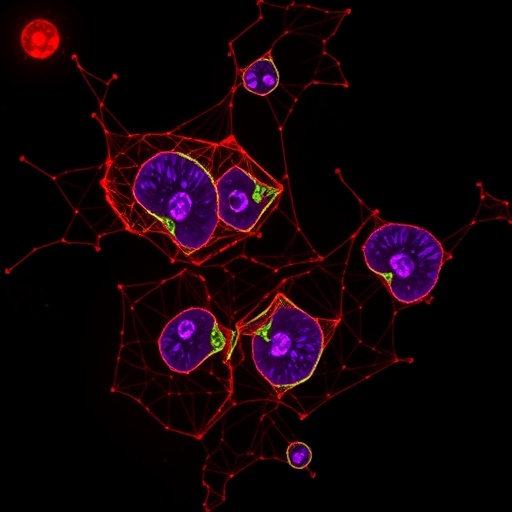
In a groundbreaking study poised to reshape the therapeutic landscape of aggressive breast cancers, researchers have uncovered a novel metabolic vulnerability in a specific subset of triple-negative breast cancer (TNBC). This discovery hinges on the interplay between BET protein inhibition and the stabilization of hypoxia-inducible factor 1-alpha (HIF1α), revealing a targetable dependency on glycolysis that may pave the way for innovative treatment strategies.
Triple-negative breast cancer, known for its lack of hormone receptors and HER2 expression, has long eluded targeted therapies, making chemotherapy the mainstay despite its limited efficacy and high relapse rates. The latest findings, published in Cell Death Discovery, shed light on a molecular mechanism that could disrupt this grim status quo. The research team, led by Rossi, Iorio, and Chirico, demonstrated that inhibiting Bromodomain and Extra-Terminal domain (BET) proteins triggers a profound metabolic shift governed by HIF1α stabilization.
BET proteins are epigenetic readers that regulate gene expression by binding to acetylated histones, and their inhibition has been explored as a strategy to dampen oncogenic transcriptional programs. However, the unintended consequence of BET inhibition, as revealed in this study, is the stabilization of HIF1α—a critical transcription factor that governs cellular responses to hypoxia and orchestrates glycolytic metabolism.
The accumulation of HIF1α initiates a transcriptional program that reprograms cancer cell metabolism towards enhanced glycolysis, a process often leveraged by tumor cells to sustain their rapid growth and survival under low oxygen conditions. This metabolic rewiring exposes a previously hidden dependency on glycolysis in TNBC cells subjected to BET inhibition, effectively unmasking a therapeutic target.
Importantly, the research delineates that this glycolytic dependency is not uniform across all TNBC cases but is confined to a well-defined molecular subset. This stratification opens avenues for precision medicine approaches, enabling clinicians to identify patients who might benefit from combinatorial therapies targeting both BET proteins and glycolytic pathways.
From a therapeutic perspective, dual targeting could suppress tumor proliferation more effectively, circumvent resistance mechanisms, and improve patient outcomes. The study underscores the potential of employing glycolytic inhibitors alongside BET inhibitors, exploiting the synthetic lethality arising from the metabolic vulnerabilities induced by epigenetic modulation.
This discovery highlights the intricate network between epigenetic regulators and metabolic pathways in cancer, emphasizing the necessity for integrated treatment paradigms that address these interconnected axes. By illuminating the HIF1α-driven transcriptional landscape following BET inhibition, the study provides valuable insights into tumor biology and metabolic plasticity.
As triple-negative breast cancer continues to pose a significant clinical challenge, findings such as these inject optimism into the quest for durable targeted therapies. Future research will undoubtedly focus on validating these mechanisms in clinical settings and developing potent, selective glycolytic inhibitors compatible with BET-targeted regimens.
In conclusion, this transformative research opens a new frontier in cancer therapy by revealing how modulating epigenetic factors can unveil metabolic susceptibilities. The exploitation of HIF1α stabilization-induced glycolytic dependencies offers a promising strategy that could eventually translate into more effective interventions for patients afflicted with this formidable breast cancer subtype.
Subject of Research: Targeting glycolytic dependency through HIF1α stabilization induced by BET inhibition in a subset of triple-negative breast cancer.
Article Title: BET inhibition unmasks a targetable glycolytic dependency through a HIF1α stabilization and driven transcriptional program in a defined subset of triple-negative breast Cancer.
Article References:
Rossi, T., Iorio, E., Chirico, M. et al. BET inhibition unmasks a targetable glycolytic dependency through a HIF1α stabilization and driven transcriptional program in a defined subset of triple-negative breast Cancer. Cell Death Discov. (2026). https://doi.org/10.1038/s41420-026-03230-8
Image Credits: AI Generated
DOI: https://doi.org/10.1038/s41420-026-03230-8
Tags: BET protein inhibitionbromodomain inhibitorscancer metabolism and epigeneticsepigenetic regulation in cancerglycolysis dependency in tumor cellsglycolytic vulnerabilityHIF1α stabilizationhypoxia-inducible factors in cancermetabolic reprogramming in TNBCnovel therapeutic strategies for TNBCtargeted therapy for aggressive breast cancerstriple-negative breast cancer


