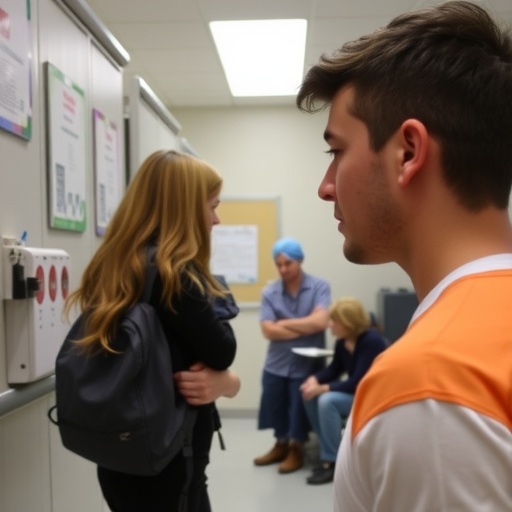
As more patients leave feedback on online platforms including social media, research shows how health and social care organisations can offer value in their response.
Led by Rebecca Baines and Professor Ray Jones from the University of Plymouth in collaboration with James Munro, the CEO of Care Opinion, the study highlights 19 key factors centred around:
- Providing details of the responder e.g. name, role, responsibilities
- Need for prompt reply
- Tailored content
- Signposting to key services
- Sign-off
The team will be discussing the findings in full alongside a practical framework for patient feedback via webinar on Thursday 21 June from 2-3pm GMT. Register here https://register.gotowebinar.com/register/4973923813535225857
The research began as Rebecca worked with a volunteer mental health patient research partner to explore experiences of psychiatric care shared on online feedback platforms.
Following concerns expressed by the patient research partner when a patient shared an emotive and powerful suicide related care experience online and received a 'generic and standard' response back, the team spoke to Plymouth charity Headscount to discuss what people wanted and looked for in an effective reply.
Led primarily by the people involved, the qualitative data collection with 12 people enabled the group to identify a number of key themes, which were then collaboratively analysed and turned into a practical framework outlining a useful response.
Rebecca, from the Collaboration for the Advancement of Medical Education Research & Assessment (CAMERA) in the University's Faculty of Medicine and Dentistry, said: "Some organisations see online feedback as dangerous – assuming it will always be negative and unhelpful. I imagine that this stops some places from responding altogether, while others err on the side of caution and put out generic responses for fear of repercussion.
"In reality, despite being in a mental health setting, a lot of the feedback in this study was really positive – some people wanted to thank hospitals and social care organisations for the help provided and the new lease of life they provided.
"Either way, it's so important for organisations to listen to their feedback, learn from it and respond effectively. Evidence suggests a poor response can increase the likelihood of patients transforming their feedback into a formal complaint.
"Going right back to grassroots level enabled us to see exactly what people valued in feedback responses and, although the framework relates to mental health patient experiences, it is applicable to many other forms of health and social care."
James Munro said: "The format of Care Opinion is that patients leave feedback for a person or organisation, we pass on the comments and the organisation then replies.
"The importance of specificity was striking in this study, with patients wanting to know exactly the job role and name of who was responding to them – rather than a generic email address.
"Social media accounts, patient feedback platforms and online forums are only a few ways that are making online feedback a greater part of health and social care, so it's important that people see it as an opportunity for engagement rather than a threat."
###
The full paper is entitled Responding effectively to adult mental health patient feedback in an online environment: A coproduced framework and is available to view in the journal Health Expectations (doi: 10.1111/hex.12682).
Media Contact
Amy McSweeny
[email protected]
@PlymUni
http://www.plymouth.ac.uk
http://dx.doi.org/10.1111/hex.12682