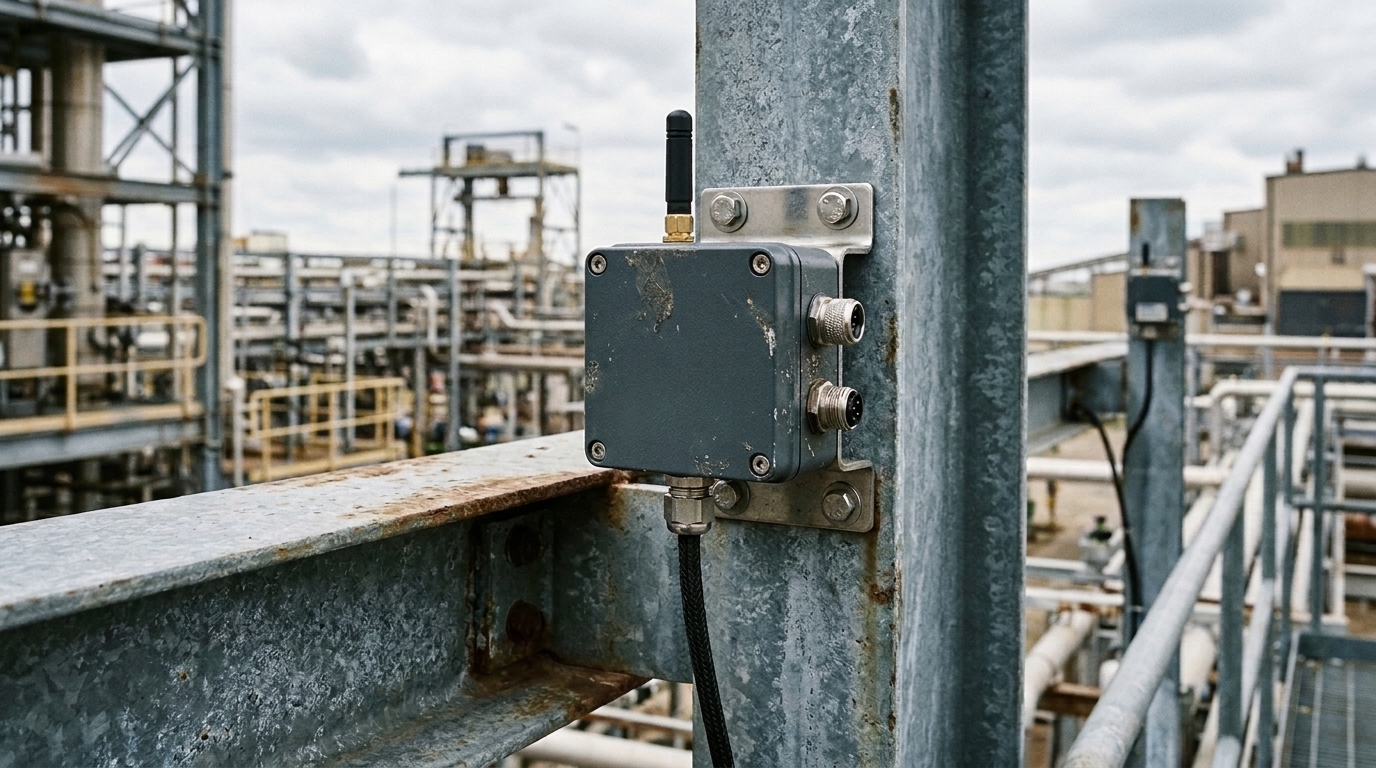
A hybrid deep learning architecture combining a Bayesian convolutional neural network and a Transformer model can detect intermittent faults in wireless sensor networks while quantifying prediction uncertainty, according to a study by researchers at Vellore Institute of Technology in India. Intermittent faults represent a critical operational challenge in wireless sensor networks because they occur infrequently, develop nonlinearly, and vary with fluctuating network conditions, rendering timely identification difficult under conventional deterministic methods.
Conventional fault-detection frameworks in wireless sensor networks typically depend on deterministic algorithms, including standard deep learning systems such as convolutional neural networks and long short-term memory networks, as well as traditional rule-based mechanisms. The authors noted that these established methods fail to jointly model the complex relationships between diverse operational features and lack the technical capability to compute the uncertainty associated with their predictions.
To address these constraints, the investigators designed an architecture intended for uncertainty-aware fault detection, formulating the task around determining whether a fault is present in a specific sensor reading rather than predicting upcoming faults across the network. The computational design employs a residual convolutional network to handle feature extraction, which feeds into a Transformer encoder that models interactions across five designated input variables: sensor reading, mote identification, humidity, temperature, and single-hop status.
The system incorporates approximate Bayesian inference through Monte Carlo dropout, enabling the model to estimate its epistemic uncertainty during the prediction phase. This uncertainty quantification provides an operational basis for confidence-based selective decision-making, allowing the system to withhold or prioritize outputs based on estimated reliability instead of forcing a purely deterministic binary classification on every incoming data point.
In test set evaluations, the hybrid architecture achieved an accuracy of 99.84 percent when restricted to predictions within its most confident decile, which comprised 12.8 percent of all evaluated samples that demonstrated an entropy-based confidence exceeding 0.9. Overall probability calibration across the full sample distribution was measured at an expected calibration error of 0.067, with a 95 percent confidence interval spanning 0.060 to 0.073 evaluated across ten fixed bins.
When evaluated across full, 100 percent sample coverage, the hybrid model demonstrated overall accuracy comparable to the strongest deterministic baseline model, though its precision and false alarm rate remained somewhat below that baseline. The principal operational benefit emerged during uncertainty-driven selective prediction, where restricting the model output to the 79 to 80 percent most confident predictions elevated classification accuracy to between 84.00 and 84.29 percent while substantially reducing false alarm rates.
The performance gains of selective prediction and epistemic uncertainty modeling introduce computational trade-offs, as the proposed hybrid framework contains approximately 2.19 million parameters compared to the 83,000 to 105,000 parameters found in the baseline architectures. Additionally, the researchers evaluated system resilience against untargeted Fast Gradient Sign Method adversarial perturbations applied to a synthetic dataset containing spike and random-noise intermittent faults, where the Bayesian CNN-Transformer model demonstrated the smallest accuracy degradation among all evaluated models.
The investigators concluded that the hybrid Bayesian CNN-Transformer architecture improves predictive reliability, interpretability, and operational robustness for intermittent fault detection under synthetic testing conditions. However, the authors emphasized that confirming this robustness on naturally occurring hardware and environmental faults will require direct deployment testing in operational field environments or structural health monitoring systems in future work.
Subject of Research: Uncertainty-aware intermittent fault detection in wireless sensor networks using a Bayesian CNN-Transformer model
Article Title: Bayesian CNN-transformer hybrid architecture for uncertainty-aware intermittent fault detection in WSNs
Article References: Iswarya, P., & Manikandan, K. (2026). Bayesian CNN-transformer hybrid architecture for uncertainty-aware intermittent fault detection in WSNs. Frontiers in Artificial Intelligence, 9, 1951754. https://doi.org/10.3389/frai.2026.1951754
Image Credits: AI Generated
DOI: 10.3389/frai.2026.1951754
Keywords: wireless sensor networks, intermittent fault detection, Bayesian convolutional neural network, Transformer encoder, epistemic uncertainty, Monte Carlo dropout, uncertainty quantification, selective prediction, expected calibration error, residual convolutional network, adversarial perturbation, Fast Gradient Sign Method, sensor reliability, deep learning, machine learning
News Source: Blake Davidson. (November 13, 2026). Bayesian CNN-Transformer Hybrid Improves Intermittent Fault Detection in Wireless Sensor Networks. Scienmag.