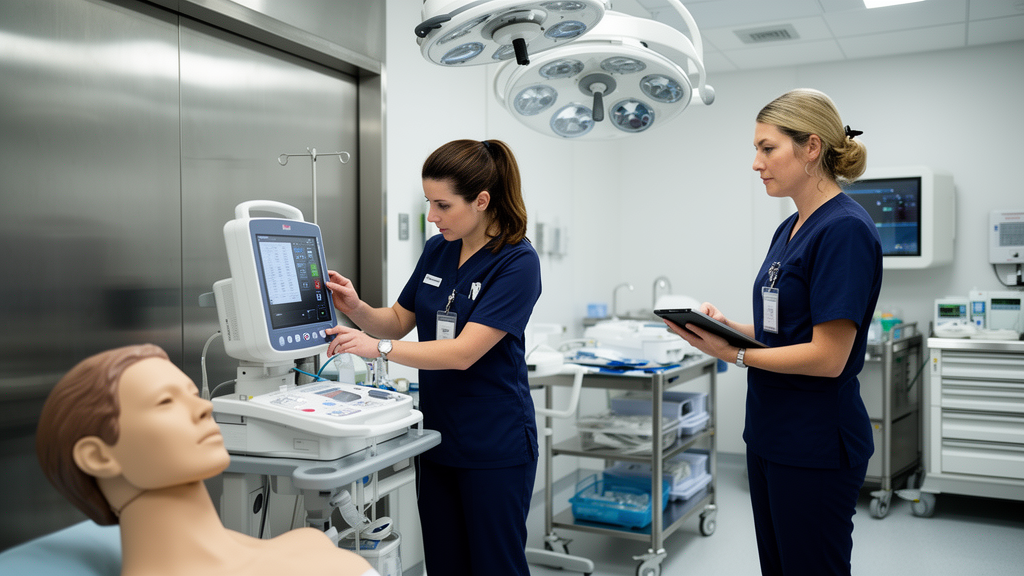
A longitudinal cohort investigation tracking emergency specialist nurses across a provincial development program has revealed that baseline self-efficacy profiles and educational backgrounds are closely linked to how effectively nurses apply and sustain newly acquired clinical competencies over a twelve-month follow-up period. Conducted across healthcare institutions in Henan Province, China, the research demonstrated that the translation of specialist training into routine bedside practice does not follow a uniform pathway among practitioners. Instead, tracking participants from pre-training through one year post-graduation identified four distinct longitudinal training transfer trajectories alongside three baseline self-efficacy profiles. Researchers found that nurses entering specialist education with relatively high self-efficacy were substantially less likely to experience declining or persistently low levels of training transfer compared with peers possessing low baseline coping confidence. These findings provide empirical evidence that individual psychological resources before instruction commences play an essential role in determining whether emergency care skills endure in high-pressure hospital environments.
The conceptual framework of training transfer examines the degree to which trainees translate knowledge, clinical skills, professional attitudes, and behaviours acquired during training into routine work and maintain those practices over time. In demanding clinical environments like emergency departments, educational evaluations frequently emphasize immediate post-course examination performance or short-term participant satisfaction rather than sustained workplace translation. Emergency specialist nursing demands advanced technical proficiency, rapid clinical judgement, and effective interdisciplinary coordination amidst unpredictable workloads, severe clinical deterioration, and acute resuscitation scenarios. Because conventional variable-centred statistical analyses examine only average changes across entire cohorts, they can obscure important individual differences in skill retention, delayed implementation, or progressive skill loss among clinical staff. To capture this underlying heterogeneity, the investigators combined two person-centred statistical approaches, employing latent profile analysis to identify pre-training psychological profiles and latent class growth modelling to trace dynamic pathways of post-training clinical application across a twelve-month observation period.
The study recruited registered nurses enrolled in a provincial emergency specialist nurse training program administered by the Henan Nursing Association across two tertiary hospital training centers. Eligible participants were required to hold active nursing registration, gain admission to the training program, and possess at least three years of frontline emergency nursing experience prior to enrollment. The provincial curriculum comprised forty hours of theoretical instruction alongside four hundred and eighty hours of clinical skills training. To achieve official certification as emergency specialist nurses within this provincial framework, candidates had to attain a score of at least eighty out of one hundred on a theoretical examination and eight individual procedural assessments. Recruitment occurred between March 2024 and April 2025, enrolling three hundred and twenty-nine eligible emergency nurses who all subsequently completed the required curriculum. Longitudinal data collection concluded in April 2026, establishing an observational cohort followed across four scheduled measurement waves.
Baseline general self-efficacy was assessed prior to training using the Chinese version of the ten-item General Self-Efficacy Scale. This validated instrument measures perceived ability to manage stressful or demanding situations across life contexts using a four-point Likert scale, with total scores spanning ten to forty points and higher values indicating stronger self-efficacy. In this cohort, baseline internal consistency was robust, with a Cronbach’s alpha of 0.877. Training transfer was tracked using an emergency nursing-adapted version of the Training Transfer Scale for Stroke Specialist Nurses, comprising thirty-seven items across five dimensions: attitude change, clinical practice transformation, management and education optimization, professional development, and interpersonal communication. Scored on a five-point scale from thirty-seven to one hundred and eighty-five points, the adapted instrument demonstrated good content validity among nine clinical experts, showing item-level content validity indices of 0.78 to 1.00, a scale-level index of 0.84, and strong structural validity in preliminary factor analysis.
All data were gathered through the Wenjunxing online platform across four distinct evaluation points: immediately following training completion, and subsequently at three, six, and twelve months post-training. To eliminate careless submissions, questionnaires completed in under two minutes were excluded based on pilot testing indicating that valid completion required at least two minutes. Of the three hundred and twenty-nine nurses evaluated immediately after training, three hundred and twenty participated at three months, three hundred and eight at six months, and two hundred and ninety-four completed the twelve-month assessment, yielding a follow-up completion rate of 89.4 percent. Documented losses were due to inability to establish contact, voluntary withdrawal, maternity leave, and transfers out of emergency departments. Statistical comparisons between the two hundred and ninety-four completers and the thirty-five individuals lost to follow-up revealed no significant baseline differences in sex, education, marital status, children, employment type, workplace level, age, or clinical experience, indicating attrition bias was unlikely.
Latent profile analysis conducted on baseline self-efficacy responses from the two hundred and ninety-four nurses completing follow-up identified three distinct profiles. The three-profile model demonstrated optimal balance between model fit and substantive interpretability, exhibiting an entropy value of 0.972 and a Bayesian information criterion of 6,148. Class 1, comprising 22.4 percent of participants (sixty-six nurses), exhibited consistently low scores across all self-efficacy items and was labelled the low self-efficacy profile. Class 2, representing 43.5 percent of the sample (one hundred and twenty-eight nurses), displayed the highest scores on most items and was labelled the relatively high self-efficacy profile. Class 3, accounting for 34.0 percent of respondents (one hundred nurses), exhibited moderate, stable scores across items, forming the moderate self-efficacy profile. Notably, nurses in the relatively high group showed score decreases on items seven through ten, which capture remaining calm under pressure and managing unexpected difficulties, highlighting situational vulnerability in high-acuity environments.
Latent class growth modelling across the four post-training assessments revealed four distinct trajectories of training transfer over the twelve-month follow-up period. The four-class model yielded acceptable fit indices, including an entropy of 0.920, an Akaike information criterion of 7,999.400, and a Bayesian information criterion of 8,062.021. The most favorable developmental pathway, Class 3, encompassed 32.3 percent of nurses and was designated the high-increasing trajectory because participants exhibited high initial transfer that expanded steadily over time. Class 1, representing 19.7 percent of the cohort, followed a moderate-stable trajectory showing intermediate transfer levels with a minor final decline. Class 2, representing 19.0 percent of nurses, exhibited a low-increasing trajectory characterized by low initial scores followed by progressive improvement. In contrast, Class 4, comprising 28.9 percent of participants, followed a low-decreasing trajectory marked by persistently low transfer scores that declined slightly, identifying a substantial subgroup struggling to sustain practice changes after returning to clinical duties.
Multinomial logistic regression examined predictors of trajectory membership using the high-increasing trajectory as the reference category. Baseline self-efficacy profiles were strongly associated with trajectory assignment. Compared with the low self-efficacy profile, membership in the relatively high self-efficacy profile was associated with significantly reduced odds of belonging to the low-decreasing trajectory (odds ratio 0.122, 95 percent confidence interval 0.044 to 0.337, p < 0.001), the low-increasing trajectory (odds ratio 0.249, 95 percent confidence interval 0.076 to 0.814, p = 0.021), and the moderate-stable trajectory (odds ratio 0.130, 95 percent confidence interval 0.044 to 0.388, p < 0.001). The moderate self-efficacy profile was similarly associated with reduced odds of membership in the low-decreasing trajectory (odds ratio 0.022, 95 percent confidence interval 0.006 to 0.079, p < 0.001) and the moderate-stable trajectory (odds ratio 0.247, 95 percent confidence interval 0.083 to 0.732, p = 0.012), confirming the protective role of pre-training psychological coping beliefs against unfavorable transfer trajectories.
The regression analyses also established that educational attainment, clinical experience, marital status, and family structure significantly influenced trajectory classification. Compared with nurses possessing a graduate degree, those holding a diploma degree (odds ratio 11.981, 95 percent confidence interval 2.289 to 62.697, p = 0.003) or a bachelor’s degree (odds ratio 20.539, 95 percent confidence interval 3.710 to 113.711, p = 0.001) were significantly more likely to belong to the low-decreasing trajectory. Longer clinical work experience was protective against low-decreasing trajectory membership (odds ratio 0.736, 95 percent confidence interval 0.606 to 0.895, p = 0.002). Unmarried nurses (odds ratio 0.168, p < 0.001) and nurses without children (odds ratio 0.244, p < 0.001) were also less likely to experience the low-decreasing pathway. Conversely, participant age, sex, employment status, and hospital tier did not demonstrate statistically significant predictive effects, indicating that personal coping resources, foundational education, clinical background, and domestic caregiving demands were the primary determinants of sustained clinical transfer.
The researchers noted several methodological boundaries, emphasizing that participant recruitment was conducted using convenience sampling from training initiatives within Henan Province, which may limit generalizability across different health systems and regions. Furthermore, training transfer was evaluated through self-reported measurement scales, which could be subject to social desirability or recall effects rather than objective clinical performance metrics or supervisor ratings. The observational longitudinal design also precludes establishing definitive causal relationships between baseline self-efficacy and long-term transfer outcomes. Nonetheless, the finding that nearly twenty-nine percent of emergency specialist nurses experienced a low-decreasing trajectory highlights that educational completion alone does not guarantee long-term clinical practice change. The authors concluded that incorporating baseline self-efficacy screening into specialist training programs could help educators identify nurses at risk of inadequate transfer early, facilitating targeted mentoring, simulation-based reinforcement, supportive scheduling, and workplace facilitation to ensure that critical emergency competencies are successfully translated into routine clinical care.
Subject of Research: Baseline self-efficacy profiles and longitudinal training transfer trajectories among emergency specialist nurses
Article Title: Baseline self efficacy profiles and training transfer trajectories among emergency specialist nurses: a longitudinal study
Article References: Pan, Y., Li, Y., Zang, S., Ren, Y., Zhang, J., & Chang, Y. (2026). Baseline self efficacy profiles and training transfer trajectories among emergency specialist nurses: a longitudinal study. Frontiers in Medicine, 13, Article 1914837. https://doi.org/10.3389/fmed.2026.1914837
Image Credits: AI Generated
DOI: 10.3389/fmed.2026.1914837
Keywords: emergency nursing, training transfer, self-efficacy profiles, latent class growth modelling, latent profile analysis, General Self-Efficacy Scale, clinical skills training, nursing education, longitudinal cohort study, post-training support, clinical practice transformation, workplace learning, retention rate, work experience, educational attainment, emergency care
News Source: Ophelia Keating. (November 20, 2026). Baseline Self-Efficacy Profiles Predict Longitudinal Training Transfer Among Emergency Specialist Nurses. Scienmag.