


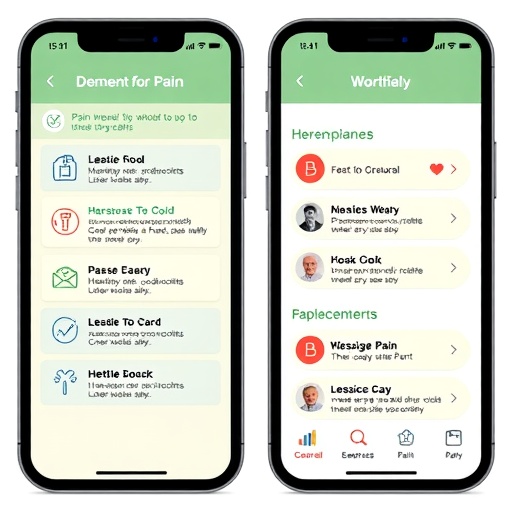
In recent years, the intersection of technology and healthcare has garnered heightened attention, particularly regarding mobile health applications. One such application focuses on assessing pain among individuals with dementia, a demographic that often faces significant challenges in communicating their distress. The study conducted by Hussein et al. offers a critical lens into this phenomenon, illuminating the complex landscape of barriers and facilitators that family caregivers encounter when utilizing this new mobile application.
As dementia progresses, it increasingly hinders an individual’s ability to articulate feelings, particularly pain. This communication barrier not only complicates the caregiving process but also significantly undermines the quality of care that affected individuals receive. This research delves into the potential of mobile health applications to bridge this communication gap, offering caregivers an innovative tool to better understand and address their loved ones’ discomfort.
The qualitative study conducted involved detailed interviews with family caregivers, providing rich, descriptive insights into their experiences with the app. Caregivers reported both positive outcomes and frustrating obstacles that informed their usage of the technology. Understanding these nuances not only benefits the development of the application itself but can influence broader policy regarding the integration of technology into dementia care. This research aims to present a pathway towards improved pain assessment and management, thereby enhancing the overall quality of life for individuals afflicted with dementia.
Among the predominant themes identified in the study was the notable resistance from some caregivers who expressed skepticism towards technology. Many caregivers voiced concerns over the practicality of mobile applications, fearing that their complexity might inhibit effective usage. This skepticism is a crucial insight; it underscores the importance of user-friendly design in technological solutions and highlights the need for extensive training and resources to accompany the introduction of such innovations in caregiving environments.
Conversely, other participants highlighted the empowering functions of the mobile application. Many caregivers reported feeling more confident in their ability to monitor pain levels, thanks to the systematic data collection features of the app. This shift towards a more proactive approach in pain management signifies a progressive step forward for families dealing with dementia. It reflects a growing recognition that caregiving should not be a passive undertaking; rather, it requires active participation and informed decision-making, where technology serves as a supportive ally.
Another significant aspect revealed in the study was the necessity for ongoing support networks. Caregivers noted that their experiences with the app were greatly enhanced when they had access to community or familial support. Many reported that sharing data with healthcare providers facilitated more informed discussions during medical appointments, ultimately leading to better pain management strategies. This highlights the vital role that communication and collaboration play in the caregiving process and suggests that technology should be designed to facilitate these connections, further integrating caregivers into the health care continuum.
In addition to social support, the study illuminated the crucial aspect of emotional resilience among caregivers. The emotional toll of caregiving can be profound, and understanding the psychological state of caregivers is paramount. The study underscored that caregivers often feel isolated and overwhelmed, leading to high levels of stress and burnout. However, caregivers who felt supported and educated about the technology found it to alleviate some of that emotional burden. The app seemed to empower them, enhancing their capability to provide care, which in turn positively affected their emotional well-being and the quality of care their loved ones received.
The research also delved into the importance of feedback mechanisms within the app. Many participants noted that establishing a system for tracking user satisfaction and app effectiveness could significantly enhance its utility. This indicates a further direction for developers; iterative improvements based on caregiver and patient feedback could lead to a more responsive tool that evolves alongside users’ needs. Health applications must not only meet a current demand but should be agile enough to incorporate suggestions and upgrades, ensuring long-term relevance and effectiveness.
In the broader context, the study’s findings have implications for policy makers as well. As mobile health applications become more prevalent in caregiving, understanding their barriers and facilitators is essential for developing comprehensive health policies. The integration of mobile technology in caregiving extends beyond the individual; it involves creating systems and structures that encourage their adoption while advocating for supportive resources and frameworks for caregivers.
Furthermore, this research may spark additional inquiries into the role of technology in other chronic illness management contexts. Similar methodologies could be employed across various health issues, highlighting the adaptability and potential of mobile applications as resources for both caregivers and healthcare professionals alike. The study encourages a broader exploration into the uncharted territories of mobile health in diverse demographic categories, advocating for a future of tailored technological solutions that meet unique patient needs.
As the conversation regarding mobile health applications continues to evolve, it is imperative to remain vigilant about ethical considerations. Questions regarding privacy, data security, and consent take center stage when personal health information is processed through digital platforms. Protecting caregivers and their loved ones’ data should be foundational in the development of any healthcare application, ensuring users feel safe and secure while using technology to manage their health.
The findings of Hussein et al. serve as a clarion call for further research into the harmonization of technology with caregiving practices. As the world grapples with an aging population and an increase in dementia cases, understanding how to better equip caregivers is imperative. This study exemplifies how qualitative research can yield insights that drive innovation, leading to real-world applications that enhance the lives of both caregivers and their charges.
In conclusion, the study’s exploration of mobile health applications offers a vital perspective on the caregiving experience. By addressing the barriers and facilitators identified, we become more equipped to implement solutions that can truly transform the pain assessment process for individuals living with dementia. The evolution of such technology warrants careful consideration, comprehensive support, and ongoing dialogue among all stakeholders involved in dementia care.
Ultimately, the insights captured in this qualitative study not only illuminate the complexities of caregiving but also celebrate the resilience and resourcefulness of caregivers navigating this challenging landscape. Through ongoing exploration and collaborative efforts, we are one step closer to realizing a future where technology tools are fully integrated into supportive frameworks that elevate the standard of care for those most in need.
Subject of Research: Barriers and facilitators to the use of a mobile health application for pain assessment by family caregivers of people with dementia.
Article Title: Correction To: Identification of Barriers and Facilitators To the Use of a New Pain Assessment Mobile Health Application by Family Carers of People with Dementia: A Qualitative Study.
Article References:
Hussein, A., Moullin, J., Stafford, A. et al. Correction To: Identification of Barriers and Facilitators To the Use of a New Pain Assessment Mobile Health Application by Family Carers of People with Dementia: A Qualitative Study.
Ageing Int 50, 30 (2025). https://doi.org/10.1007/s12126-025-09609-9
Image Credits: AI Generated
DOI:
Keywords: dementia, mobile health applications, pain assessment, family caregivers, qualitative study, technology in healthcare.
Tags: barriers to technology use in caregivingcaregiver perspectives on mobile applicationscommunication challenges in dementiadementia pain assessment appsenhancing caregiver-patient communication in dementiafacilitators of app adoption for caregiversfamily caregiver experiences with health appsimproving quality of care for dementia patientsinnovative tools for pain managementmobile health technology in dementia carequalitative research in healthcare technologytechnology integration in dementia support



