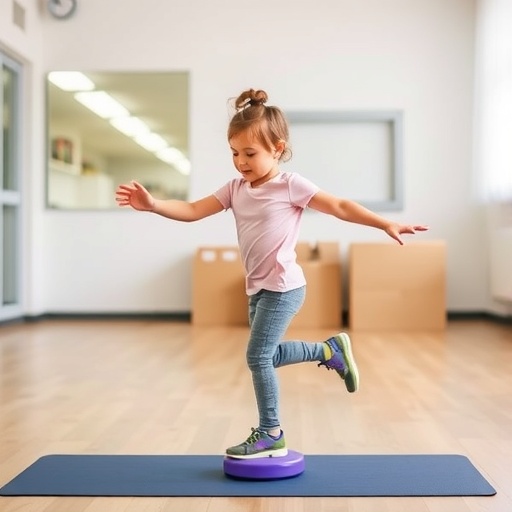
Researchers have long recognized the complexities of spastic cerebral palsy (CP), especially in children who face unique challenges associated with muscle control, balance, and proprioception. A recent groundbreaking study has made waves in the scientific community by investigating the impact of balance training on various surfaces and its subsequent effects on ankle proprioception and functional balance in young children diagnosed with spastic cerebral palsy. This innovative research provides critical insights that could reshape therapeutic strategies aimed at improving the quality of life for these children and their families.
The dynamic interplay between proprioception and balance is crucial for individuals with spastic CP. Proprioception refers to the body’s ability to sense its position and movement in space, which remains crucial for executing coordinated and balanced movements. The study’s authors, led by S. Bezgin, sought to evaluate whether balance training could enhance these sensory capabilities and, by extension, improve the functional balance of children affected by this condition. This effort involved specific training regimens delicately designed to be both safe and effective for young participants.
One of the novel aspects of this study is its focus on different surfaces for balance training. It is commonly understood that varying the training environment can significantly affect physical and sensory outcomes. By employing unstable and stable surfaces, researchers aimed to challenge and improve children’s proprioceptive abilities while simultaneously understanding which environment yielded the best results in terms of balance and control. This customization stands to offer an individualized approach beneficial for advancing rehabilitation practices.
The randomized controlled trial method utilized in the research adds a layer of credibility and rigor to the findings. By employing a single-blind design, the researchers aimed to minimize biases that could skew results, ensuring that evaluations of balance and proprioception were as objective as possible. Such methodological sophistication not only enhances the reliability of the results but also sets a precedent for future studies in the field of pediatric rehabilitation.
Balancing training on different surfaces allows for a deeper engagement of the core stabilizing muscles, something that can be particularly beneficial for children with spastic CP. The research outlines how the training protocol involved exercises performed on both stable surfaces, such as flat ground, and unstable surfaces, like balance boards. This direct engagement provides children with regular opportunities to enhance their proprioceptive feedback mechanisms, which can sometimes be dulled due to the neurological constraints of CP.
Outcomes from the study revealed promising advancements in proprioception and functional balance among participants who underwent balance training. Among the metrics evaluated were postural sway and stability under varied conditions—a critical measure of balance that helps clinicians assess improvement and provide informed recommendations. The measurement tools employed in this research were both robust and appropriate for the pediatric population, utilizing methods that are sensitive to small yet clinically significant changes in balance capabilities.
In analyzing the data, the researchers emphasized that this balance training not only aided participants in maintaining their stability but also contributed to improvements in daily activities and overall independence. For many families affected by spastic cerebral palsy, even small steps toward increased mobility and control can significantly impact quality of life. The ability to engage in physical activities with reduced risk of falls inspires hope and fosters a sense of agency among these children.
The implications of these findings extend beyond the clinic. As knowledge around effective therapeutic strategies expands, there is a growing conversation about the importance of early intervention and regular exercise in managing spastic cerebral palsy. This study reinforces the need for tailored physical therapy programs that incorporate balance training and are adaptable to the needs of individual children. By harnessing the power of physiological responses to different surfaces, therapists can strategically support children’s development across various domains.
It is important to note that the field’s continual evolution requires ongoing research and discourse around the best practices for treating pediatric populations with complex neuromuscular disorders. While this study represents a significant advancement, it opens avenues for further inquiries. Future research could more closely examine the long-term effects of varied balance training protocols or explore additional rehabilitation strategies that encompass comprehensive care for children with cerebral palsy.
Moreover, as communities increasingly strive for inclusive practices, studies like this serve as essential advocacy tools, illustrating the capabilities of children with disabilities when offered the right supportive measures. The anecdotal evidence gathered from participating families echoes the transformative potential of therapy tailored to their children’s needs, reinforcing the importance of research-driven practices in rehabilitation.
In conclusion, the exploration of balance training across different surfaces offers a beacon of hope for children with spastic cerebral palsy. It underscores the significance of proprioception in functional outcomes and emphasizes the necessity for innovative therapeutic strategies that meet individual needs. As additional findings surface, the scientific community will be better positioned to refine interventions and drive forward compelling narratives aimed at improving the lives of children living with spastic cerebral palsy.
In summary, this study encapsulates the convergence of innovative training techniques and critical research methodologies in advancing the understanding and treatment of spastic cerebral palsy in children. It reinforces the profound potential for physical rehabilitation to alter not just the physical capabilities of affected individuals but the broader landscape of their lives and experiences.
Subject of Research: Effects of balance training on proprioception and functional balance in children with spastic cerebral palsy.
Article Title: Effects of balance training on different surfaces on ankle proprioception and functional balance in children with spastic cerebral palsy: a single-blind randomized controlled trial.
Article References:
Bezgin, S., Akkaya, K.U., Çiçek, İ. et al. Effects of balance training on different surfaces on ankle proprioception and functional balance in children with spastic cerebral palsy: a single-blind randomized controlled trial.
BMC Pediatr 26, 3 (2026). https://doi.org/10.1186/s12887-025-06346-5
Image Credits: AI Generated
DOI: https://doi.org/10.1186/s12887-025-06346-5
Keywords: spastic cerebral palsy, balance training, proprioception, randomized controlled trial, pediatric rehabilitation.
Tags: balance training for childrenbalance training on various surfacescoordinated movement challenges in childreneffective training regimens for young participantsenhancing functional balance in kidsimpact of balance training on ankle proprioceptioninnovative research in pediatric rehabilitationproprioception improvement techniquesquality of life for cerebral palsy familiessensory capabilities in spastic CPspastic cerebral palsy interventionstherapeutic strategies for cerebral palsy