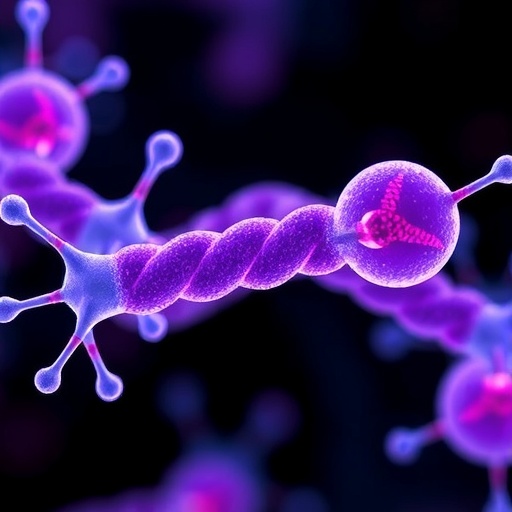
A pioneering study conducted by researchers at Dartmouth College has uncovered a startling mechanism by which bacterial infections may gain formidable resilience against medical treatments. By examining the role of conjugative plasmids within bacterial communities, the team has revealed how these mobile genetic elements facilitate spatial reorganization among bacterial cells, fostering tightly packed clusters that exhibit heightened tolerance to antibiotics. This phenomenon suggests an additional, non-genetic avenue through which bacteria can resist eradication, posing new challenges for clinical strategies aimed at combating infectious diseases.
Plasmids are extrachromosomal DNA molecules capable of autonomous replication inside bacterial hosts. Their notoriety in microbiology stems from their ability to transfer genetic traits, including antibiotic resistance. This transfer occurs via conjugation pili—thin, tube-like appendages that plasmid-bearing bacteria extend to adjacent cells, allowing the physical passage of plasmids from one bacterium to another. These molecular “bridges” effectively interconnect neighboring bacterial cells, enabling profound genetic exchange within biofilms.
Biofilms themselves are dense, surface-attached microbial communities that are notoriously difficult to eliminate with conventional antibiotics. Such structures shield constituent bacteria through multiple protective mechanisms, one of which Dartmouth researchers, led by Carey Nadell, have now illuminated in greater detail. Their work demonstrates that plasmid-driven conjugation does not merely transfer resistance genes but also orchestrates the spatial assembly of biofilms into compact clusters. This physical restructuring enhances the overall biofilm’s resilience to antibiotic treatment, independent of direct genetic resistance within individual cells.
Intriguingly, the research reveals that these plasmid-induced clusters are not limited to mono-species biofilms. By examining interactions among various bacterial species—including Escherichia coli, Salmonella enterica, and Serratia fonticola—the investigators observed that plasmids compel diverse bacteria to integrate into a cohesive community. Such cross-species clustering augments the complexity and robustness of infections, implying that pathogens typically unable to establish biofilms independently might exploit plasmid-mediated community formation to persist within hosts.
The implications for clinical treatments are profound. Antibiotics and novel interventions, such as bacteriophage therapy, traditionally target biofilms from their surface, relying on diffusion gradients and bacterial activity to penetrate effectively. However, dense cell packing mediated by plasmid conjugation creates formidable physical barriers, reducing therapeutic uptake. Additionally, biofilms harbor metabolically inactive “persister” cells that naturally display tolerance toward antibiotics, but plasmid-driven clustering appears to exacerbate this effect by constraining bacterial dispersal and growth dynamics within the biofilm matrix.
Importantly, this form of tolerance does not hinge on classic genetic resistance, such as mutations in antibiotic target sites or enzymatic inactivation of drugs. Instead, plasmids mediate phenotypic changes by restructuring the spatial organization of the microbial community, creating microenvironments where cells survive antibiotic assault passively. As Carey Nadell emphasizes, “We’re not seeing antibiotic resistance based on genetic encoding, which commonly happens. Instead, plasmids can make bacterial cells much more tolerant to harm just by changing how they are arranged in space.”
This discovery was made possible through meticulous experimental studies utilizing Escherichia coli, a model organism well characterized for its role in both environmental and clinical contexts. By introducing a few plasmid-bearing cells into a biofilm, researchers tracked the rapid dissemination of plasmids across the community, leading to almost full-scale plasmid colonization within a mere three-day period. Such findings underscore the efficiency and effectiveness of conjugation in reorganizing bacterial populations.
The biological trade-offs for bacteria involved in this plasmid-mediated clustering, however, are complex. While these dense aggregates enhance antibiotic tolerance, the resulting physical constraints impose fitness costs on bacteria, notably reduced mobility and foraging efficiency. James Winans, the study’s lead author, notes that clustered bacteria tend to become sluggish, limiting their ability to seek new environments—a cost that might counterbalance the survival advantages within the biofilm context.
Further research explored synergy with other microbial taxa, including Candida albicans and Vibrio cholerae. Co-culture experiments illustrated that the presence of different microbes influences plasmid transfer dynamics and biofilm architecture. The polymicrobial nature of many infections means that these findings have broad relevance beyond single-species systems, highlighting how plasmids act as ecological engineers shaping infection landscapes.
Looking ahead, the research team aims to unravel the precise molecular and biophysical mechanisms by which plasmid-enabled clusters impede antibiotic efficacy. A leading hypothesis is that the dense packing slows bacterial metabolism, rendering antibiotics—which typically target actively dividing cells—less effective. Alternatively, physical barriers could directly reduce drug penetration. Understanding these mechanisms will be crucial for devising therapeutic strategies that can disrupt or circumvent plasmid-induced biofilm resilience.
The revelations about plasmids’ dual role—as genetic vectors and architects of microbial community structure—sound a warning about the sophistication of bacterial survival strategies. These findings also suggest that combating bacterial infections may require novel approaches targeting not only the genetic basis of resistance but also the spatial and community-level adaptations that bacteria exploit. Careful investigation of plasmid biology in clinical settings could pave the way for innovative anti-biofilm therapies.
In sum, this Dartmouth-led study enriches our understanding of bacterial conjugation and its impact on infection dynamics. By demonstrating that plasmid-induced restructuring of biofilms confers robust protection against antibiotics—even in bacteria not genetically resistant—the research compels the scientific and medical communities to reconsider existing paradigms of resistance. More than a genetic phenomenon, antibiotic tolerance emerges as a complex, spatially mediated process that demands sophisticated and multi-faceted countermeasures.
Subject of Research: Cells
Article Title: Bacterial conjugation can restructure biofilms and increase their resilience while constraining host cell dispersal
News Publication Date: 15-Dec-2025
Web References: http://dx.doi.org/10.1016/j.cub.2025.11.022
Image Credits: James Winans and Carey Nadell
Keywords: Antibiotic resistance, Bacteriology, Bacterial biofilms, Gram negative bacteria, Parasitic bacteria, Bacteria, Diseases and disorders, Infectious diseases, Acute infections, Coinfection, Microbial infections, Opportunistic infections, Persistent infections, Public health, Escherichia coli, Bacterial infections, Gastrointestinal disorders, Cholera, Salmonella, Biofilms