• HOME
  • NEWS
  • EXPLORE
    • CAREER
      • Companies
      • Jobs
    • EVENTS
    • iGEM
      • News
      • Team
    • PHOTOS
    • VIDEO
    • WIKI
  • BLOG
  • COMMUNITY
    • FACEBOOK
    • INSTAGRAM
    • TWITTER
Saturday, February 7, 2026
BIOENGINEER.ORG
No Result
View All Result
  • Login
  • HOME
  • NEWS
  • EXPLORE
    • CAREER
      • Companies
      • Jobs
        • Lecturer
        • PhD Studentship
        • Postdoc
        • Research Assistant
    • EVENTS
    • iGEM
      • News
      • Team
    • PHOTOS
    • VIDEO
    • WIKI
  • BLOG
  • COMMUNITY
    • FACEBOOK
    • INSTAGRAM
    • TWITTER
  • HOME
  • NEWS
  • EXPLORE
    • CAREER
      • Companies
      • Jobs
        • Lecturer
        • PhD Studentship
        • Postdoc
        • Research Assistant
    • EVENTS
    • iGEM
      • News
      • Team
    • PHOTOS
    • VIDEO
    • WIKI
  • BLOG
  • COMMUNITY
    • FACEBOOK
    • INSTAGRAM
    • TWITTER
No Result
View All Result
Bioengineer.org
No Result
View All Result
Home NEWS Science News Biology

Bacteria: Third RNA binding protein identified

Bioengineer by Bioengineer
January 24, 2018
in Biology, Science News
Reading Time: 2 mins read
0
Share on FacebookShare on TwitterShare on LinkedinShare on RedditShare on Telegram
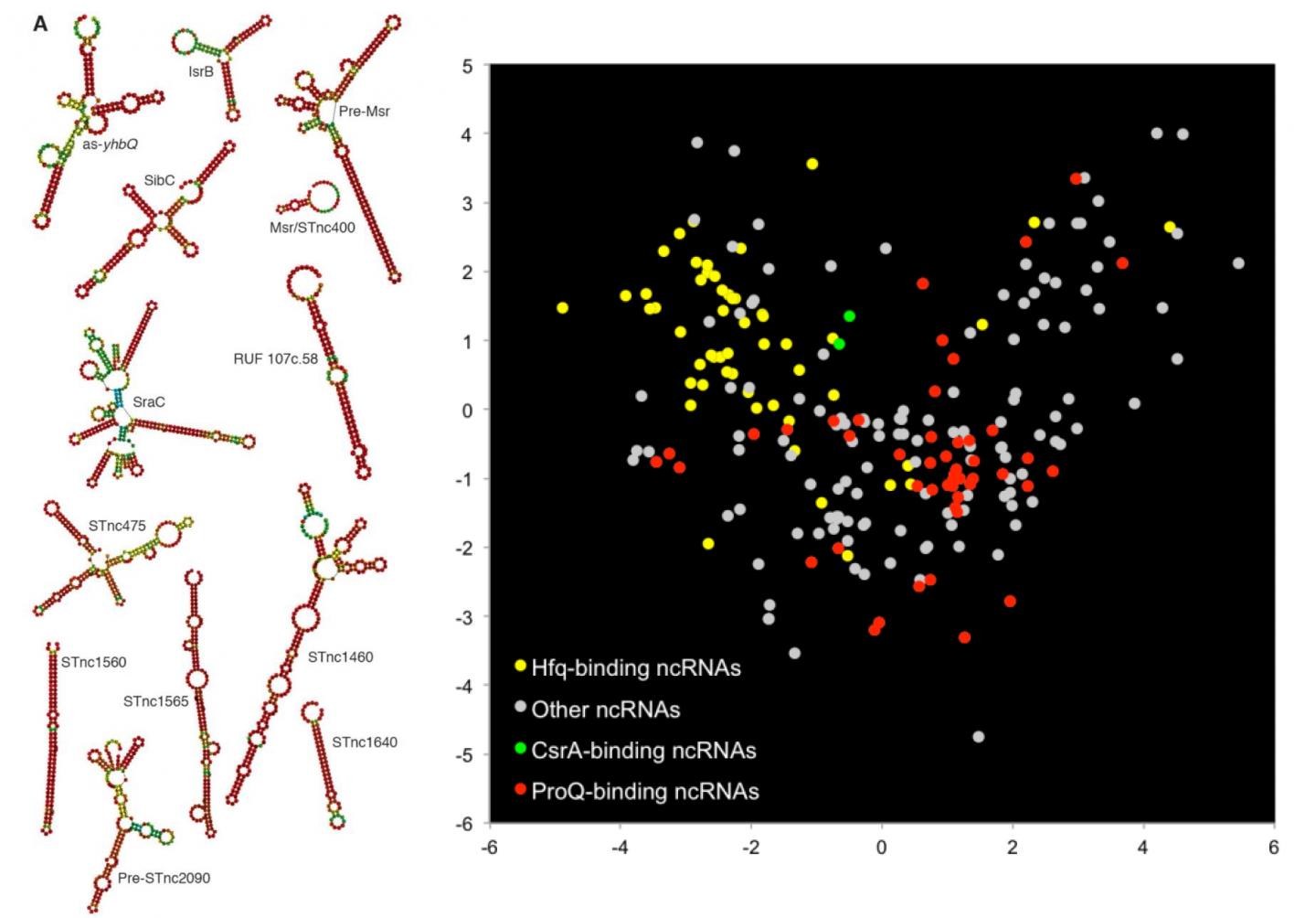
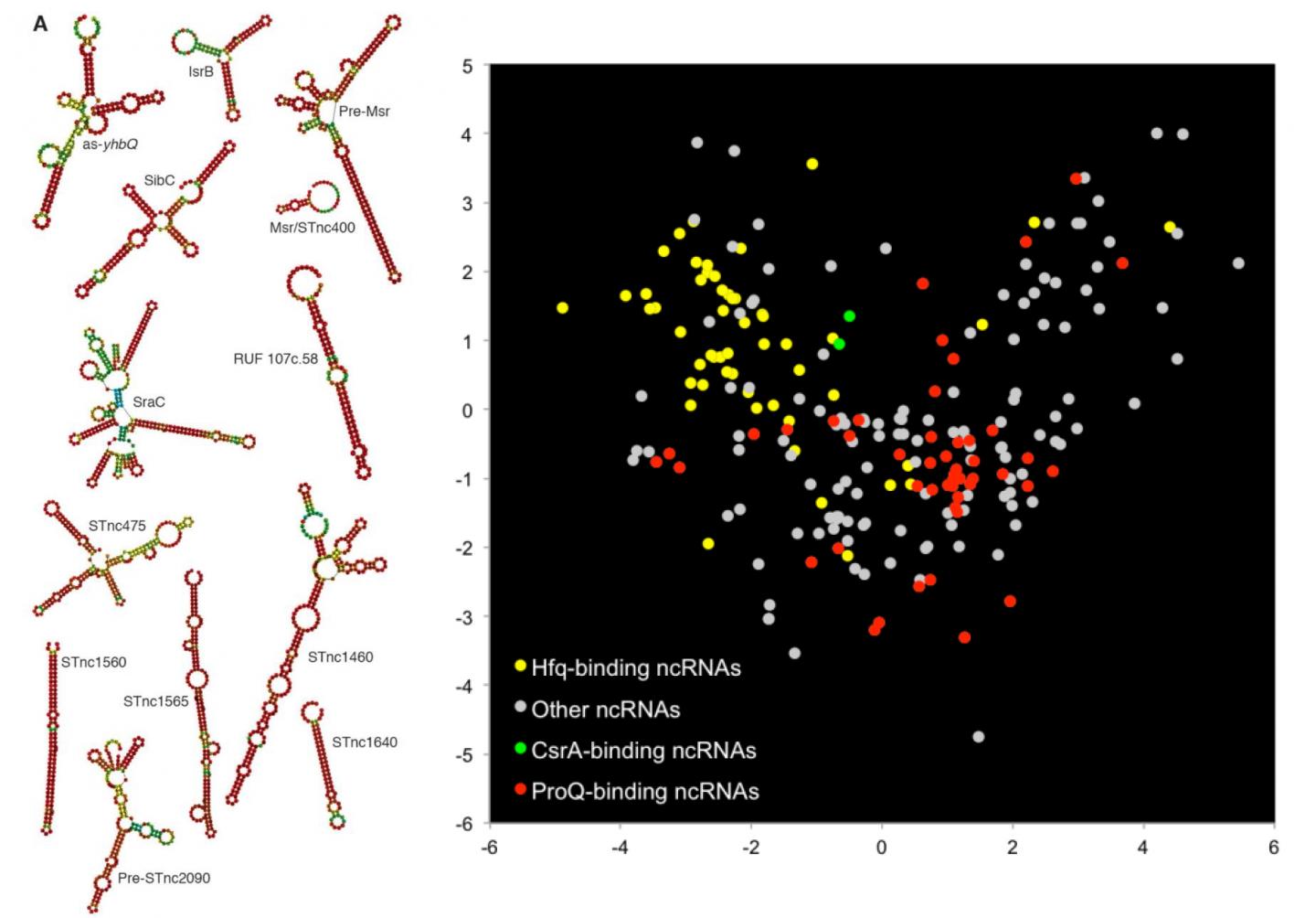
IMAGE

Credit: (Picture: Alexandre Smirnov)

Small regulatory RNA molecules are vital for salmonella and other bacteria potentially harmful to humans: This RNA type controls gene activity and allows bacteria to quickly adjust to changing conditions of living and stress as are typical during an infection, for example, when entering the blood stream or inside human cells.

Professor Jörg Vogel, head of the Institute for Molecular Infection Biology of the Julius-Maximilians-Universität Würzburg (JMU) in Bavaria, Germany, is a pioneer in researching small regulatory RNA molecules. He and his team are determined to get to the bottom of how these molecules work and act. His works could also show new ways to fight pathogens.

ProQ binds nearly 100 regulatory RNAs

New findings from Vogel's team have now been published in the journal PNAS: So far, two proteins (Hfg and CsrA) have been known to bind closely to the bacteria's regulatory RNA molecules and influence their activities. Using a new self-designed method, the Würzburg team has now discovered a long-suspected third protein (ProQ) whose function inside the cell has been unknown until recently.

Experiments showed that the ProQ protein binds to 98 regulatory RNAs of the enterobacterial Salmonella enterica. The bacterium has been found to have around 300 such RNAs in total. Moreover, ProQ seems to have specialised in RNA molecules with a rather complex structure.

This protein and the RNA molecules that bind to it represent a largely unresearched class of gene activity regulators in the bacterial "RNA universe". "It will be particularly exciting to find out how ProQ is able to pinpoint the highly structured RNAs among millions of other RNA molecules in a cell," says Jörg Vogel.

PNAS considers results significant

These results have been reported in PNAS by the Würzburg professor together with Alexandre Smirnov, Konrad Förstner, Erik Holmqvist and Regina Günster as well as colleagues from Greifswald and Cologne. Considered highly significant for bacterial research, the new findings are featured in the journal's "Research Highlight" section.

A new technique developed by the JMU team has successfully tracked down the activities of the ProQ protein. "The methods available so far were subject to certain limits with regard to detecting and generally classifying RNA protein interactions which we have overcome here," Professor Vogel further. Since the new method can basically be applied to any other organism, it is expected to provide more progress in researching regulatory RNA.

###

Media Contact

Dr. Jörg Vogel
[email protected]
49-931-318-2575
@Uni_WUE

https://www.uni-wuerzburg.de/

Share13Tweet8Share2ShareShareShare2

Related Posts

Evaluating Pediatric Emergency Care Quality in Ethiopia

February 7, 2026

TPMT Expression Predictions Linked to Azathioprine Side Effects

February 7, 2026

Improving Dementia Care with Enhanced Activity Kits

February 7, 2026

Decoding Prostate Cancer Origins via snFLARE-seq, mxFRIZNGRND

February 7, 2026
Please login to join discussion

POPULAR NEWS

  • Robotic Ureteral Reconstruction: A Novel Approach

    Robotic Ureteral Reconstruction: A Novel Approach

    82 shares
    Share 33 Tweet 21
  • Digital Privacy: Health Data Control in Incarceration

    63 shares
    Share 25 Tweet 16
  • Study Reveals Lipid Accumulation in ME/CFS Cells

    57 shares
    Share 23 Tweet 14
  • Breakthrough in RNA Research Accelerates Medical Innovations Timeline

    53 shares
    Share 21 Tweet 13

About

We bring you the latest biotechnology news from best research centers and universities around the world. Check our website.

Follow us

Recent News

Evaluating Pediatric Emergency Care Quality in Ethiopia

TPMT Expression Predictions Linked to Azathioprine Side Effects

Improving Dementia Care with Enhanced Activity Kits

Subscribe to Blog via Email

Success! An email was just sent to confirm your subscription. Please find the email now and click 'Confirm' to start subscribing.

Join 73 other subscribers
  • Contact Us

Bioengineer.org © Copyright 2023 All Rights Reserved.

Welcome Back!

Login to your account below

Forgotten Password?

Retrieve your password

Please enter your username or email address to reset your password.

Log In
No Result
View All Result
  • Homepages
    • Home Page 1
    • Home Page 2
  • News
  • National
  • Business
  • Health
  • Lifestyle
  • Science

Bioengineer.org © Copyright 2023 All Rights Reserved.