In a groundbreaking study published in Nature Neuroscience, researchers have unveiled a critical molecular mechanism that governs local protein synthesis in axons, providing new hope for therapeutic intervention in Amyotrophic Lateral Sclerosis (ALS) linked to mutations in the FUS gene. This new research reveals that hypusination of the translation factor eIF5A plays a pivotal role in maintaining axonal health and function, directly influencing the disease phenotypes observed in FUS-ALS models.
The study focuses on eukaryotic initiation factor 5A (eIF5A), a unique translation factor that undergoes a rare post-translational modification called hypusination – the addition of a hypusine residue derived from spermidine. This modification is essential for eIF5A’s activity in facilitating the elongation phase of mRNA translation. Although eIF5A’s global role in protein synthesis has been appreciated, this investigation specifically highlights its axonal function, a previously underexplored area with significant implications for neurodegeneration.
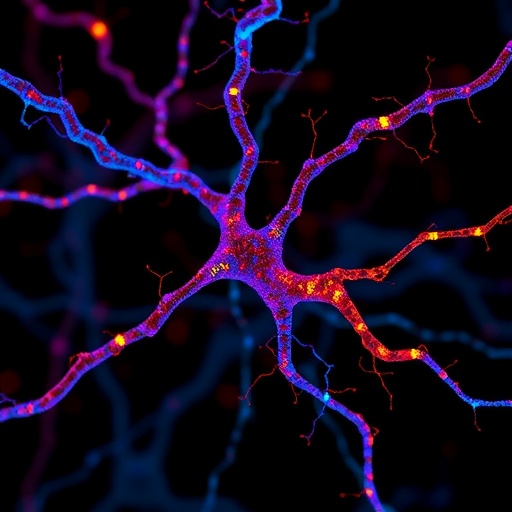
Leveraging advanced molecular biology techniques and innovative axonal isolation systems, the research team was able to demonstrate that hypusinated eIF5A localizes prominently within axons, where it orchestrates the local translation of a subset of mRNAs crucial for maintaining axonal integrity and synaptic functionality. Intriguingly, the authors show that defects in eIF5A hypusination disrupt these localized translation processes, resulting in phenotypes reminiscent of the pathological features observed in FUS-ALS.
FUS, an RNA-binding protein implicated in familial forms of ALS, is known to accumulate aberrantly in neurons, leading to distal axonopathy and motor neuron degeneration. The researchers discovered that in FUS-mutant models, a marked reduction in eIF5A hypusination correlates with impaired axonal translation. This deficit contributes to axonal degeneration and neuromuscular junction dysfunction, both hallmarks of ALS. Crucially, restoring eIF5A hypusination pharmacologically or genetically was sufficient to alleviate these axonal defects and improve neuronal survival.
The mechanistic insights provided by this study shed light on how post-translational modifications can precisely modulate protein synthesis within subcellular compartments, an idea that challenges the traditional view of translation as a purely cytoplasmic, soma-centric process. By demonstrating that eIF5A’s hypusination is an axon-specific regulatory switch, the authors propose a new model wherein local translational control is dynamically modulated to meet the metabolic and structural demands of distal neuronal compartments.
The authors employed a sophisticated combination of in vitro and in vivo models, including cultured primary motor neurons derived from both wild-type and FUS-mutant mice, as well as patient-derived induced pluripotent stem cell (iPSC) motor neurons. Employing cutting-edge ribosome profiling techniques focused on axonal fractions, they cataloged the translational landscape and convincingly showed that hypusination selectively enhances the translation of proteins involved in cytoskeletal stability, mitochondrial function, and stress response pathways — all critical for axonal maintenance and motor neuron viability.
Furthermore, this work underscores the therapeutic potential of targeting the hypusination pathway in neurodegenerative diseases. The study highlights the enzyme deoxyhypusine synthase (DHS), responsible for the initial step of eIF5A hypusination, as a promising drug target. Small molecules that enhance DHS activity or mimic hypusinated eIF5A function were demonstrated to restore axonal translation and ameliorate neurodegenerative phenotypes in experimental models. This discovery opens the door to a new class of interventions aiming to rescue the delicate balance of local protein homeostasis in neurons.
One of the most striking aspects of the paper is the implication of local translational control not just in maintaining normal neuronal function but in actively mitigating pathological processes that drive disease progression. The authors propose that impaired axonal translation may serve as a convergent mechanism in ALS, with eIF5A hypusination acting as a molecular rheostat capable of tuning this process. This insight adds a new layer to our understanding of ALS pathogenesis and provides a novel angle for the development of therapeutic strategies beyond conventional approaches targeting protein aggregation or excitotoxicity.
The study also challenges the existing dogma by illustrating that interventions aimed at restoring eIF5A hypusination specifically within axons can yield beneficial outcomes without globally impacting protein synthesis. This compartmentalized approach to modulating translation is particularly appealing in the context of neurodegenerative disorders, where systemic manipulation of fundamental cellular processes often leads to unintended side effects.
Importantly, the paper highlights that the impaired hypusination of eIF5A is not merely a downstream consequence of FUS mutation but may represent a critical upstream event contributing to pathogenesis. This distinction provides a valuable conceptual framework to understand the temporal sequence of molecular events in ALS and suggests that early therapeutic targeting of eIF5A hypusination could delay or prevent motor neuron degeneration.
From a technical perspective, the researchers’ use of proximity-specific ribosome profiling in isolated axons represents a major methodological advance, enabling an unprecedented resolution in mapping translational dynamics spatially within neurons. This approach can be widely applied to study localized protein synthesis in other neurological conditions and may uncover additional compartment-specific translational regulators.
The implications of this research extend beyond ALS, hinting at broader roles for eIF5A hypusination in neuronal maintenance and plasticity. Given the importance of local translation in synaptic remodeling and regeneration, modulating hypusination pathways could become relevant for treating a spectrum of neurodegenerative and neurodevelopmental disorders where axonal dysfunction is a common denominator.
Future studies will need to explore the detailed molecular interactions through which hypusinated eIF5A selectively enhances the translation of axonal mRNAs, as well as to identify additional modulatory factors influencing this process. Addressing these questions could uncover complex regulatory networks that fine-tune axonal protein synthesis in health and disease.
In conclusion, this seminal paper by Piol and colleagues unravels a heretofore underappreciated layer of translational regulation within axons controlled by eIF5A hypusination. By delineating its essential role in mitigating ALS-associated defects in models of FUS pathology, the study offers novel therapeutic targets and a fresh perspective on the spatial organization of gene expression in neurons. This discovery promises to invigorate ALS research and may catalyze the development of innovative therapies aimed at preserving motor neuron function and improving patient outcomes.
Subject of Research: Molecular mechanisms underlying axonal local translation and its role in FUS-related Amyotrophic Lateral Sclerosis (ALS).
Article Title: Axonal Eif5a hypusination controls local translation and mitigates defects in FUS-ALS.
Article References:
Piol, D., Khalil, B., Robberechts, T. et al. Axonal Eif5a hypusination controls local translation and mitigates defects in FUS-ALS. Nat Neurosci (2025). https://doi.org/10.1038/s41593-025-02101-2
Image Credits: AI Generated
DOI: https://doi.org/10.1038/s41593-025-02101-2
Tags: advanced molecular biology techniquesAxonal health and functionaxonal translation factors and diseaseseIF5A hypusination in neurodegenerationeIF5A’s role in mRNA translationFUS gene mutations and ALSimplications of hypusination in axonal integritylocal protein synthesis in axonsmaintaining synaptic functionality in axonsmolecular mechanisms in neurobiologypost-translational modifications in translationtherapeutic interventions for ALS