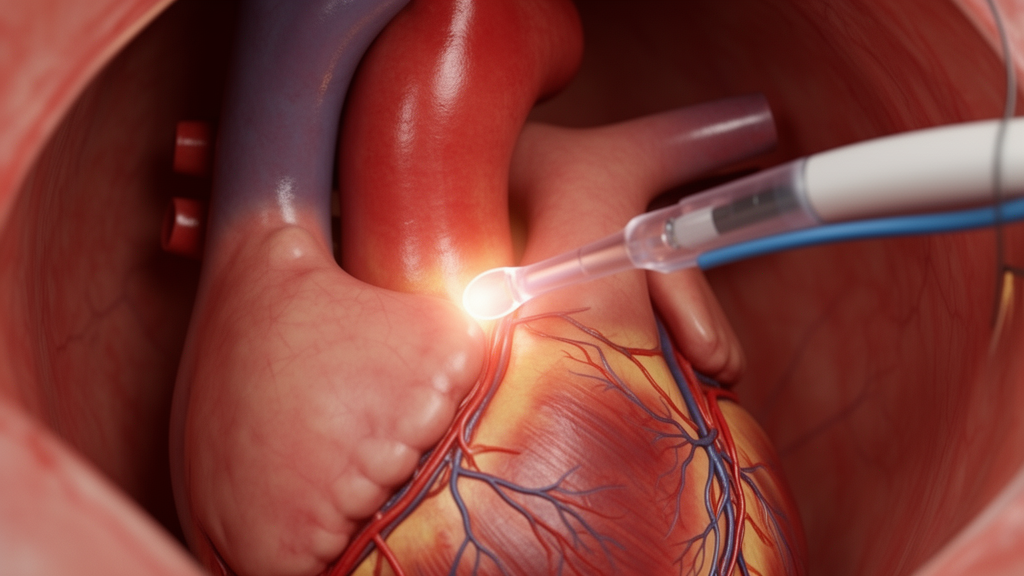
New research evaluating the TactiFlex Sensor Enabled (TFSE) radiofrequency (RF) ablation catheter identifies a novel protocol using averaged impedance drop (AID) as an effective method for achieving pulmonary vein isolation (PVI). In a clinical study of 26 patients with atrial fibrillation, researchers utilized the EnSite X EP system to implement a filtered impedance signal, aiming to address the limitations of cardiac and respiratory oscillation artifacts during traditional ablation monitoring.
Traditional reliance on impedance drop to measure the efficacy of lesion formation during radiofrequency ablation has historically been impeded by external physiological noise.
The study conducted by Akerström et al. enrolled 26 patients diagnosed with atrial fibrillation, comprising 17 individuals with paroxysmal atrial fibrillation and 9 with persistent atrial fibrillation. The research focused on patients undergoing their first-time pulmonary vein isolation procedure. The core objective was to determine whether a standardized protocol—grounded in achieving a specific threshold of percentage averaged impedance drop (%AID)—could consistently yield durable isolation of the pulmonary veins. This design allowed investigators to assess both the immediate clinical success of the ablation procedure and, through mandatory remapping performed at least two months post-ablation, the long-term anatomical durability of the created lesions.
The ablation protocol mandated that practitioners achieve a %AID of 9 or greater at each targeted point, or reach a maximum allowed radiofrequency application time of 20 seconds for anterior vein segments and 10 seconds for posterior segments. Protocol adherence was 93 percent.
The technical outcomes of the procedures were evaluated based on the success of achieving first-pass isolation for each pulmonary vein. The team reported that 85 percent of the left pulmonary veins and 93 percent of the right pulmonary veins reached isolation on the first attempt. The average recorded %AID across all ablations was 9.4 ± 0.98, while the proportion of individual lesions that successfully met or exceeded the 9 percent AID threshold was 62.2 ± 15.5 percent.
To assess the durability of the pulmonary vein isolation, the research team mandated follow-up remapping of all participants at least two months after the initial procedure. The data demonstrated that 93 percent of all pulmonary veins remained isolated, a finding that corresponded to 88 percent of the enrolled patients having durable PVI.
The researchers further analyzed the characteristics of reconnected segments within the pulmonary veins to determine if specific variables could predict which lesions might fail to persist over time. Statistical analysis revealed that inter-lesion distance was significantly different in reconnected segments compared to those that exhibited durable isolation, as evidenced by a Firth logit value of less than 0.001.
In conclusion, the study provides evidence that point-by-point radiofrequency ablation using the TactiFlex Sensor Enabled catheter, when combined with a protocol based on percentage average impedance drop, leads to a high rate of first-pass isolation and durable pulmonary vein isolation.
Subject of Research: Clinical evaluation of a novel impedance-guided radiofrequency ablation protocol for atrial fibrillation treatment.
Article Title: Evaluation of a radiofrequency catheter ablation target based on averaged impedance drop for pulmonary vein isolation
Article References: Åkerström, F., Charitakis, E., Asaad, F., Saygi, S., Svennberg, E., Braunschweig, F., Jensen-Urstad, M., & Drca, N. (2026). Evaluation of a radiofrequency catheter ablation target based on averaged impedance drop for pulmonary vein isolation. Frontiers in Cardiovascular Medicine, 13, Article 1983617. https://doi.org/10.3389/fcvm.2026.1983617
Image Credits: AI Generated
DOI: 10.3389/fcvm.2026.1983617
Keywords: Atrial Fibrillation, Radiofrequency Ablation, Pulmonary Vein Isolation, TactiFlex Sensor Enabled Catheter, Average Impedance Drop, Cardiac Electrophysiology, Ablation Protocol, First-pass Isolation, PVI Durability, EnSite X EP System, Atrial Arrhythmia, Electrophysiology Study, Patient Remapping, Impedance Monitoring, Catheter Ablation Safety, Cardiovascular Medicine, Cardiac Rhythmology, Clinical Cardiology, Ablation Parameters
News Source: Ophelia Keating. (November 16, 2026). Averaged Impedance Drop Protocol Shows 93 Percent Durable Pulmonary Vein Isolation. Scienmag.