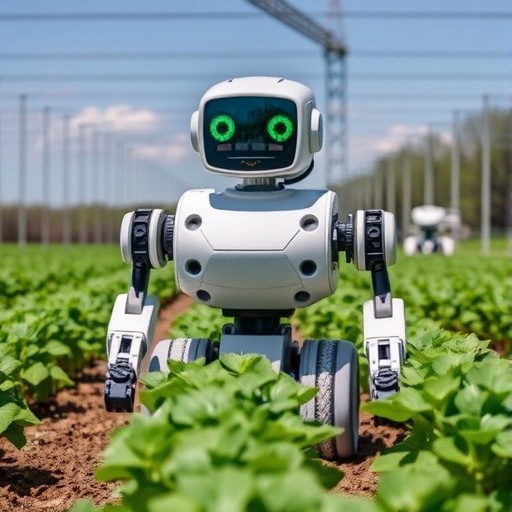
In an era where agricultural efficiency is becoming paramount amid population growth and climate change, the rise of agricultural robotics offers a promising solution. Recent advancements detail a breakthrough in automated plant detection systems, integrating both visual navigation and phenotype recognition. Liu, L., Shen, C., and Wang, L. have spearheaded efforts to enhance the interaction between machines and crops, fostering a future where robots can intelligently manage and evaluate agricultural environments.
The integration of visual navigation in these robots represents a significant leap forward. Unlike traditional systems that rely heavily on pre-programmed routes or simple obstacle avoidance, modern agricultural robots equipped with visual navigation use sophisticated algorithms to interpret their surroundings in real-time. This capability empowers robots to adapt to various terrains, recognize different crop types, and avoid obstacles such as irrigation systems or other machinery. Consequently, these robots can perform tasks with unprecedented accuracy and flexibility, leading to a more efficient agricultural process.
The ability to recognize plant phenotypes is another fundamental aspect of this technology. Phenotype recognition allows robots to assess various characteristics of the plants they encounter, such as height, leaf color, and overall health. By utilizing advanced image processing techniques and machine learning algorithms, these robots can identify plant diseases, monitor growth patterns, and even determine the optimal timing for harvesting. The combination of these features not only streamlines agricultural operations but also allows for data collection that can enhance future planting strategies and crop resilience.
Moreover, the significance of automating these processes cannot be overstated. Researchers have pointed out that human labor in agriculture can be inconsistent and often limited by factors like weather and physical demand. Robots, on the other hand, operate tirelessly, ensuring consistent observation and management throughout the cultivation cycle. This steady monitoring leads to improved data management, which in turn supports better decision-making processes for farmers.
Field trials of these innovative robots have exhibited promising results. During initial tests, its capabilities demonstrated that it could navigate complex field layouts while efficiently detecting and categorizing various plant species. Not only did the robots perform with exceptional accuracy, but they also communicated findings in real-time to a centralized data system, creating a comprehensive overview of the agricultural landscape. Such developments can transform data-driven agriculture into a fully automated operation, reducing reliance on manual labor and enhancing productivity.
Another critical area addressed by the researchers is the environmental impact of agricultural practices. Utilizing automated systems designed for optimal crop management can lessen the investment in chemical pesticides and fertilizers. This shift toward more environmentally conscious methods aligns with global initiatives aimed at sustainable agriculture. By accurately assessing the health of crops, these robots can significantly minimize chemical usage, applying treatments only when necessary. Thus, the technology not only supports better yields but also contributes to a healthier ecosystem.
Furthermore, researchers have emphasized the educational potential of this robotics integration into agriculture. By incorporating real-time data processing and machine learning, students and professionals can learn more about agricultural practices through hands-on experience with cutting-edge technology. This speaks to broader educational initiatives focusing on STEM (Science, Technology, Engineering, and Mathematics) applications, where hands-on learning fuels innovation. Cultivating a new generation of tech-savvy agricultural experts could lead to breakthroughs that continuously enhance food production efficiency.
Nevertheless, the integration of technology raises concerns regarding the job market around agricultural work. While automation promises increased productivity, it also brings the challenge of displacing traditional farming jobs. However, experts argue that the demand for highly skilled workers in the agricultural sector will actually increase, as maintaining such robotic systems requires specialized knowledge. This evolution could lead to the development of new job categories focused on technology management, data analysis, and system maintenance—transforming the agriculture workforce landscape.
In light of these advancements, policymakers and agricultural organizations must collaborate to ensure a responsible and equitable transition to automated systems in agriculture. This would involve training programs for workers affected by automation as well as investment in infrastructure that supports the integration of robotics. Ultimately, adapting to such technologies will significantly influence not just how crops are grown, but also how agricultural stakeholders engage with the land and the economy.
As farmers begin adopting this technology, the initial investment in robotic systems may raise concerns regarding cost-effectiveness. However, it is essential to recognize that the long-term benefits far outweigh initial expenditures. Enhanced precision in crop management can ultimately lead to higher yields and greater profitability. Furthermore, as technology continues to advance, the costs associated with implementing such systems are expected to decrease, making it more accessible for farms of all sizes.
The studies undertaken by Liu, Shen, and Wang represent a profound leap towards the future of agriculture—a sector that has long been rooted in tradition. This blend of visual navigation and phenotype recognition presents a proactive approach to cultivate crops efficiently, effectively, and sustainably. In a world grappling with the challenges of feeding a growing population, innovations in agricultural robotics will undoubtedly play a pivotal role.
In conclusion, the research outlined illustrates a critical juncture for agricultural practices. The merger of technology and agriculture not only holds promise for increased crop yields and efficiency but also encourages sustainable methods that respect our environment. It highlights the importance of continually pushing the boundaries of agricultural science through innovative solutions that address both current and future challenges. As this technology evolves, so too will our understanding of and capability to cultivate the land, ultimately benefiting society as a whole.
Subject of Research: Agricultural robot plant automatic detection integrating visual navigation and phenotype recognition
Article Title: Agricultural Robot Plant Automatic Detection Integrating Visual Navigation and Phenotype Recognition
Article References: Liu, L., Shen, C. & Wang, L. Agricultural robot plant automatic detection integrating visual navigation and phenotype recognition. Discov Artif Intell (2026). https://doi.org/10.1007/s44163-025-00779-8
Image Credits: AI Generated
DOI: 10.1007/s44163-025-00779-8
Keywords: Agricultural robots, plant detection, visual navigation, phenotype recognition, sustainable agriculture, automation, machine learning, agricultural efficiency.
Tags: advanced image processing in farmingagricultural efficiency solutionsautomated agricultural robotsinnovations in agricultural roboticsintelligent agricultural environmentsmachine learning for plant recognitionphenotype detection technologyplant health assessment technologiesreal-time navigation systems for agriculturerobotics in crop managementsmart farming technologiesvisual navigation in agriculture