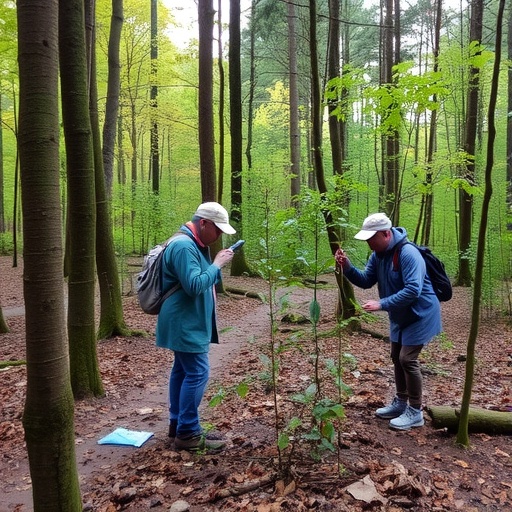
In the heart of Central Ethiopia lies the Muger Zala natural forest, a unique ecosystem buzzing with life and offering invaluable resources to both the environment and local communities. Recent research conducted by a team of dedicated scientists, Asmamaw, M., Fisaha, G., and Wassie, K.B., sheds light on the complex interplay of woody plants that not only contribute to the ecological balance but also reflect the regeneration status of this vital habitat. Their study, published in Sci Rep, delves deep into the composition and structure of these plants, unraveling the ecological dynamics that underpin the survival and sustainability of the forest.
The research design employed by the authors took a holistic approach towards understanding the forest’s woody plant composition. This involved systematic sampling, where various plots within the forest were meticulously surveyed. Parameters such as species diversity, abundance, and the overall structure of the woody flora were cataloged. The outcome revealed a remarkable richness of species, some of which are endemic to the region, highlighting not only biodiversity but also the ecological significance of the Muger Zala forest in the face of environmental changes.
A critical aspect of the research was the assessment of plant community structure and its implications for ecological resilience. Each plant species plays a crucial role in maintaining the health of the ecosystem, and their structural arrangement can affect resource availability and inter-species interactions. The team utilized advanced statistical models to analyze the data collected, which provided a clear picture of how these plant communities function collectively. Their findings suggest that certain species not only coexist but also actively support one another, creating a robust network that contributes to ecosystem stability.
In addition to investigating composition and structure, the study also focused on the regeneration status of the woody plants. The researchers meticulously examined various regeneration strategies employed by different species, such as seed dispersal mechanisms and vegetative propagation. This examination is vital, as understanding regeneration can provide insights into potential threats posed by climate change and human encroachment. The findings indicated that while some species are thriving, others are struggling to reproduce adequately, raising concerns about their long-term viability.
The methodological rigor of this study extended to environmental assessments as well. Researchers identified key environmental factors, such as soil type, moisture levels, and light availability, influencing plant growth and distribution within the forest. This interconnectedness underscores the notion that protecting the Muger Zala forest goes beyond merely preserving the trees; it involves safeguarding the intricate web of life that sustains these woody plants.
Tackling human impact was another significant dimension of the study. Anthropogenic activities, including logging and agricultural expansion, pose a substantial threat to forest ecosystems. The authors of this research drew correlations between human encroachment and alterations in plant composition and regeneration patterns. They argued for the need for sustainable management practices to mitigate these impacts and ensure the longevity of natural forests like Muger Zala.
Communication of research findings is essential for fostering awareness regarding environmental issues. The authors effectively contextualized their results within broader discussions on conservation strategies and sustainable land use. By articulating the ecological importance of the Muger Zala forest, they aim to unite stakeholders, including policymakers, conservationists, and local communities, in a shared effort to protect this invaluable resource.
In pursuit of a proactive conservation approach, the researchers also suggested establishing community-based management systems. Such initiatives could empower local populations, providing them with the tools and resources needed to protect their environment. The interplay between conservation goals and local livelihoods is a delicate balance, but the authors believe that empowering communities can pave the way for sustainable practices that benefit both the ecosystem and its human inhabitants.
As climate change continues to exert pressure on ecosystems worldwide, the research conducted on the Muger Zala forest holds relevant lessons for similar ecosystems in different geographical contexts. The methodologies and findings could inform conservation efforts on a global scale. Furthermore, this study contributes to the urgent dialogue surrounding global biodiversity loss and the need for informed action plans.
The implications of the research extend to various disciplines, including ecology, forestry, and environmental management. For scientists, these findings provide a framework to explore further hypotheses concerning species interactions and ecological dynamics. For policymakers, the research offers empirical evidence crucial for formulating effective environmental policies aimed at safeguarding vital habitats.
In conclusion, the work done by Asmamaw, Fisaha, and Wassie serves as a vital reminder of the interconnectedness of nature and human activities. By investigating the woody plant composition, structure, and regeneration status of the Muger Zala natural forest, they have not only highlighted the richness of this ecosystem but also underscored the urgency of preserving it. The intricate balance of life in Muger Zala reflects a larger narrative about our planet’s ecological health, calling all of us to take action in nurturing and protecting the natural environments that sustain us.
As we navigate the challenges posed by population growth and climate change, studies like this one from Central Ethiopia stand at the forefront of conservation science, merging rigorous methodology with a clear message of responsibility. The survival of such ecosystems depends on our collective efforts to understand and protect them for future generations, making this research not just a scientific contribution, but a rallying cry for environmental stewardship.
Subject of Research: Woody plants composition and regeneration status of Muger Zala natural forest in Central Ethiopia.
Article Title: Woody plants composition, structure and regeneration status of Muger Zala natural forest, Central Ethiopia.
Article References:
Asmamaw, M., Fisaha, G. & Wassie, K.B. Woody plants composition, structure and regeneration status of Muger Zala natural forest, Central Ethiopia. Sci Rep (2025). https://doi.org/10.1038/s41598-025-33509-2
Image Credits: AI Generated
DOI: 10.1038/s41598-025-33509-2
Keywords: Woody plants, composition, regeneration, ecological dynamics, biodiversity, environmental sustainability, Central Ethiopia.
Tags: Central Ethiopia biodiversityecological balance in forest ecosystemsecological dynamics of woody floraendemic species of Muger Zalaenvironmental sustainability in forestsimpact of environmental changes on forestsMuger Zala forest ecosystemplant community structure analysisregeneration status of natural habitatsspecies diversity in Ethiopian forestssystematic sampling methods in ecologywoody plant assessment research