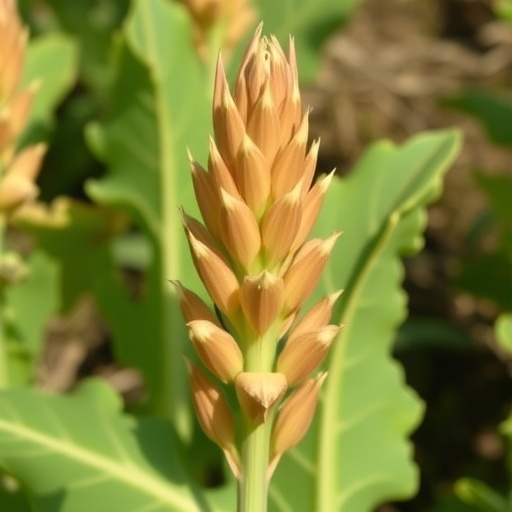
The intricate relationship between agricultural practices and the resilience of crops in the face of environmental stressors is an ever-relevant topic in the field of agronomy. Recent developments have shed light on the vexing challenges posed by parasitic weeds, particularly the Egyptian broomrape (Orobanche aegyptiaca), which poses a significant threat to tobacco cultivation. A comprehensive evaluation by Sabaghnia, Ranjbar, and Maleki offers profound insights into the stress tolerance exhibited by various tobacco genotypes when confronted with this formidable adversary. This exploration not only adds a layer of understanding to stress tolerance but also underscores the agricultural implications of these findings.
With increasing global concern over food security and crop yield stability, the research into stress tolerance is a timely endeavor. The study highlights how different tobacco genotypes respond to infestations of Egyptian broomrape, a weed notorious for its parasitic lifestyle that drains vital nutrients and water from host plants. For tobacco farmers, the ramifications of broomrape infestation can be devastating, leading to reduced yields and compromised crop quality. It is within this context that the research conducted by Sabaghnia et al. becomes a cornerstone for future agronomic strategies.
What makes this study noteworthy is its methodological approach in determining the various indices of tolerance. The researchers applied multiple tolerance indices which include the Stress Tolerance Index (STI), Mean Productivity (MP), and the Geometric Mean Productivity (GMP). These indices are crucial for evaluating how well different genotypes withstand stress, each taking into account varying dimensions of plant resilience. By employing this multifaceted approach, the researchers were able to comprehensively assess the performance of each tobacco genotype under stress conditions brought on by the Egyptian broomrape.
The findings of this study reveal not only which tobacco genotypes are more resilient but also how these genotypes maintain physiological and phenological functions in the presence of stress. This is significant for agronomists and farmers who are on the lookout for robust crop varieties that can thrive even in challenging conditions. Stress tolerance in plants often relates back to their physiological mechanisms, including photosynthesis efficiency, nutrient absorption rates, and overall metabolic responses. By understanding these underlying mechanisms, the research paves the way for breeding initiatives aimed at developing stress-resistant tobacco crops.
Furthermore, the implications of this research extend beyond just tobacco cultivation and have potential applications across various crops susceptible to broomrape. The methodologies and indices utilized by the authors could be adopted in similar studies, facilitating a broader understanding of plant stress responses and resilience mechanisms. As agricultural practices evolve, insights gained from these kinds of investigations will be pivotal for developing sustainable agricultural systems capable of withstanding environmental challenges.
As climate change continues to challenge agricultural productivity worldwide, the findings presented by Sabaghnia and colleagues underscore the necessity of embracing scientific research to inform best practices in crop management. With rising temperatures and erratic weather patterns contributing to plant stress, the urgent need for resilient crop varieties becomes increasingly apparent. The research not only addresses the current challenges faced by growers but also sets the stage for future investigations aimed at unraveling the complexities of plant interactions with parasitic weeds.
Understanding the dynamics of weed-crop relationships can guide farmers in making informed decisions regarding crop choices and management strategies. The work of Sabaghnia, Ranjbar, and Maleki provides a foundation for further exploration into genetic and agronomic approaches that can enhance stress tolerance in crops universally impacted by parasitic weeds. Such explorations may also yield innovative management practices that could considerably mitigate the economic impacts of weed infestations.
Moreover, the research emphasizes the importance of interdisciplinary approaches. The integration of plant genetics, agronomy, and ecology could yield robust solutions to combat challenges posed by weeds like Egyptian broomrape. Collaborative efforts among scientists, agricultural practitioners, and policymakers will be essential to translating insights from research into practices that can be adapted across diverse agricultural landscapes.
As the world strives toward improving agricultural sustainability, studies like that of Sabaghnia et al. serve as critical reminders of the intricate connections between plant health and environmental factors. As more growers face the dual pressures of weed competition and climate variability, the need for adaptive strategies backed by rigorous scientific inquiry remains paramount. The dialogue between research and practical application must be sustained to forge pathways toward resilient and productive agricultural systems.
In conclusion, the exploration of Egyptian broomrape stress tolerance in tobacco genotypes marks a significant stride in agricultural research, offering hope and direction to farmers grappling with the persistent challenges posed by parasitic weeds. This vital research not only expands the existing body of knowledge but also ignites conversation around the future of crop resilience in the face of incoming ecological shifts. The commitment to research and innovation will ultimately be key to safeguarding agricultural productivity for generations to come.
Subject of Research: Stress tolerance in tobacco genotypes against Egyptian broomrape weed.
Article Title: Evaluation of Egyptian broomrape weed stress tolerance in tobacco genotypes through various indices of tolerance indices.
Article References: Sabaghnia, N., Ranjbar, R. & Maleki, H.H. Evaluation of Egyptian broomrape weed stress tolerance in tobacco genotypes through various indices of tolerance indices.
Discov. Plants 2, 368 (2025). https://doi.org/10.1007/s44372-025-00426-7
Image Credits: AI Generated
DOI: https://doi.org/10.1007/s44372-025-00426-7
Keywords: Egyptian broomrape, tobacco genotypes, stress tolerance, agronomy, crop resilience.
Tags: agricultural strategies against broomrapeagronomy and crop resiliencecrop quality and yield reductionEgyptian broomrape infestation effectsenvironmental stressors in farmingfood security and crop yieldinsights into tobacco farming practicesparasitic weeds impact on agricultureresearch on agricultural practicesstress tolerance evaluation methodstobacco cultivation challengestobacco genotypes stress tolerance