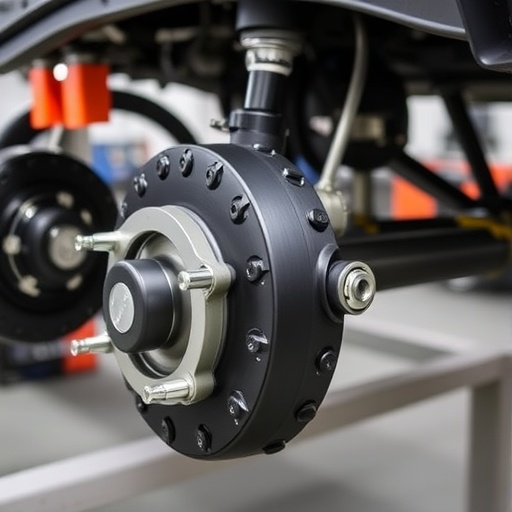
In recent years, the automotive industry has seen a significant shift towards electric vehicles (EVs), driven by advancements in battery technology, changing consumer preferences, and increasing environmental regulations. Among the various components that influence the performance and comfort of these vehicles, the suspension system plays a crucial role, particularly in ensuring ride quality. A recent study by researchers Niessing and Fang delves into this topic by evaluating the ride quality of a multi-link torsion axle designed for battery electric vehicles (BEVs).
Dynamic performance and passenger comfort are foundational elements in vehicle design. The suspension system, tasked with absorbing shocks from the road, must effectively manage both the dynamics of the vehicle and the comfort of the occupants. In traditional internal combustion engine vehicles, the design and tuning of the suspension are often driven by weight distribution and engine placement, factors that are less pronounced in battery electric vehicles, where the center of mass is generally lower due to the placement of batteries in the chassis. The research conducted by Niessing and Fang aims to capitalize on this design difference to achieve superior ride quality in BEVs.
The study presents a comprehensive approach to measuring ride quality through objective metrics, moving beyond subjective assessments that have historically plagued automotive evaluations. By employing advanced measurement techniques, the researchers were able to quantify the performance of the multi-link torsion axle under various operational scenarios. This methodology is critical for creating an accurate picture of how occupants perceive ride quality, as it provides data that can be replicated and analyzed.
One of the standout features of the multi-link torsion axle is its ability to decouple the handling characteristics from the ride comfort. This is achieved by allowing the axle design to flex in multiple directions, which smooths out the impacts of road irregularities while maintaining vehicle stability during cornering and rapid maneuvers. The study showcases how incorporating multiple linkages can create a suspension system that adapts more dynamically to differing driving conditions, leading to an improved overall experience for passengers.
Furthermore, the research emphasizes the significance of suspension tuning, which can vary greatly between different vehicle platforms. A tailored approach to tuning the suspension setup for BEVs is pivotal in maximizing their potential. Through various experiments, the authors explored different configurations of the multi-link torsion axle, adjusting parameters such as spring rates and damping characteristics. The findings indicate that specific tuning can lead to marked improvements in both handling and ride comfort.
Another critical aspect highlighted in the research is the influence of different driving conditions on ride quality. The study found that factors such as road surface, speed, and vehicle load can significantly affect how the suspension behaves. By testing the multi-link torsion axle across a variety of conditions, the researchers provided vital insights into optimizing suspension setups for urban driving versus highway cruising, each with its unique demands.
The implications of the study extend beyond merely enhancing passenger comfort; they also touch on safety and overall vehicle performance. A well-designed and tuned suspension system can significantly improve vehicle handling, which is essential for maintaining control during emergency maneuvers. The research findings suggest that a better suspension setup can lead to a decrease in stopping distances and an increase in overall stability during adverse conditions.
Market trends suggest that consumers are increasingly prioritizing ride comfort when selecting electric vehicles. As manufacturers strive to differentiate their offerings in a competitive landscape, the work of Niessing and Fang provides a roadmap for achieving superior ride quality through innovative suspension design. By leveraging advanced engineering principles, manufacturers can create electric vehicles that not only meet stringent performance metrics but also enhance the driving experience on a qualitative level.
Moreover, the research resonates with the broader movement towards sustainable transportation. As the automotive industry pivots towards renewable energy sources, the integration of efficient and comfortable suspension systems becomes even more pertinent. The better the ride quality, the more appealing the vehicle becomes to potential buyers, further driving the adoption of EVs and contributing to global sustainability goals.
In summary, the objective ride quality evaluation of a multi-link torsion axle for battery electric vehicles presents a promising pathway towards enhancing the driving experience in an era of electric mobility. The comprehensive methodology employed by Niessing and Fang sheds light on the intricate balance between comfort, performance, and safety in vehicle design. By harnessing the power of objective measurements and advanced engineering, the findings signify an important step forward in creating future-ready electric vehicles that both satisfy consumer demands and support sustainable practices.
As the automotive industry continues to evolve, studies like that of Niessing and Fang are invaluable for informing future advancements in electric vehicle technology. With continuous improvements in components such as the multi-link torsion axle, it is evident that the future of transportation is not only about greener solutions but also about the quality of the journey itself. This research ultimately lays the foundation for ongoing innovation, ensuring that as we transition to electric mobility, we do so without compromising on comfort or performance.
The commitment to enhancing ride quality in battery electric vehicles represents a significant step forward in the automotive sector’s evolution. By focusing on engineering solutions that prioritize passenger experience, we can expect a new generation of electric vehicles that redefine the standard for long-term usability and driving enjoyment. As the industry embraces these advancements, consumers can look forward to more comfortable, safe, and efficient rides in the years to come.
In conclusion, the multi-link torsion axle represents much more than just an engineering solution; it is a testament to the dedication of researchers and manufacturers alike toward improving the electric vehicle landscape. With ongoing research and development informed by objective data, the automotive industry is poised to provide consumers with the rides of tomorrow, today.
Subject of Research: Evaluation of a multi-link torsion axle for ride quality in battery electric vehicles.
Article Title: Objective ride quality evaluation of a multi-link torsion axle for battery electric vehicles.
Article References:
Niessing, T., Fang, X. Objective ride quality evaluation of a multi-link torsion axle for battery electric vehicles. Automot. Engine Technol. 10, 6 (2025). https://doi.org/10.1007/s41104-025-00149-7
Image Credits: AI Generated
DOI: https://doi.org/10.1007/s41104-025-00149-7
Keywords: Battery Electric Vehicles, Ride Quality, Multi-Link Torsion Axle, Suspension Systems, Vehicle Dynamics.
Tags: advanced suspension technology researchautomotive industry trends towards electrificationdynamic performance in EV designelectric vehicle suspension innovationsevaluating ride quality metricsimpact of battery placement on vehicle dynamicsmulti-link torsion axles in electric vehiclesNiessing and Fang ride quality studyoptimizing ride quality in BEVspassenger comfort in electric carsride quality assessmentsuspension systems for battery electric vehicles