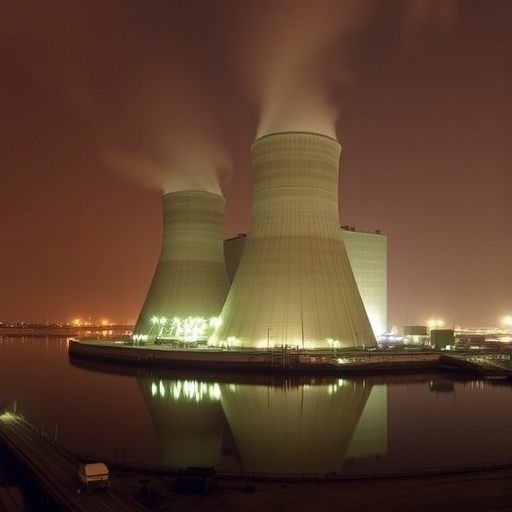
In a groundbreaking study set to reshape our understanding of environmental safety regarding fossil fuel power stations, a team of researchers from Egypt has unveiled significant findings related to radiological and radioecological risks. The investigation, spearheaded by scientists Elgingihy, S.M., Abdelsalam, A.A., and Saleh, I.H., primarily focused on the West Delta fossil-fuel power station. Their research, published in the journal Scientific Reports, brings to light critical insights that could inform future energy projects and environmental assessments.
Fossil fuel power stations, which have long been a cornerstone of energy production in many nations, are increasingly scrutinized for their potential environmental impacts. The study at hand probing the West Delta site serves as a case in point, illustrating that while these facilities are essential for meeting energy demands, they may also pose significant risks to public health and the surrounding ecosystems. The authors take a keen interest in the radiological aspects within a specific geographical context, emphasizing not only local health implications but also broader ecological consequences.
Utilizing advanced methodologies, the researchers conducted comprehensive sampling of soil, water, and vegetation in the vicinity of the West Delta power station. Their multi-faceted approach aimed to evaluate the levels of naturally occurring radioactive materials, specifically Uranium-238 and Radium-226. Notably, these radionuclides can migrate within the environment, leading to potential bioaccumulation in food chains and raising alarms regarding public exposure. The implications of their findings stretch beyond local borders, with the potential for informing policy-makers on safe practice standards across similar energy infrastructures globally.
In assessing the local population’s exposure levels, the team measured the external gamma radiation from soil and the radiological quality of groundwater supplies. Groundwater is a critical resource in Egypt, and any radioactivity could jeopardize the health of the communities that rely on it. The meticulous structure of their study encompassed parameters such as dose rates, which are crucial for understanding the potential health ramifications for residents and local flora and fauna.
The results indicated a concerning trend wherein certain samples exceeded the recommended safety limits set by international health organizations. This finding raises pivotal questions about regulations and monitoring practices at fossil fuel facilities. If the findings are reflective of broader systemic issues, stakeholders in the energy sector may need to re-evaluate operational protocols to mitigate potential harm to both the environment and community health.
The implications of these radiological assessments invariably touch on public health dialogue. With a heightened awareness of environmental contaminants, particularly in energy-producing environments, the need for accountability and transparency becomes ever more pressing. The researchers advocate for routine assessments and an immediate re-evaluation of risk mitigation strategies, particularly in areas where fossil fuel production is paramount. Their call to action emphasizes that ongoing monitoring is essential to ensure that protective measures keep pace with technological advancement in energy production.
Furthermore, the study sheds light on a critical intersection of science and policy. The authors emphasize the importance of governmental engagement with scientific findings to enact regulations that not only safeguard public health but also promote ecological integrity. The energy sector must navigate complex environmental challenges, and as such, there exists an urgent need for evidence-based policymaking that incorporates scientific insights like those presented in this study.
Another vital component of the researchers’ findings pertains to communities dependent on the West Delta power station for employment. The economic ramifications of altering fossil fuel operations must also be weighed against the environmental repercussions of continued harmful practices. This tension reveals the multifaceted challenges faced by policymakers who encompass various stakeholders aiming for sustainable growth amidst technological reliance on fossil fuels.
As the demand for energy continues to escalate, the urgency for cleaner and safer production methods becomes paramount. The researchers highlight the significance of transitioning toward renewable energy sources as part of a wider strategy to mitigate radiological risks. This shift is not only environmentally prudent but is also increasingly becoming an economic imperative as the world grapples with the impacts of climate change and sustainability.
The findings from the West Delta case contribute valuable empirical data to the ongoing global dialogue about energy production and its ramifications. While the researchers have provided a critical assessment of the radiological landscape, their study also serves as a model for other nations to conduct similar inquiries into the environmental impact of fossil fuel facilities around the globe.
In conclusion, the research conducted by Elgingihy, Abdelsalam, and Saleh presents a clarion call for increased vigilance concerning the operations of fossil fuel power stations. Their work serves as a reminder that health and environmental safety cannot be sacrificed for the sake of electricity generation. As scientific inquiry continues to shed light on these issues, it is the responsibility of policymakers to heed these insights for the betterment of public health and ecological sustainability.
Ultimately, the study exemplifies how science can lead the charge toward a more informed energetic future. The collaboration of rigorous research and responsive policy can pave the way for safer energy practices, ensuring that future energy demands are met without compromising community wellness or environmental health.
As the world grapples with complex environmental challenges, the findings from this research exemplify a crucial step toward ensuring that fossil fuel reliance transitions into a model that prioritizes safety, health, and ecological integrity.
Subject of Research: Radiological and radioecological risks associated with fossil-fuel power stations.
Article Title: Radiological and radioecological risk assessment around the West Delta fossil-fuel power station in Egypt.
Article References:
Elgingihy, S.M., Abdelsalam, A.A. & Saleh, I.H. Radiological and radioecological risk assessment around the West Delta fossil-fuel power station in Egypt.
Sci Rep (2025). https://doi.org/10.1038/s41598-025-31092-0
Image Credits: AI Generated
DOI: 10.1038/s41598-025-31092-0
Keywords: radiological risks, radioecological assessment, fossil fuel power stations, environmental safety, public health, renewable energy.
Tags: advanced methodologies in environmental researchecological consequences of fossil fuel powerenergy project environmental assessmentsenvironmental safety in fossil fuel energyfossil fuel energy and environmental scrutinyimpact of uranium on ecosystemslocal health risks from power stationspublic health implications of energy productionradioecological risks assessmentradiological risks in power stationssampling of radioactive materials in EgyptWest Delta Power Station study