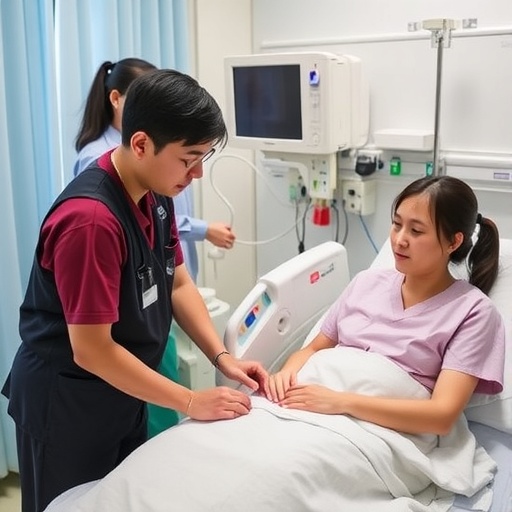
In a thought-provoking examination of the state of occupational therapy practices within the intensive care unit (ICU) environment, a thorough study has been conducted focusing on healthcare professionals in Jiangsu Province, China. This exploration led by a collaborative team, including notable researchers Dong, Tang, and Zhang, provides crucial insights into the knowledge, attitudes, and practices of occupational therapy in critical care settings. Occupational therapy, often misunderstood, plays a vital role in rehabilitation and recovery. Yet, its implementation among ICU practitioners remains inconsistent, emphasizing a need for further investigation.
The researchers framed their study within a pressing context: as the demand for specialized care in ICUs grows, the necessity for multidisciplinary approaches to patient rehabilitation becomes increasingly significant. Occupational therapy has the potential to enhance recovery by addressing both physical and cognitive limitations that patients face after critical illnesses. However, the extent to which ICU professionals are aware of these benefits varies significantly, underscoring the necessity for targeted educational efforts in this area.
What drove the researchers to embark on this cross-sectional study was not only a lack of awareness surrounding occupational therapy but also the influence of various factors that may contribute to this discrepancy. The study meticulously outlines the current understanding of occupational therapy among ICU staff, which is pivotal for improving patient outcomes. Through comprehensive surveys and interviews, the researchers gathered data that shed light on how knowledge is disseminated and the prevalent attitudes towards integrating occupational therapy into everyday practices in ICU settings.
Among the alarming findings is the significant gap in foundational knowledge regarding occupational therapy among ICU professionals. Although many practitioners recognized the general philosophy of occupational therapy, their understanding of its practical applications was notably superficial. This gap can lead to missed opportunities for patient-centered interventions that could significantly impact recovery trajectories. The study calls for an urgent need for tailored educational programs aimed at fostering a better understanding of how occupational therapy can be harmoniously integrated into critical care routines.
Moreover, the study highlights several factors influencing healthcare professionals’ attitudes towards occupational therapy. Job stress, workload, and institutional support play critical roles in shaping how practitioners perceive and utilize occupational therapy. While some professionals may view it as an essential adjunct to care, others may regard full integration as impractical amidst their already overwhelming responsibilities. This dichotomy reveals a clear need for systemic changes within healthcare settings that prioritize interdisciplinary collaboration and resource allocation to foster a culture that embraces occupational therapy.
Interestingly, the research also delves into the perceived benefits of occupational therapy for ICU patients. Many healthcare professionals acknowledged that patients who receive such therapy tend to exhibit improved functional outcomes, reduced lengths of stay, and heightened overall satisfaction with their care. Nonetheless, despite this recognition, the practical application of occupational therapy often falls short due to a lack of established protocols and evidence-based guidelines outlining its incorporation into daily ICU routines.
The analysis further brings to light the resistance to change that often characterizes hospital environments. Given the ingrained practices existing within many institutions, introducing novel concepts such as occupational therapy can encounter significant hurdles. Cultural resistance can lessen the enthusiasm for adopting interdisciplinary practices, potentially stymieing the efforts aimed at improving patient recovery through comprehensive care models.
As the research progresses, the authors emphasize the crucial role of leadership within healthcare institutions to advocate for and implement effective occupational therapy programs. Leaders can take the initiative in crafting policy changes that highlight the importance of occupational therapy and allocate resources to facilitate training and practical application in ICUs. They maintain that empowering staff through education and providing appropriate tools is critical in bridging the knowledge-to-practice gap identified in their findings.
The implications of this study extend beyond Jiangsu Province, resonating with global healthcare practices. Countries around the world face similar challenges in integrating occupational therapy into critical care protocols. As healthcare systems evolve, the findings underscore the paramount importance of collaboration and communication among health disciplines. A collective approach can dismantle the silos often present in patient care, ultimately leading to enhanced outcomes and quality of life for critically ill patients.
As this study garners attention, the conversation surrounding the role of occupational therapy in ICUs is bound to intensify. Advocacy for multidisciplinary healthcare programs that prioritize patient-centered approaches will gain momentum. The integration of occupational therapy not only promises to enrich the care provided but also aligns with the contemporary shift towards recognizing the holistic needs of patients.
As we look toward the future, integrating occupational therapy into ICU practices may be one of the pivotal strategies to transform patient care radically. The findings serve as a clarion call for healthcare professionals worldwide to reevaluate their approaches, embrace change, and cultivate a landscape where every patient’s unique needs are acknowledged and met.
In conclusion, this pathbreaking research captures the essence of the challenges and opportunities associated with occupational therapy within critical care environments. It advocates for continued exploration into educational initiatives that can empower ICU professionals, ultimately leading to heightened awareness and integration of essential therapeutic practices into patient care. The discussion continues, and as awareness spreads, the hope remains that every ICU can harness the benefits of holistic care methodologies.
Subject of Research: Knowledge, attitude, and practice of occupational therapy among ICU healthcare professionals.
Article Title: Research on the current status and influencing factors of knowledge, attitude and practice of occupational therapy among ICU healthcare professionals in Jiangsu Province: a cross-sectional study.
Article References:
Dong, C., Tang, J., Zhang, T. et al. Research on the current status and influencing factors of knowledge, attitude and practice of occupational therapy among ICU healthcare professionals in Jiangsu Province: a cross-sectional study.
BMC Health Serv Res (2026). https://doi.org/10.1186/s12913-025-13843-x
Image Credits: AI Generated
DOI: 10.1186/s12913-025-13843-x
Keywords: Occupational therapy, ICU, healthcare professionals, knowledge, attitudes, practices.
Tags: critical care rehabilitation practiceshealthcare education and traininghealthcare professionals knowledge assessmentICU patient recovery strategiesimproving patient outcomes in ICUinterdisciplinary approach in healthcareJiangsu Province occupational therapymultidisciplinary healthcare challengesoccupational therapy awareness in Chinaoccupational therapy in ICUoccupational therapy role in critical careunderstanding occupational therapy benefits