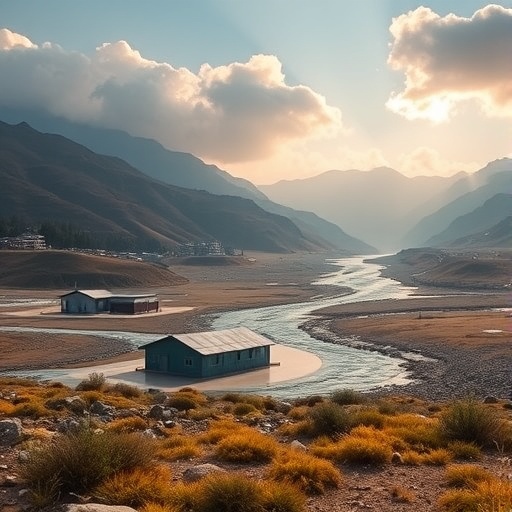
In the tranquil embrace of the northwestern Himalayas, a region remarkably known for its picturesque landscapes and rich biodiversity, lies the Baddi-Barotiwala-Nalagarh industrial belt. This area has experienced rapid industrialization, leading to significant environmental concerns that call for urgent examination. In recent years, numerous studies have drawn attention to the alarming changes in groundwater quality and the associated health risks. A new research endeavor brings critical insights into this pressing issue, revealing the intricate balance between industrial growth and ecological sustainability.
The research undertaken by Awasthi, Rana, and Thakur, as presented in their article, meticulously assesses the groundwater quality within this industrial belt, focusing on specific contaminants that pose substantial health risks to the local populace. As industries proliferate in the region, pollutants inevitably infiltrate the groundwater reserves, threatening not only the health of individuals but also the overall ecological balance. Understanding these risks is fundamental for framing effective policy measures and ensuring the safety of water supply in an area heavily reliant on groundwater for domestic and agricultural use.
At the heart of this investigation lies a deep dive into the parameters that determine water quality. The study employed a comprehensive methodology, utilizing multi-stage sampling techniques to collect groundwater samples from various locations across the industrial belt. Each sample underwent meticulous analysis for various physicochemical parameters, including pH, total dissolved solids (TDS), heavy metals, and harmful bacteria. The findings paint a stark picture of the current state of groundwater quality in the region.
The results indicate that several samples exceeded permissible limits established by both national and international guidelines. The proliferation of heavy metals, particularly lead, arsenic, and mercury, is of grave concern, as they are known to have profound adverse effects on human health. Prolonged exposure to these contaminants can lead to severe health conditions, including neurological disorders, developmental issues in children, and various forms of cancer. Awareness of these health risks is crucial for the local communities, many of whom depend on this groundwater for their daily needs.
Moreover, the health risk assessment presented in the study is particularly important as it quantifies the potential health implications associated with the consumption of contaminated groundwater. By employing robust statistical models, the researchers were able to construct a risk profile for various demographics within the population, highlighting vulnerable groups such as children and the elderly. This nuanced understanding of risk is essential for targeting health interventions and informing public health policy in the region.
One cannot overlook the role of industrial practices in exacerbating the groundwater crisis. Many industries in the Baddi-Barotiwala-Nalagarh belt lack adequate waste management systems, leading to the direct discharge of untreated effluents into the environment. This practice not only pollutes groundwater sources but also poses a significant liability to the health of surrounding communities. The findings of this research serve as a clarion call for industries to adopt sustainable practices and for regulatory institutions to enforce stricter environmental standards.
The researchers also explored the socio-economic dimensions of groundwater contamination in their study. The implications of polluted groundwater extend beyond health issues; they touch on the socio-economic fabric of the community. As groundwater quality deteriorates, it places additional burdens on healthcare systems, impairs agricultural productivity, and contributes to water scarcity. This interplay between environmental health and socio-economic stability calls for an integrated approach to policy-making that considers both ecological integrity and community well-being.
Furthermore, the research underscores the importance of community engagement in tackling groundwater contamination. Local residents must be informed of the risks associated with poor water quality and be empowered to advocate for change. Educational initiatives aimed at raising awareness about groundwater protection are pivotal in fostering community-led conservation efforts. Engaging the community can lead to the adoption of water-saving practices and increased advocacy for governmental action in protecting groundwater resources.
Innovations in technology can also play a vital role in advancing groundwater management in the region. The use of remote sensing and GIS technologies can help in mapping pollution sources and tracking changes in groundwater quality over time. These tools provide valuable data that can inform interventions and help predict future contamination scenarios. Collaborative efforts between researchers, governmental bodies, and technology firms could yield unprecedented advancements in groundwater protection strategies.
As the research draws attention to the relationship between industrial activities and environmental degradation, it also highlights the urgent need for comprehensive policies that can reconcile economic growth with ecological health. Governments are called upon to implement stricter regulations governing industrial discharge and to ensure robust monitoring of groundwater quality. Proactive policies not only protect water resources but also safeguard public health and promote sustainable industrial practices.
In the end, the study conducted by Awasthi, Rana, and Thakur serves as an essential resource for understanding and addressing the groundwater crisis in the Baddi-Barotiwala-Nalagarh region. The findings illustrate the dire need for immediate intervention and the establishment of a cohesive plan that prioritizes both personal health and environmental sustainability. As awareness spreads, it is crucial for stakeholders at every level—government, industry, and community—to collaborate towards solutions that can mitigate these alarming trends.
Ultimately, the research shines a light on the intricate connection between groundwater quality and public health, serving as a reminder that the choices made today will shape the legacy we leave for generations to come. Through informed action, it is possible to prevent the past mistakes of industrial neglect from becoming the untold story of the future. Together, with the right approach and commitment to change, we can protect this vital resource and ensure that the waters of the northwestern Himalayas continue to sustain life.
Subject of Research: Groundwater quality assessment and health risk evaluation in the Baddi-Barotiwala-Nalagarh industrial belt.
Article Title: Groundwater quality and health risk assessment in the Baddi-Barotiwala-Nalagarh industrial belt of the northwestern Himalayas.
Article References:
Awasthi, A., Rana, S., Thakur, A. et al. Groundwater quality and health risk assessment in the Baddi-Barotiwala-Nalagarh industrial belt of the northwestern Himalayas.
Sci Rep (2025). https://doi.org/10.1038/s41598-025-33393-w
Image Credits: AI Generated
DOI: 10.1038/s41598-025-33393-w
Keywords: groundwater quality, health risk assessment, industrial pollution, northwestern Himalayas, environmental sustainability.
Tags: agricultural reliance on groundwaterBaddi-Barotiwala-Nalagarh industrial zoneecological impact of industrial growthenvironmental sustainability in industrial regionsgroundwater quality assessmentgroundwater safety in Indiahealth risks from contaminated waterindustrial pollution in Himalayaspolicy measures for water safetypollutants in groundwater sourcesresearch on groundwater contaminationwater quality parameters analysis