


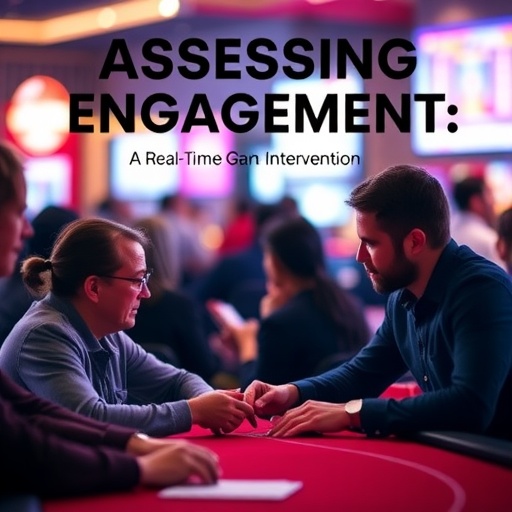
In recent years, the increasing prevalence of gambling-related issues has sparked significant concern among health professionals, policymakers, and the public alike. The rise of online gambling platforms and mobile applications has contributed to an environment where easy access to gambling can lead to detrimental consequences for individuals and their families. In response to these challenges, researchers have begun to explore innovative intervention strategies that are specifically designed to address gambling behavior in real-time. The recent study conducted by Dowling, Merkouris, Greenwood, and their colleagues, published in the journal Addictive Sciences and Clinical Practice, sheds light on one such approach known as the GamblingLess: In-The-Moment intervention.
The key focus of the study is to evaluate the acceptability and engagement levels associated with a just-in-time adaptive intervention that aims to support individuals struggling with gambling behaviors. This intervention is particularly noteworthy as it seeks to provide real-time assistance to users at moments when they are most vulnerable to the triggers of gambling. Unlike traditional interventions that may involve longer-term therapy sessions or static resources, the GamblingLess approach is tailored to offer insights and support that can help mitigate impulsive decisions associated with gambling.
The study employs a mixed-methods evaluation framework, combining quantitative data from user engagement metrics with qualitative insights gathered from participant interviews. By employing this dual approach, the researchers gain a comprehensive understanding of how users interact with the GamblingLess intervention and their perceptions regarding its usefulness and impact. This method also allows for a deeper examination of the psychological and emotional experiences of participants, adding richness to the overall findings.
One of the primary aims of the GamblingLess intervention is to bridge the gap between recognizing potential gambling distress and taking action to alleviate it. The challenge faced by many individuals is the difficulty in controlling the urge to gamble, especially in moments of high temptation, such as during stressful life events or after a perceived loss. The researchers have designed the intervention with this knowledge in mind, incorporating features that allow for immediate feedback and guidance, which are intended to foster better decision-making during critical moments.
Initial observations from the study highlight that users perceive the GamblingLess intervention as a valuable tool for managing their gambling behaviors. Feedback indicates a high level of satisfaction with the real-time support it offers, particularly in terms of feeling more empowered to make informed choices. Participants reported that having access to instant advice at the time of temptation can significantly alter their decision-making process and contribute positively to their recovery journey.
Furthermore, engaging with the GamblingLess intervention does not merely offer immediate support; it also encourages users to reflect on their gambling habits, consider the consequences of their actions, and develop coping strategies. By combining real-time alerts with reflective exercises, users are prompted to think critically about their choices, enabling them to cultivate greater awareness of their gambling patterns.
The results of the research hold substantial implications for public health initiatives aimed at gambling prevention and intervention. Given the escalating costs associated with gambling addiction on both individuals and societal levels, there is an urgent need for scalable and accessible solutions that can be efficiently deployed. The innovative nature of the GamblingLess intervention presents opportunities to extend its use beyond academic settings and into community support services, mobile applications, and online platforms, enhancing its reach.
In terms of potential challenges, the researchers acknowledge the importance of ongoing user engagement. While initial participants have expressed positive sentiments regarding the intervention, the sustainability of this engagement over time remains a crucial consideration. Future developments may involve tailored follow-up strategies that sustain user interaction and encourage continuous reflection on gambling behaviors well beyond the initial experience with the intervention.
Technology is poised to play a critical role in shaping the future of gambling interventions. As the GamblingLess: In-The-Moment intervention exemplifies, integrating responsive technology with behavioral health strategies can create a synergistic effect that improves engagement. By leveraging smartphones and apps, interventions can reach users in their everyday environments, making help more accessible when it matters most.
Moreover, the success of such interventions can lead to significant advancements in our understanding of behavioral health and the nuances of addiction. Insights garnered from studies like this one can inform future research, leading to refined and optimized strategies for tackling not only gambling addiction but also other behavioral health issues. The intersection of technology, psychology, and public health stands as a fertile ground for innovation.
Policymakers, too, have a golden opportunity to utilize findings from studies like this in formulating public health strategies and regulations surrounding gambling. Understanding how interventions can be adapted to be as effective as possible will be essential for safeguarding vulnerable populations. By adopting evidence-based approaches that take into account the nuances of human behavior and technology, policymakers can contribute to a healthier society.
In conclusion, the GamblingLess: In-The-Moment intervention exemplifies the evolving landscape of addiction interventions, particularly in the context of gambling. This innovative strategy, grounded in real-time support and user engagement, represents a proactive approach to addressing gambling issues. As research continues to unfold, the potential to enhance individual well-being and reduce the societal burden of gambling addiction may become increasingly feasible through technological advancements and evidence-based practices. With ongoing evaluation and refinement, the GamblingLess intervention may pave the way for a new paradigm in addiction management, one that prioritizes accessibility, immediacy, and effectiveness for individuals at risk.
Subject of Research: Gambling behaviors and real-time interventions
Article Title: GamblingLess: In-The-Moment: a mixed-methods acceptability and engagement evaluation of a gambling just-in-time adaptive intervention
Article References: Dowling, N., Merkouris, S., Greenwood, C. et al. GamblingLess: In-The-Moment: a mixed-methods acceptability and engagement evaluation of a gambling just-in-time adaptive intervention. Addict Sci Clin Pract 20, 80 (2025). https://doi.org/10.1186/s13722-025-00608-4
Image Credits: AI Generated
DOI: https://doi.org/10.1186/s13722-025-00608-4
Keywords: Gambling addiction, Just-in-time adaptive interventions, Behavioral health, Technology, Real-time support, Public health.
Tags: acceptability of gambling interventionsgambling-related issues interventionGamblingLess program evaluationhealth professionals and gamblingimpulsive gambling decisionsinnovative strategies for gambling problemsjust-in-time adaptive interventionsmixed-methods research in addictionmobile applications for gambling supportonline gambling behaviorreal-time assistance for gamblersreal-time gambling intervention



