• HOME
  • NEWS
  • EXPLORE
    • CAREER
      • Companies
      • Jobs
    • EVENTS
    • iGEM
      • News
      • Team
    • PHOTOS
    • VIDEO
    • WIKI
  • BLOG
  • COMMUNITY
    • FACEBOOK
    • INSTAGRAM
    • TWITTER
Monday, June 29, 2026
BIOENGINEER.ORG
No Result
View All Result
  • Login
  • HOME
  • NEWS
  • EXPLORE
    • CAREER
      • Companies
      • Jobs
        • Lecturer
        • PhD Studentship
        • Postdoc
        • Research Assistant
    • EVENTS
    • iGEM
      • News
      • Team
    • PHOTOS
    • VIDEO
    • WIKI
  • BLOG
  • COMMUNITY
    • FACEBOOK
    • INSTAGRAM
    • TWITTER
  • HOME
  • NEWS
  • EXPLORE
    • CAREER
      • Companies
      • Jobs
        • Lecturer
        • PhD Studentship
        • Postdoc
        • Research Assistant
    • EVENTS
    • iGEM
      • News
      • Team
    • PHOTOS
    • VIDEO
    • WIKI
  • BLOG
  • COMMUNITY
    • FACEBOOK
    • INSTAGRAM
    • TWITTER
No Result
View All Result
Bioengineer.org
No Result
View All Result
Home NEWS Science News Biology

Artificial light affects plant pollination even during the daytime

Bioengineer by Bioengineer
March 17, 2021
in Biology
Reading Time: 2 mins read
0
IMAGE
Share on FacebookShare on TwitterShare on LinkedinShare on RedditShare on Telegram

IMAGE

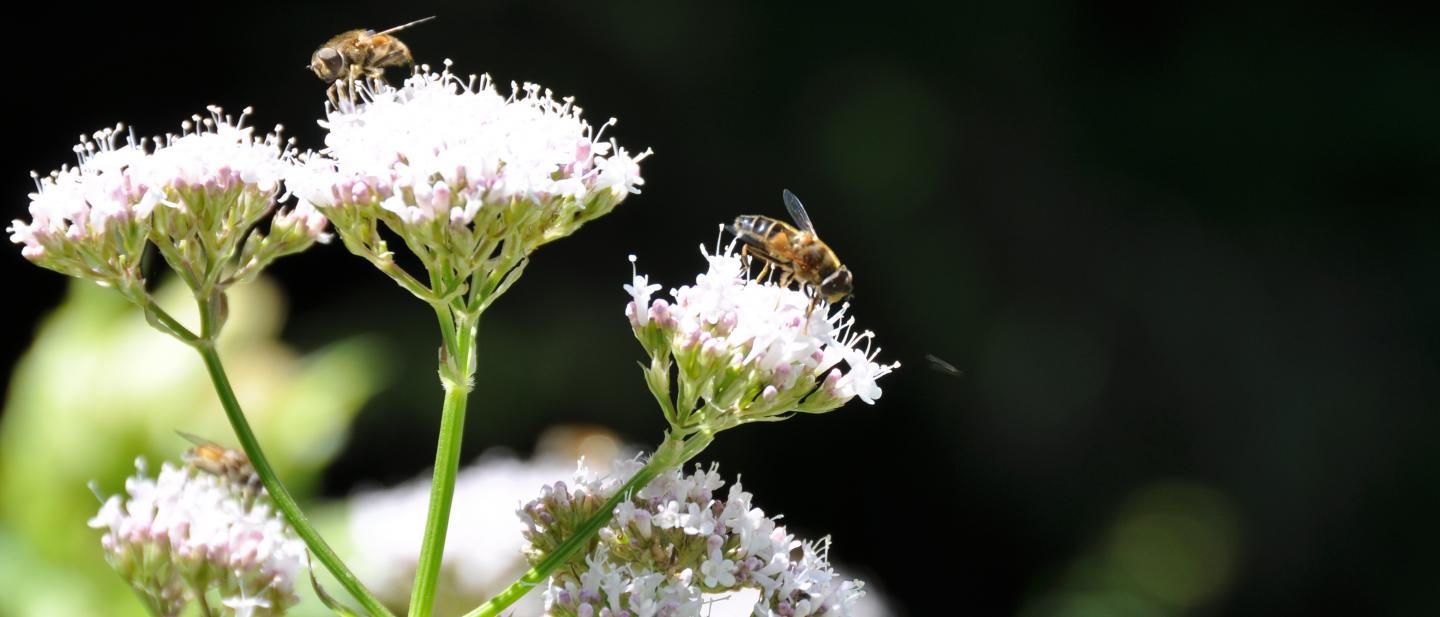
Credit: UZH/Agroscope

The use of artificial light at night around the world has increased enormously in recent years, causing adverse effects on the survival and reproduction of nocturnal organisms. Artificial light at night interferes with vital ecological processes such as the nighttime pollination of plants by nocturnal insects, which could have consequences for agricultural crop yields and reproduction of wild plants.

Scientists from the University of Zurich and Agroscope have now demonstrated for the first time that artificial light at night also adversely affects insects’ pollination behavior during the daytime. In an experiment, they used commercial streetlamps to illuminate natural plant-pollinator communities during the nighttime on six natural meadows. Six other natural meadows were left dark. The research team concentrated its analysis on 21 naturally occurring plant species and the insect orders Diptera, Hymenoptera and Coleoptera.

Differing interactions depending on plant species
“Our findings indicate that artificial light during the nighttime alters the number of plant-pollinator interactions during the daytime, depending on the plant species,” says Eva Knop from UZH’s University Research Priority Program Global Change and Biodiversity and Agroscope. For example, three plant species received significantly fewer, and one other species slightly fewer, pollinator visits during the daytime. A different plant species, in contrast, received many more pollinator visits, and one other a little more, under LED illumination.

Interestingly, nocturnal pollinator activity also varied in the presence of artificial light. For example, woodland geraniums (Geranium sylvaticum) in illuminated and dark meadows received the same number of pollinator visits, but not by the same insects: whereas dipterous insects reduced their visits to plants that were illuminated during the night, beetles (Coleoptera) tended to increase their visits. Two other plant species exhibited similar trends.

Indirect ecological effects of light pollution
The indirect ecological impact of light pollution has been ignored thus far. “Since insects play a vital role in pollinating crops and wild plants and are already endangered by habitat destruction and climate change regardless of artificial light, it is important to study and clarify these indirect mechanisms,” Knop says.

On the basis of their findings, Knop and her colleagues call for “the ecological impact of light pollution to be researched more thoroughly and for actions to be devised to avert adverse effects on the environment.” They say they see ways to do this even though artificial light is an integral feature of populated areas. Public lighting, for instance, could be carefully designed in combination with new technologies to reduce it to a minimum.

###

Literature:

Giavi S., Fontaine C., Knop E. (2021) Impact of artificial light at night on diurnal plant-pollinator interactions. Nature Communications, 16 March 2021, doi: 10.1038/s41467-021-22011-8

Media Contact
Dr. Eva Knop
[email protected]

Original Source

https://www.media.uzh.ch/de/medienmitteilungen/2021/Nachtbestaeuber.html

Related Journal Article

http://dx.doi.org/10.1038/s41467-021-22011-8

Tags: BiodiversityBiologyDevelopmental/Reproductive BiologyEcology/EnvironmentParasitologyPlant SciencesPollution/Remediation
Share12Tweet8Share2ShareShareShare2

Related Posts

Natural Hallucinogens: Evolution’s Ecological Tools, Not Mere Chemical Byproducts

June 25, 2026

This Famous Butterfly Revealed: Three Distinct Species Hidden in One

June 25, 2026

Scientists Attack Soybean Cyst Nematode by Starving Its Food Source

June 25, 2026

Decoding the Secret Code of a Crucial Immune Sensor

June 24, 2026
Please login to join discussion

POPULAR NEWS

  • Saying Goodbye to PGY-6: Pediatric Fellowship Realities

    103 shares
    Share 41 Tweet 26
  • Multi-Hospital Study Reveals Long Covid Burden Is Twice as High as Current Estimates

    92 shares
    Share 36 Tweet 23
  • Detection of EDCs in Breast Milk and Infant Urine Up to Six Months Highlights Early Exposure Risks

    77 shares
    Share 31 Tweet 19
  • New Drug Candidate Developed at McMaster Shows Potential for Treating Brain Cancer

    58 shares
    Share 23 Tweet 15

About

We bring you the latest biotechnology news from best research centers and universities around the world. Check our website.

Follow us

Recent News

Tracking Lanthanide-Labeled Microplastics in Plants

POSTECH Researchers Slash Cost of Reconstituted Cell-Free Systems by 95%

AI and Physics Collaborate to Design Advanced Hydrogen Storage Materials

Subscribe to Blog via Email

Success! An email was just sent to confirm your subscription. Please find the email now and click 'Confirm' to start subscribing.

Join 82 other subscribers
  • Contact Us

Bioengineer.org © Copyright 2023 All Rights Reserved.

Welcome Back!

Login to your account below

Forgotten Password?

Retrieve your password

Please enter your username or email address to reset your password.

Log In
No Result
View All Result
  • Homepages
    • Home Page 1
    • Home Page 2
  • News
  • National
  • Business
  • Health
  • Lifestyle
  • Science

Bioengineer.org © Copyright 2023 All Rights Reserved.