• HOME
  • NEWS
  • EXPLORE
    • CAREER
      • Companies
      • Jobs
    • EVENTS
    • iGEM
      • News
      • Team
    • PHOTOS
    • VIDEO
    • WIKI
  • BLOG
  • COMMUNITY
    • FACEBOOK
    • INSTAGRAM
    • TWITTER
Thursday, October 1, 2026
BIOENGINEER.ORG
No Result
View All Result
  • Login
  • HOME
  • NEWS
  • EXPLORE
    • CAREER
      • Companies
      • Jobs
        • Lecturer
        • PhD Studentship
        • Postdoc
        • Research Assistant
    • EVENTS
    • iGEM
      • News
      • Team
    • PHOTOS
    • VIDEO
    • WIKI
  • BLOG
  • COMMUNITY
    • FACEBOOK
    • INSTAGRAM
    • TWITTER
  • HOME
  • NEWS
  • EXPLORE
    • CAREER
      • Companies
      • Jobs
        • Lecturer
        • PhD Studentship
        • Postdoc
        • Research Assistant
    • EVENTS
    • iGEM
      • News
      • Team
    • PHOTOS
    • VIDEO
    • WIKI
  • BLOG
  • COMMUNITY
    • FACEBOOK
    • INSTAGRAM
    • TWITTER
No Result
View All Result
Bioengineer.org
No Result
View All Result
Home NEWS Science News Biology

Are we genetically ‘grounded’?

Bioengineer by Bioengineer
September 6, 2025
in Biology
Reading Time: 2 mins read
0
IMAGE
Share on FacebookShare on TwitterShare on LinkedinShare on RedditShare on Telegram

Hebrew University identifies molecular factors that enable birds to fly, but keep the rest of us on terra firma

For centuries, scientists, aeronautic designers and adventure-seekers have sought to replicate the qualities that allow birds to fly, namely wing-structure and balance. However, without an external mechanism such as a hot air balloon or airplane, humans have remained earth-bound, unable to use their own bodies to propel themselves into the stratosphere.

While researchers have long-focused on structural factors, like wings, that define the category of bird, a recent study published Science Advances by Professor Avihu Klar at the Hebrew University of Jerusalem’s Faculty of Medicine and Prof. Claudio Mello from Oregon Health and Science University found that there are specific molecular characteristics that distinguish birds from animals, and these differences allow birds to flap their wings and take to the sky.

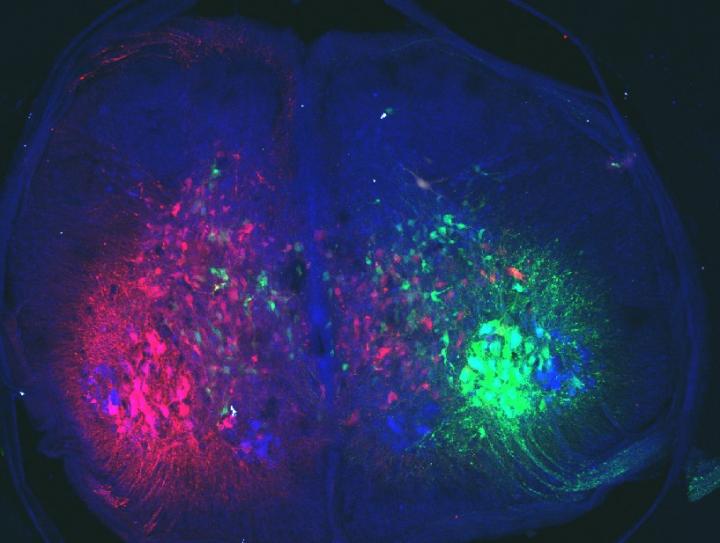
In previous studies, researchers found that the ability of mammals and reptiles to walk is embedded within their spinal cord. In this new study, the scientists found that the ability to fly is embedded in birds’ spinal cords. The team closely examined the neural networks of chicken and mice embryos and discovered that the genetic coding of the ephrin-B3 molecule in birds is fundamentally different than those of mammals and reptiles.

“The molecule ephrin-B3 is present in mammals but mutated or absent in birds. This simple but profound difference is what allows birds to flap their wings and take flight,” shared Klar. Animals, such as rodents, present this molecule in its fullest form and therefor move in a stepping motion from left to right with their front and back limbs. On the other hand, mice with an ephrin-B3 mutation move with a synchronous jumping motion of both left and right sides at the same time, similar to birds.

These findings reinforced their theory that evolution–genetic changes over time–helped birds to develop a network of neurons that activates a very coordinated movement pattern, namely: the simultaneous flapping of wings.

“Our study provides a clue to the evolutionary enigma: How did the nervous system evolve to support stepping, flying and swimming,” said Klar. “It paves the way for future experiments to reveal the evolution of neuronal networks that enable the different modes of movement of legs and hands, a characteristic of bipedal animals, such as birds and human.”

###

Media Contact
Tali Aronsky
[email protected]

Related Journal Article

http://dx.doi.org/10.1080/00758914.2021.1923906

Tags: BiologyCell BiologyEvolutionMolecular Biology
Share13Tweet8Share2ShareShareShare2

Related Posts

When Mitochondrial Calcium Goes Wrong, Plants Sound a Whole-Cell Alarm

When Mitochondrial Calcium Goes Wrong, Plants Sound a Whole-Cell Alarm

October 1, 2026
Microbes Turn Tannin-Rich Food Waste Into Functional Ingredients, Review Finds

Microbes Turn Tannin-Rich Food Waste Into Functional Ingredients, Review Finds

October 1, 2026

AI Framework Cleans Batch Noise From DNA Methylation Data to Sharpen Cancer Subtyping

October 1, 2026

Blood or skin? The starting cell may shape hidden DNA flaws in stem cell lines

October 1, 2026
Please login to join discussion

POPULAR NEWS

  • Liquid Biopsy Guides First-of-Its-Kind Immunotherapy Win in Relapsed Lymphoma

    29 shares
    Share 12 Tweet 7
  • Oxygen Sweet Spot for Brain-Injured ICU Patients Is Wider Than Guidelines Suggest

    29 shares
    Share 12 Tweet 7
  • When Mitochondrial Calcium Goes Wrong, Plants Sound a Whole-Cell Alarm

    29 shares
    Share 12 Tweet 7
  • Why Robots Creeping Up Behind You Feel Faster Than They Really Are

    29 shares
    Share 12 Tweet 7

About

We bring you the latest biotechnology news from best research centers and universities around the world. Check our website.

Follow us

Recent News

Liquid Biopsy Guides First-of-Its-Kind Immunotherapy Win in Relapsed Lymphoma

Oxygen Sweet Spot for Brain-Injured ICU Patients Is Wider Than Guidelines Suggest

When Mitochondrial Calcium Goes Wrong, Plants Sound a Whole-Cell Alarm

Subscribe to Blog via Email

Enter your email address to subscribe to this blog and receive notifications of new posts by email.

Join 85 other subscribers
  • Contact Us

Bioengineer.org © Copyright 2023 All Rights Reserved.

Welcome Back!

Login to your account below

Forgotten Password?

Retrieve your password

Please enter your username or email address to reset your password.

Log In
No Result
View All Result
  • Homepages
    • Home Page 1
    • Home Page 2
  • News
  • National
  • Business
  • Health
  • Lifestyle
  • Science

Bioengineer.org © Copyright 2023 All Rights Reserved.