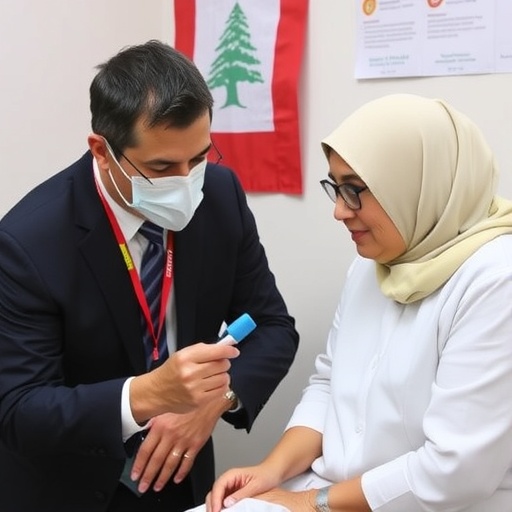
A groundbreaking advancement in dementia diagnostics has emerged from the heart of the Middle East, heralding a new era in cognitive health assessment tailored to Arabic-speaking populations. Researchers led by El Asmar, Abi Nassif, and Karam have meticulously validated the Arabic version of the short 10/66 dementia diagnostic schedule specifically for the Lebanese population, a milestone achievement poised to alter the diagnostic landscape for neurodegenerative disorders within this culturally rich yet underserved demographic.
Dementia, a progressive decline in cognitive function that interferes profoundly with daily life, poses a daunting challenge globally, particularly in regions where linguistic and cultural nuances hinder accurate diagnosis. The original 10/66 diagnostic schedule, developed by the 10/66 Dementia Research Group, stands as a cornerstone in dementia epidemiology, designed primarily for low and middle-income countries. However, its adaptation has lagged in Arabic-speaking regions, where reliable and culturally sensitive tools remain scarce. This new validation project addresses this critical gap, offering a scientifically robust instrument capable of capturing the early and subtle manifestations of dementia in Arabic speakers.
The validation methodology embraced rigorous psychometric analyses, ensuring that the translated tool maintained the integrity and clinical utility of the original schedule. This involved comprehensive translation and back-translation processes, engaging linguistic experts well-versed in both Arabic and clinical terminology. More so, the researchers conducted pilot testing to refine colloquialisms and idiomatic expressions, optimizing the tool’s clarity and cultural relevance without compromising its diagnostic sensitivity or specificity.
One of the fundamental technical challenges in cross-cultural validation lies in maintaining construct equivalence. Cognitive assessments must transcend linguistic differences and resonate with cultural contexts, which influence how symptoms manifest and are perceived. The study meticulously evaluated various psychometric properties, including reliability indices such as Cronbach’s alpha to measure internal consistency, and test-retest reliability, ensuring stability over time. The results indicated excellent reliability metrics, signifying that the Arabic version performs consistently in repeated administrations.
Validity assessments featured prominently, with confirmatory factor analysis elucidating the dimensional structure of the instrument, confirming that it aligned closely with the theoretical framework established by the 10/66 schedule. Concurrent validity was established through correlation with established dementia assessment instruments previously validated in Arabic, further reinforcing the tool’s diagnostic legitimacy. This multi-faceted evaluation guarantees that clinicians and researchers can confidently rely on the Arabic 10/66 schedule for accurate dementia diagnostics tailored to their patient populations.
The implications for public health across Lebanon — and potentially the broader Arab world — are profound. Dementia prevalence is expected to rise sharply due to increasing life expectancy and demographic shifts. However, underdiagnosis remains rampant, largely because many existing diagnostic tools are either not available in Arabic or fail to account for the unique sociocultural dynamics present in these communities. By providing a reliable, validated, and culturally appropriate tool, this research paves the way for earlier detection and intervention, critical to improving patient outcomes and planning healthcare resources effectively.
Equally important is the role this diagnostic tool plays in epidemiological surveillance. Accurate data collection is the cornerstone for understanding disease burden, influencing policy, and allocating healthcare funding. The 10/66 schedule’s validation now enables large-scale population-based studies previously hampered by lack of culturally adapted instruments. Researchers can identify risk factors, track disease progression, and evaluate the impact of therapeutic interventions with unprecedented accuracy within Arabic-speaking demographics.
From a technical perspective, the implementation of the short 10/66 schedule streamlines the diagnostic process, requiring significantly less time than comprehensive neuropsychological batteries while maintaining robust diagnostic precision. This is particularly vital in resource-constrained settings where access to specialist neurologists or psychologists may be limited. Healthcare providers can now administer a validated screening tool efficiently, allowing for wider reach and enhanced case identification within primary care or community settings.
Moreover, the interdisciplinary approach taken by El Asmar and colleagues showcases the power of combining neuropsychology, linguistics, and epidemiology to overcome barriers in global mental health research. Cultural adaptation is no longer a peripheral consideration but a fundamental aspect shaping the integrity and applicability of diagnostic tools. This study serves as a blueprint for future efforts aiming to adapt neurocognitive instruments for diverse populations, reinforcing the ethical imperative of equity in healthcare diagnostics.
The validation also highlights the importance of semantic equivalence in cognitive assessments. In Arabic, dialectal variations present unique challenges, often necessitating adaptations that transcend mere word-for-word translation. Researchers accounted for dialectal differences prevalent in Lebanon, ensuring the tool’s generalizability across various Arabic-speaking subpopulations, thus maximizing its utility beyond the immediate study cohort.
Technological integration is poised to amplify the impact of this validated tool as well. Digital platforms incorporating the Arabic 10/66 schedule can facilitate remote screening, especially relevant in rural areas or during periods where in-person consultations are limited, such as pandemics. The digital administration also opens avenues for automated scoring and immediate feedback, democratizing access to dementia screening and catalyzing timely referrals to specialists.
This research carries significant implications for caregiver support and public awareness within Arabic-speaking communities. Early diagnosis is often the precursor to educational initiatives that empower families and caregivers to manage the multifaceted challenges of dementia. Furthermore, culturally sensitive diagnostic tools can reduce stigma associated with cognitive decline by framing the condition in relatable terms, thereby encouraging more individuals to seek assessment and care.
In conclusion, the validation of the Arabic version of the short 10/66 dementia diagnostic schedule stands as a beacon of progress in multicultural neuroepidemiology, blending scientific rigor with cultural empathy. By aligning diagnostic precision with linguistic and social realities, this tool promises to enhance dementia care pathways and elevate the standards of cognitive health assessments for millions of Arabic speakers. The ripple effects of this work will undoubtedly foster a more inclusive approach to global dementia research, driving innovations that honor and reflect cultural diversity at the core of healthcare.
Subject of Research: Validation of an Arabic dementia diagnostic tool
Article Title: Validation of the Arabic version of the short 10/66 dementia diagnostic schedule for the Lebanese population.
Article References:
El Asmar, K., Abi Nassif, A., Karam, Z. et al. Validation of the Arabic version of the short 10/66 dementia diagnostic schedule for the Lebanese population. BMC Geriatr (2026). https://doi.org/10.1186/s12877-026-07286-0
Image Credits: AI Generated
Tags: 10/66 dementia test adaptationArabic dementia diagnostic tool validationArabic-speaking population cognitive testscognitive health assessment in Lebanonculturally sensitive dementia screeningdementia epidemiology Middle Eastdementia research in Lebanonearly detection of dementia Arabic speakerslow and middle-income countries dementia diagnosticsneurodegenerative disorder diagnosis Arabicpsychometric validation dementia toolstranslation and back-translation in medical tools