• HOME
  • NEWS
  • EXPLORE
    • CAREER
      • Companies
      • Jobs
    • EVENTS
    • iGEM
      • News
      • Team
    • PHOTOS
    • VIDEO
    • WIKI
  • BLOG
  • COMMUNITY
    • FACEBOOK
    • INSTAGRAM
    • TWITTER
Thursday, April 2, 2026
BIOENGINEER.ORG
No Result
View All Result
  • Login
  • HOME
  • NEWS
  • EXPLORE
    • CAREER
      • Companies
      • Jobs
        • Lecturer
        • PhD Studentship
        • Postdoc
        • Research Assistant
    • EVENTS
    • iGEM
      • News
      • Team
    • PHOTOS
    • VIDEO
    • WIKI
  • BLOG
  • COMMUNITY
    • FACEBOOK
    • INSTAGRAM
    • TWITTER
  • HOME
  • NEWS
  • EXPLORE
    • CAREER
      • Companies
      • Jobs
        • Lecturer
        • PhD Studentship
        • Postdoc
        • Research Assistant
    • EVENTS
    • iGEM
      • News
      • Team
    • PHOTOS
    • VIDEO
    • WIKI
  • BLOG
  • COMMUNITY
    • FACEBOOK
    • INSTAGRAM
    • TWITTER
No Result
View All Result
Bioengineer.org
No Result
View All Result
Home NEWS Science News Biology

Apocalypse not yet — surviving the 21st century

Bioengineer by Bioengineer
January 24, 2018
in Biology, Science News
Reading Time: 2 mins read
0
Share on FacebookShare on TwitterShare on LinkedinShare on RedditShare on Telegram
IMAGE

Credit: Springer

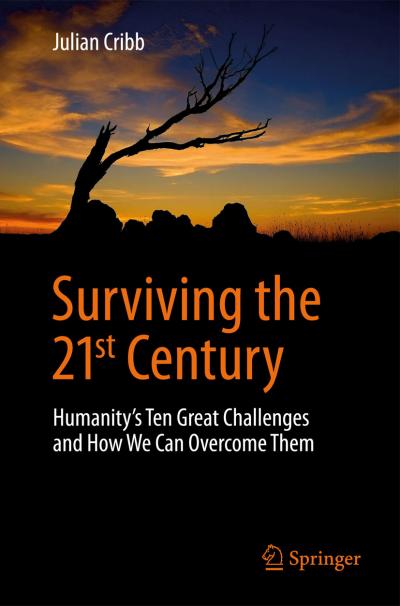
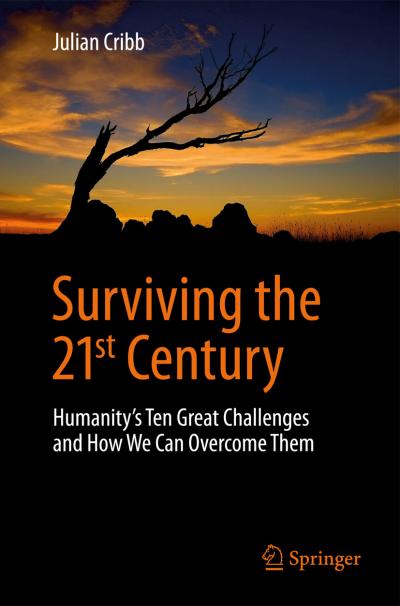
Humanity and our civilization are facing the greatest challenge in the million-year ascent of our species. It consists of the coming-together of ten huge, man-made threats which are now combining to imperil our future. In his new book Surviving the 21st Century – Humanity's ten great challenges and how we can overcome them, published by Springer, Julian Cribb explores these risks and explains what can and should be done to limit them.

According to the author, the ten intersecting existential threats are ecological collapse, resource depletion, weapons of mass destruction, climate change, global poisoning, food crises, population and urban overexpansion, pandemic disease, dangerous new technologies and self-delusion. Surviving the 21st Century explores in detail the scientific evidence for their existence as well as the importance of cross-cutting solutions that do not make matters worse in other areas.

The book also probes two controversial theories. Firstly, it challenges our cherished beliefs in areas such as money, politics, religion and the human narrative. Do they prevent us from recognizing the real risks we are facing and from solving them together? Can we reinvent them to focus on our survival? Secondly, the author wonders whether our species, Homo sapiens, is fit to bear the title and whether or not it should be renamed.

Surviving the 21st Century not only describes problems and raises issues – it also identifies uplifting and positive solutions to our most pressing challenges. In addition, it looks into two paradigm-shattering developments in society which might help us tackle these challenges: the evolution of our ability to 'think as a species' through global connections made at lightspeed on the internet, and the emergence of women as world leaders to a safer, more sustainable future.

Julian Cribb is an Australian science writer and former newspaper editor, with over thirty awards for journalism to his credit. He is principal of Julian Cribb & Associates, specialist in science communication and Fellow of the Australian Academy of Technological Sciences and Engineering. Surviving the 21st Century is the third volume in Cribb's scientific trilogy about the future of humanity.

Julian Cribb
Surviving the 21st Century – Humanity's Ten Great Challenges and How We Can Overcome Them
2016, XII, 255 p. 17 illus. in colour
Softcover $ 24.99, € 36.39 , £ 19.50 ISBN 978-3-319-41269-6
Also available as an eBook ISBN 978-3-319-41270-2

###

Media Contact

Lea Brix
[email protected]
49-622-148-78414
@SpringerNature

http://www.springer.com

Share12Tweet8Share2ShareShareShare2

Related Posts

Twist Angle Shapes Superconductivity in WSe2

Twist Angle Shapes Superconductivity in WSe2

April 1, 2026
Paul Ohodnicki Leads Team Developing Transformers for High-Voltage DC Power Grids

Paul Ohodnicki Leads Team Developing Transformers for High-Voltage DC Power Grids

April 1, 2026

Illinois Tech Computer Science Researcher Recognized with IEEE Chicago Section Award

April 1, 2026

Robotic Bronchoscopy: A Safer, Faster Breakthrough in Lung Cancer Diagnosis

April 1, 2026
Please login to join discussion

POPULAR NEWS

  • blank

    Revolutionary AI Model Enhances Precision in Detecting Food Contamination

    96 shares
    Share 38 Tweet 24
  • Imagine a Social Media Feed That Challenges Your Views Instead of Reinforcing Them

    1006 shares
    Share 398 Tweet 249
  • Promising Outcomes from First Clinical Trials of Gene Regulation in Epilepsy

    51 shares
    Share 20 Tweet 13
  • Popular Anti-Aging Compound Linked to Damage in Corpus Callosum, Study Finds

    44 shares
    Share 18 Tweet 11

About

We bring you the latest biotechnology news from best research centers and universities around the world. Check our website.

Follow us

Recent News

Twist Angle Shapes Superconductivity in WSe2

Paul Ohodnicki Leads Team Developing Transformers for High-Voltage DC Power Grids

Illinois Tech Computer Science Researcher Recognized with IEEE Chicago Section Award

Subscribe to Blog via Email

Enter your email address to subscribe to this blog and receive notifications of new posts by email.

Join 78 other subscribers
  • Contact Us

Bioengineer.org © Copyright 2023 All Rights Reserved.

Welcome Back!

Login to your account below

Forgotten Password?

Retrieve your password

Please enter your username or email address to reset your password.

Log In
No Result
View All Result
  • Homepages
    • Home Page 1
    • Home Page 2
  • News
  • National
  • Business
  • Health
  • Lifestyle
  • Science

Bioengineer.org © Copyright 2023 All Rights Reserved.