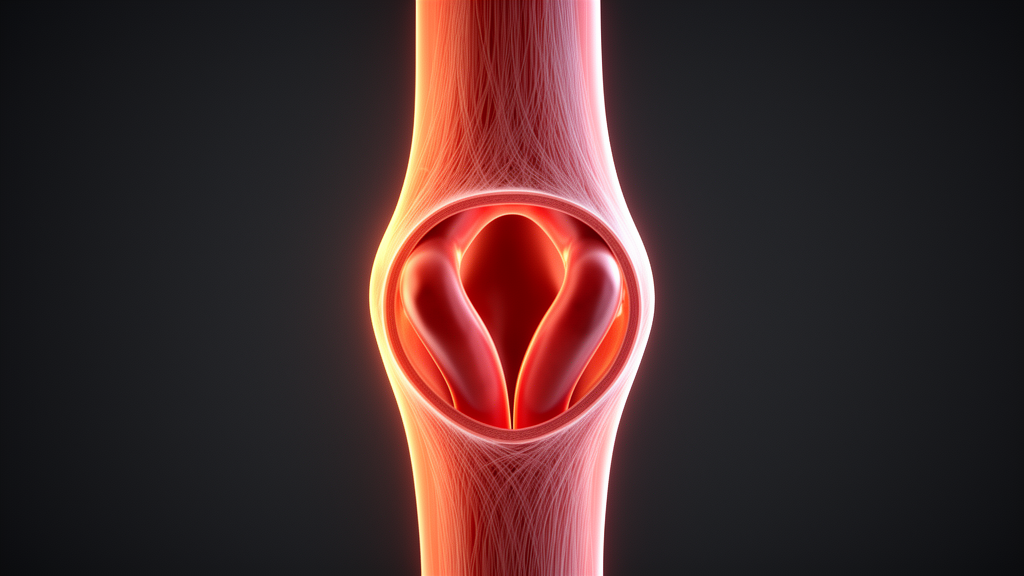
In a retrospective cohort study evaluating surgical approaches for acute type A aortic dissection involving the aortic root, autologous adventitial inversion non-coronary sinus reconstruction was associated with a smaller sinus of Valsalva diameter at one month and approximately twelve months following surgery compared with conventional reconstruction techniques. The single-center investigation examined early anatomical remodeling and perioperative outcomes to address ongoing controversy regarding how surgeons should best manage aortic root involvement in patients presenting with acute aortic dissections. The authors observed that while anatomical remodeling differed significantly between the operative techniques at designated post-surgical time points, these exploratory measurements did not demonstrate improved clinical safety, preserved valve function, or long-term operative durability.
To assess anatomical and clinical performance, the researchers analyzed data from forty-one patients with acute type A aortic dissection who underwent root intervention. Within this cohort, patients were classified according to the specific reconstruction technique documented at the time of the operation. Twenty patients underwent autologous adventitial inversion non-coronary sinus reconstruction, forming Group A, while twenty-one patients underwent heterogeneous conventional root reconstruction procedures, designated as Group B.
Serial echocardiographic measurements were obtained by a fixed measurement team whose members were fully blinded to the specific surgical technique that each patient received.
Perioperative outcomes recorded during the hospital stay were descriptively similar between the two operative groups, though low overall event frequency limited statistical conclusions. Specifically, no patient in either Group A or Group B died during the hospital admission, required surgical re-exploration for postoperative bleeding, or developed paraplegia. However, the study authors emphasized that these event counts were too small to establish comparative safety or equivalence between autologous adventitial inversion reconstruction and conventional surgical methods.
Echocardiographic monitoring showed that early postoperative sinus of Valsalva diameters did not differ significantly between the two surgical groups, yielding a P value of 0.192. To account for the risk of type I errors across multiple anatomical assessments, the investigators applied Holm multiplicity correction across twelve separate postoperative comparisons. Following this statistical adjustment, patients in Group A demonstrated a statistically significant smaller sinus diameter at one month post-surgery, with a Hodges-Lehmann location shift of minus 4.0 millimeters, a 95 percent confidence interval extending from minus 6.3 to minus 1.3 millimeters, and an adjusted P value of 0.034. A similar difference was observed at approximately twelve months, showing a Hodges-Lehmann location shift of minus 4.0 millimeters, a 95 percent confidence interval from minus 6.1 to minus 1.7 millimeters, and an adjusted P value of 0.015.
In contrast to the findings at one month and twelve months, the anatomical comparison conducted at the six-month follow-up did not retain statistical significance following Holm correction, resulting in an adjusted P value of 0.195. The researchers also evaluated baseline-to-follow-up changes across the surveillance period to track the trajectory of sinus dimension shifts. While the change from baseline differed significantly between the two reconstruction groups at one month with an adjusted P value of 0.026, the baseline-to-follow-up changes at six months and at approximately twelve months were not statistically significant, both demonstrating an adjusted P value of 0.072.
To evaluate the robustness of the primary anatomical findings, the investigators constructed a sensitivity model that adjusted for baseline sinus diameter and preoperative aortic flow velocity. In this adjusted sensitivity analysis, the model estimated that patients in Group B had a 3.63-millimeter larger sinus of Valsalva diameter at approximately twelve months compared to Group A, with a 95 percent confidence interval ranging from 1.26 to 6.00 millimeters and a P value of 0.004. In addition to measuring root dimensions, the team tracked valvular integrity, noting that the postoperative aortic regurgitation grade did not differ between the two surgical groups.
The investigators concluded that autologous adventitial inversion non-coronary sinus reconstruction represents a feasible surgical option in patients presenting with acute type A aortic dissection involving the aortic root, correlating with smaller sinus of Valsalva dimensions at one month and approximately twelve months after multiplicity correction. The authors stressed that these exploratory anatomical measurements must not be interpreted as establishing clinical safety equivalence, improved aortic valve function, patient clinical benefit, or long-term structural durability.
Subject of Research: Aortic root reconstruction techniques for acute type A aortic dissection
Article Title: Early aortic root remodeling after autologous adventitial inversion non-coronary sinus reconstruction for acute type a aortic dissection in a retrospective cohort study
Article References: Song, C., Tang, S., Sha, T., Zhang, X., Li, J., & Liu, C. (2026). Early aortic root remodeling after autologous adventitial inversion non-coronary sinus reconstruction for acute type a aortic dissection in a retrospective cohort study. BMC Cardiovascular Disorders. https://doi.org/10.1186/s12872-026-06813-6
Image Credits: AI Generated
DOI: 10.1186/s12872-026-06813-6
Keywords: acute type A aortic dissection, aortic root reconstruction, sinus of Valsalva, adventitial inversion, cardiac surgery, echocardiography, retrospective cohort study, Early, aortic, root, remodeling, autologous
News Source: Ophelia Keating. (November 11, 2026). Aortic Adventitial Inversion Linked to Smaller Sinus Diameter in Retrospective Cohort. Scienmag.