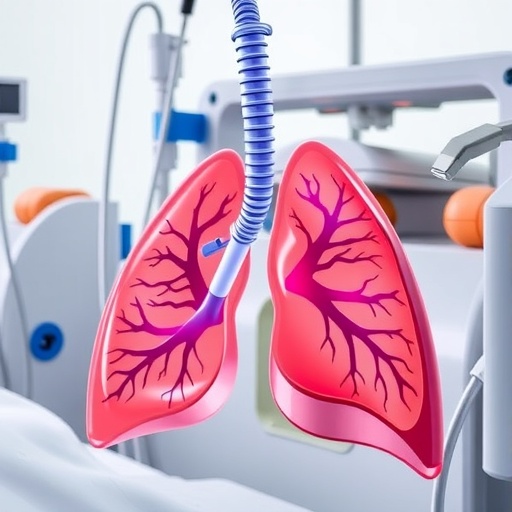
In the realm of advanced medical technologies, the recent study published by Kurihara et al. explores a groundbreaking approach to extracorporeal membrane oxygenation (ECMO), particularly focusing on the procedure in the context of re-do lung transplantation. This innovative study sheds light on the feasibility of anticoagulation-free peripheral veno-arterial ECMO, a method that promises to reduce potential complications traditionally associated with anticoagulant therapies, thereby enhancing the safety and efficacy of lung transplantation procedures.
The study meticulously details the challenges that existing ECMO methods pose, particularly during re-do lung transplant surgeries, where patients are often at a heightened risk for complications. Traditionally, ECMO procedures require anticoagulation to prevent coagulation within the circuit. However, this can lead to significant bleeding risks and other complications, which ultimately complicate patient recovery and postoperative management. The authors present a systematic evaluation of the risks and benefits associated with this new methodology, aiming to minimize the use of anticoagulants without compromising the patient’s safety.
Kurihara and colleagues deployed their innovative technique on a subject pool that encompasses both patients with severe respiratory failure and those undergoing repeat lung transplants. The team utilized advanced monitoring systems that provided real-time feedback on hemodynamics and gas exchange, essential components in assessing the effectiveness of the ECMO support. This careful monitoring allowed clinicians to adjust settings dynamically, thereby optimizing the patient’s oxygenation and circulation without relying on anticoagulant interventions.
Throughout the study, extraordinary emphasis was placed on the patient safety protocols that were indispensable during the application of this anticoagulation-free ECMO technique. The researchers implemented rigorous inclusion and exclusion criteria, ensuring that only suitable candidates underwent the procedure. Moreover, the necessity of vigilant postoperative monitoring was paramount, as the absence of anticoagulation posed unique challenges that were not typically encountered in conventional settings.
The authors also enriched their findings with comparative data, drawing parallels between patients who received traditional anticoagulation therapies during ECMO and those subjected to the novel anticoagulation-free method. Their observations highlighted potential reductions in bleeding events, which historically have been a significant concern, particularly in a population already burdened by previous thoracic surgeries. This reduction in complications not only serves as a testament to the efficacy of the new procedure but also underlines the importance of innovative thinking in surgical protocols.
As the heart of the study revolves around the significant clinical implications of the findings, it expands on the idea that an anticoagulation-free ECMO system can pave the way for broader acceptance of ECMO across diverse patient populations. The renewed focus on patient-centered care is evident, as fewer complications mean more swift recoveries and better overall outcomes for patients facing critical health challenges.
Moreover, the researchers discuss future directions and the potential for expanding this methodology beyond lung transplantation. They theorize that given the encouraging results, applications in other areas of thoracic surgery and beyond could emerge, potentially changing how clinicians think about ECMO on an institutional level. This prospective expansion alludes to a paradigm shift in best practices within critical care medicine, emphasizing a leaner, more efficient approach.
In light of this study, medical professionals are advised to consider the implications of adopting anticoagulation-free ECMO protocols in their practice. The prospect of enhanced patient outcomes and reduced complications may resonate deeply within healthcare circles, catalyzing discussions at conferences and academic forums, fostering an environment ripe for further research and innovation.
Furthermore, as the study’s findings circulate within the medical community, they may prompt a reevaluation of existing guidelines and practices relative to ECMO technology. The conversation surrounding guideline modification is crucial, as clinicians strive to remain at the forefront of medical advancements while ensuring safety and efficacy for their patients.
It is worth noting that the article underscores the extraordinary collaboration among the research team, whose diverse expertise allowed for a holistic examination of the complexities associated with this innovative ECMO approach. This interdisciplinary endeavor amplifies the message that teamwork and collaboration are paramount in addressing multifaceted medical challenges, spurring further advancements in patient care.
Finally, as the medical community continues to engage with the implications of Kurihara et al.’s research, it is clear that the feasibility of anticoagulation-free ECMO represents more than just a procedural alternative; it signifies hope for a future where critical care is safer and more effective for all patients. The call for continued innovation and research in medical practices is a reminder of the relentless pursuit of excellence in healthcare, wherein the ultimate goal remains improving patient outcomes and quality of life.
In conclusion, this pioneering study serves as a beacon within the field of transplantation, illuminating a pathway toward minimizing risks associated with anticoagulation while maximizing the benefits afforded by ECMO technology. The potential ripple effects from these findings are bound to resonate, encouraging further research and conversations that could revolutionize practice patterns in the management of patients requiring respiratory support.
Subject of Research: Anticoagulation-free peripheral veno-arterial extracorporeal membrane oxygenation in re-do lung transplantation.
Article Title: Feasibility of anticoagulation-free peripheral veno-arterial extracorporeal membrane oxygenation in re-do lung transplantation.
Article References:
Kurihara, C., Miyashita, Y., Kaiho, T. et al. Feasibility of anticoagulation-free peripheral veno-arterial extracorporeal membrane oxygenation in re-do lung transplantation.
J Artif Organs 29, 15 (2026). https://doi.org/10.1007/s10047-025-01541-8
Image Credits: AI Generated
DOI: https://doi.org/10.1007/s10047-025-01541-8
Keywords: Anticoagulation-free ECMO, lung transplantation, patient outcomes, critical care innovation, transfusion risk reduction.
Tags: advanced medical technologies in transplantationAnticoagulation-free ECMOcomplications in lung transplant surgeriesextracorporeal membrane oxygenation studygas exchange assessment during ECMOhemodynamic monitoring systemsinnovative approaches in lung surgeryminimizing anticoagulant use in ECMOpatient safety in ECMO proceduresre-do lung transplantation techniquesrespiratory failure managementrisks and benefits of ECMO methods