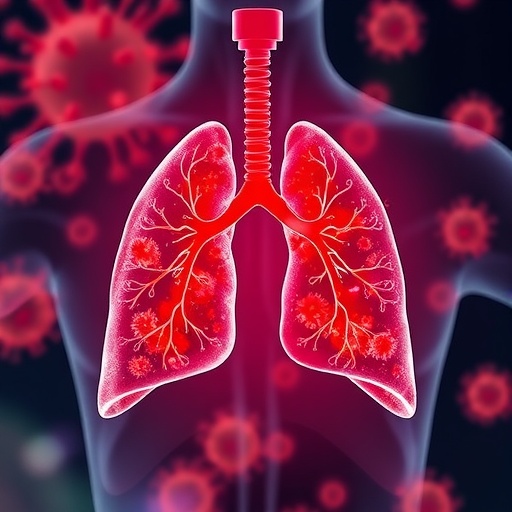
June 9, 2018 – Atlanta, GA – Researchers from the Emory Antibiotic Resistance Center describe the first strain of carbapenem-resistant, hypermucoviscous Klebsiella pneumoniae exhibiting colistin heteroresistance and enhanced virulence isolated from a patient in the United States. The research is presented at ASM Microbe, the annual meeting of the American Society for Microbiology, held from June 7th to 11th, in Atlanta, Georgia.
"The problem of antibiotic resistance is becoming increasingly alarming. The combination of increased virulence and multidrug resistance makes the situation worse," said Dr. David Weiss, director of the Emory Antibiotic Resistance Center.
The researchers showed that the K. pneumoniae isolate was heteroresistant to the last resort antibiotic colistin. This means that a small subpopulation of cells showed resistance. Heteroresistance is more difficult to detect with standard antibiotic susceptibility tests in clinical microbiology labs, and this isolate was classified as susceptible to colistin by standard methods. This discrepancy is particularly important, as Weiss' lab has shown that such undetected colistin heteroresistance can cause antibiotic treatment failure in mice.
In a hospital in Hangzhou, China, a 2016 deadly outbreak of carbapenem-resistant, hypervirulent K. pneumoniae was recently reported in Lancet Infectious Diseases.
"The isolate we are studying is not nearly as virulent (able to cause disease) in a mouse model as the bacteria from China," said Dr. Weiss, "However, finding the combination of antibiotic resistance and enhanced virulence from a clinical isolate in the United States (New York) is still alarming." The previously reported hypervirulent forms were largely antibiotic susceptible. Carbapenem-resistant K. pneumoniae, part of the carbapenem-resistant enterobacteriaceae (CRE) superbug family, is considered an urgent (top 3) threat by the CDC.
The researchers are urging more monitoring for this form of bacteria, which have the potential for increased virulence and may be especially worrisome in healthcare settings.
Jessie Wozniak, a Microbiology and Molecular Genetics graduate student at Emory University School of Medicine, and her colleagues examined 265 isolates of carbapenem-resistant K. pneumoniae from the Emerging Infections Program's Multi-site Gram-negative Surveillance Initiative, using a simple "string test."
"The string test is very low-tech," Wozniak says. "You take a loop, touch it to the bacterial colony, and pull back. The hypermucoviscous one looks like a string of cheese being pulled from a pizza."
The stretchiness observed by the string test is a sign that the bacteria produce more capsule polysaccharide, and has been associated with enhanced virulence previously. Wozniak verified that the isolate was approximately ten times more virulent in mice than other isolates of the same sequence type.
She also used whole-genome sequencing to discover that the U.S. isolate carried several antibiotic resistance genes, along with a new arrangement of virulence genes, but not the same set seen in similar K. pneumoniae isolates from Asian countries.
###
The Weiss lab is based at the Emory Vaccine Center/Yerkes National Primate Research Center. The bacteria in this study were identified through a Center for Disease Control and Prevention (CDC)-supported surveillance program. Jessie Wozniak is scheduled to present her team's findings at the American Society for Microbiology's Microbe in Atlanta on June 9, 2018.
ASM Microbe, the annual meeting of the American Society for Microbiology showcases the best microbial sciences in the world and provides a one-of-a-kind forum to explore the complete spectrum of microbiology. ASM Microbe is held in Atlanta, GA from June 7-11, 2018.
The American Society for Microbiology is the largest single life science society, composed of more than 30,000 scientists and health professionals. ASM's mission is to promote and advance the microbial sciences.
ASM advances the microbial sciences through conferences, publications, certifications and educational opportunities. It enhances laboratory capacity around the globe through training and resources. It provides a network for scientists in academia, industry and clinical settings. Additionally, ASM promotes a deeper understanding of the microbial sciences to diverse audiences.
Media Contact
Aleea Khan
[email protected]
202-942-9365
@ASMnewsroom
http://www.asm.org