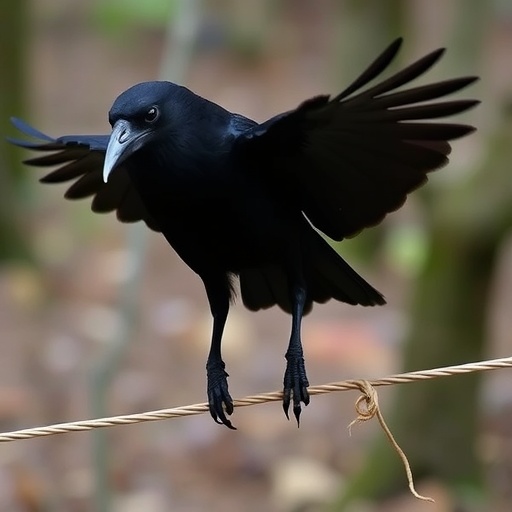
In the world of animal cognition and behavior, researchers continuously seek to unlock the mysteries inherent in the minds of various species. A groundbreaking study delves deep into the motivational aspects influencing performance in crows, particularly when they face the dual challenges of infection and anorexia. Conducted by a collaborative team of researchers led by Townsend, A.K. and including Bennett, E.M. and Argay, S.M., this study highlights significant findings that may reshape our comprehension of animal intelligence and their adaptive behaviors.
Crows are often celebrated for their remarkable problem-solving abilities. Their capacity to manipulate tools and engage in complex cognitive tasks exemplifies the advanced neural processes at play in their brains. However, for these highly intelligent birds, motivation plays a crucial role in their performance levels. The recent investigation assessed how low motivation impacts the ability of infected and anorexic crows to engage in a string-pulling task, an established benchmark in evaluating cognitive performance among avian species.
The research team meticulously designed experiments that presented infected crows with a string-pulling challenge. This specific task involved using their beaks and feet to pull a string in order to retrieve a hidden food reward. Simultaneously, the subjects were monitored for signs of infection and anorexia. The findings were illuminating, revealing that when crows were in a state of hunger or battling an illness, even their renowned problem-solving skills diminished significantly.
Delving deeper into their methodology, the researchers closely observed the crows’ behavior during the trials. They implemented a systematic approach to quantify various factors influencing performance, such as the frequency of successful string pulls, response times, and the overall effort exerted by the birds. The results were clear: motivation was critically intertwined with their physiological states, where low motivation due to illness or hunger led to suboptimal performance outcomes.
Cognitive flexibility is a hallmark of avian intelligence, particularly among corvids like crows. This study raises compelling questions about how both physical health and psychological states affect cognitive flexibility. Here, the team emphasizes the concept that cognitive performance cannot be viewed in isolation; rather, it is a complex interplay of biological, environmental, and psychological factors that can alter the outcomes of seemingly straightforward tasks.
Interpretively, the findings present a broader context when considering animal welfare and the implications of sickness on wildlife. The researchers argue that understanding these dynamics offers valuable insights for conservation efforts and how we engage with various bird populations in situ. Recognizing that infection and nutritional deficits can detrimentally affect cognitive tasks is vital, especially when designing rehabilitation programs for injured or ill wildlife.
In discussing the importance of their study, the authors point out that this research extends our understanding of the avian mind but also resonates with the human condition. The parallels drawn between how illness and motivation can influence performance in crows versus similar trends seen in humans adds an interesting layer to the discourse on cognitive psychology. It invites further exploration into how much of our own motivation is predicated on our physical health or other situational hardships.
A notable aspect of this investigation is its potential therapeutic implications. If low motivation significantly dampens performance, it raises questions about how interventions can restore motivation in animals and humans alike. In veterinary and rehabilitative settings, this might inform strategies to boost recovery and cognitive engagement among both avian species and other animals.
Equally noteworthy is the cascading impact of low motivation across ecological systems. As this study illustrates, cognitive performance in animals such as crows plays a critical role in their ability to forage, avoid predators, and navigate their environments effectively. The interdependence of health, motivation, and cognitive ability emphasizes the fragility of wildlife populations in the face of disease and ecological stressors.
The implications of this research thus extend beyond academia; they demand a conscientious consideration of how we manage and protect wildlife. The findings coax a reevaluation of conservation priorities, urging policymakers and conservationists to adopt a more holistic approach that encompasses not just habitat and protection measures but also health assessments and support systems for affected populations.
In summation, the research presented by Townsend, Bennett, Argay, and their colleagues marks a significant contribution to our understanding of animal cognition – a field that increasingly recognizes the need to integrate various biological and psychological aspects into our frameworks of understanding animal behavior. As we ponder these findings, they aptly illustrate both the complexity and the interconnectivity of life, inviting a closer examination of the myriad factors that drive performance in the natural world.
Summary and General Implications
As we observe these powerful insights into the cognitive and motivational dynamics in crows, it becomes evident that the threads connecting health, well-being, and intelligence are finely woven. The broader implications of this research extend to our responsibilities in wildlife conservation, mental health awareness, and even our views on intelligence itself. This exploration into avian cognition serves as a poignant reminder of the delicate interplay between motivation and performance, urging both researchers and practitioners alike to reflect on the multifaceted nature of life.
By understanding how physiological conditions impact psychological states, we can enhance our approaches to veterinary care, rehabilitation, and conservation. As we stand at this juncture in animal cognition research, the call for a multidisciplinary approach becomes more crucial than ever, challenging us to honor the complexity of life beyond mere observation and to engage deeply with the living ecosystems that sustain us all.
Subject of Research
Cognitive performance in crows influenced by motivation, infection, and anorexia.
Article Title
Low motivation drives poor performance of infected, anorexic crows on a string-pulling task.
Article References
Townsend, A.K., Bennett, E.M., Argay, S.M. et al. Low motivation drives poor performance of infected, anorexic crows on a string-pulling task. Anim Cogn 29, 13 (2026). https://doi.org/10.1007/s10071-025-02036-y
Image Credits
AI Generated
DOI
20 January 2026
Keywords
Cognitive performance, crows, motivation, infection, anorexia, animal cognition, wildlife rehabilitation.
Tags: advanced neural processes in crowsanimal cognition researchanimal intelligence studiesanorexia impact on cognitionavian cognitive performance benchmarksbehavioral challenges in crowscollaborative research in animal behaviorcrows problem-solving abilitiesinfection effects on intelligencemotivation in animal behaviorstring-pulling task in birdstool manipulation in avian species