• HOME
  • NEWS
  • EXPLORE
    • CAREER
      • Companies
      • Jobs
    • EVENTS
    • iGEM
      • News
      • Team
    • PHOTOS
    • VIDEO
    • WIKI
  • BLOG
  • COMMUNITY
    • FACEBOOK
    • INSTAGRAM
    • TWITTER
Wednesday, April 1, 2026
BIOENGINEER.ORG
No Result
View All Result
  • Login
  • HOME
  • NEWS
  • EXPLORE
    • CAREER
      • Companies
      • Jobs
        • Lecturer
        • PhD Studentship
        • Postdoc
        • Research Assistant
    • EVENTS
    • iGEM
      • News
      • Team
    • PHOTOS
    • VIDEO
    • WIKI
  • BLOG
  • COMMUNITY
    • FACEBOOK
    • INSTAGRAM
    • TWITTER
  • HOME
  • NEWS
  • EXPLORE
    • CAREER
      • Companies
      • Jobs
        • Lecturer
        • PhD Studentship
        • Postdoc
        • Research Assistant
    • EVENTS
    • iGEM
      • News
      • Team
    • PHOTOS
    • VIDEO
    • WIKI
  • BLOG
  • COMMUNITY
    • FACEBOOK
    • INSTAGRAM
    • TWITTER
No Result
View All Result
Bioengineer.org
No Result
View All Result
Home NEWS Science News Biology

Animals retain long-term memory of the biggest and best sources of food

Bioengineer by Bioengineer
February 9, 2018
in Biology
Reading Time: 2 mins read
0
Share on FacebookShare on TwitterShare on LinkedinShare on RedditShare on Telegram
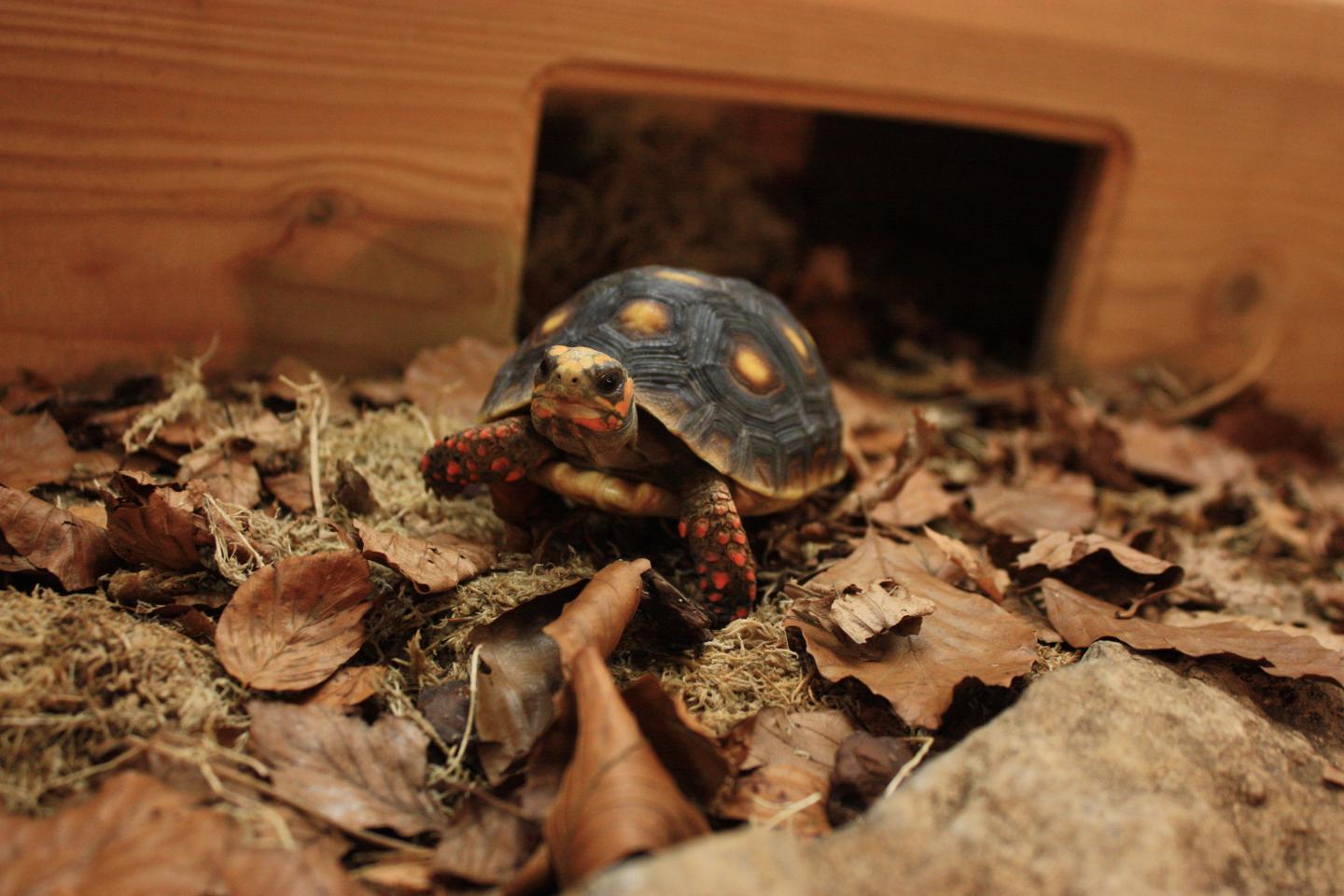
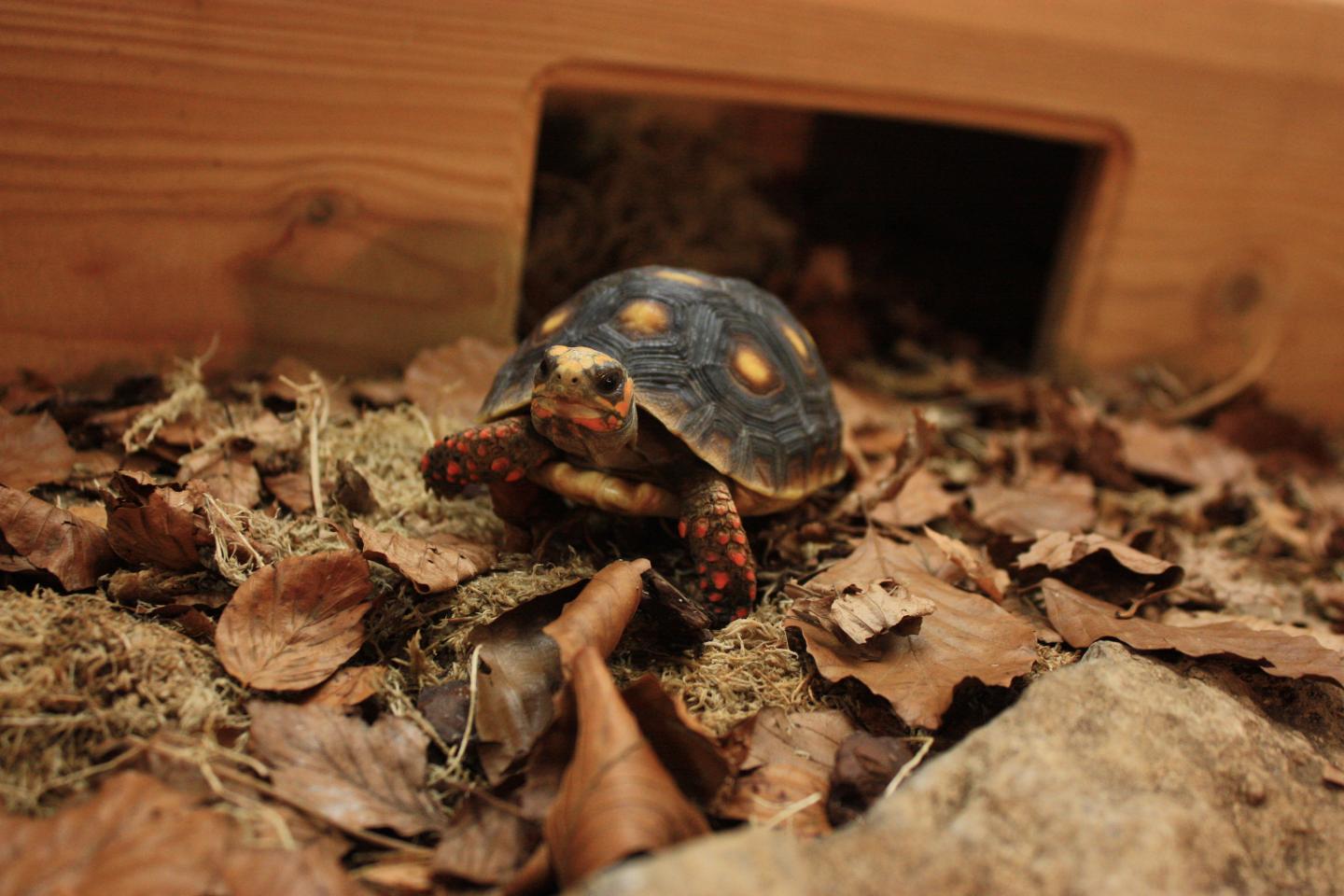
IMAGE

Credit: Sophie Moszuti

New research shows that red-footed tortoises can remember the location of their favourite food sources and the biggest stashes for at least 18 months.

When animals are making decisions in their environment, it is important that they remember not only the location of key food sources but also where the best or the most food is likely to be. The new findings from researchers at the University of Lincoln, UK, suggest these reptiles have an even greater long-term memory than previously thought.

Earlier studies have shown that animals remember the location of food, but this new research reveals for the first time that they are also able to exercise judgements about quality and quantity and retain this vital information for a long period of time.

The findings are published today (1st February 2017) in the Royal Society journal Biology Letters.

"Long-term memory is an important characteristic for animals which live for a long time, particularly if they inhabit environments where resources are patchily distributed like forests," explained Dr Anna Wilkinson, from the School of Life Sciences at the University of Lincoln. "A long-term memory enables them to retain information that is crucial for survival, such as the appearance and location of key resources.

"Our study shows us that they can in fact remember visual cues associated with different reward values over a period of at least 18 months, demonstrating a significant memory for different quantities and qualities of food. They are able to remember much more than just the presence or absence of food."

Dr Libby John, another author of the study, said: "This is an important distinction to make because, in nature, decisions are rarely clear cut so it is helpful to be able to evaluate the relative benefits of different resources."

As part of the research, red-footed tortoises were trained to associate visual cues (coloured sheets) with specific qualities of food (a preferred mango-flavoured jelly and a less-preferred apple-flavoured jelly) and different quantities. The animals learned which colours were associated with which type and quantity of food, and when they were shown the same cues 18 months later, they remembered their preferences.

The researchers conclude that this long-term memory is likely to impact directly on an animal's foraging decisions. The retention of this information could also improve fitness, as it would make foraging more efficient by eliminating the need to re-evaluate different food sources during each season and reduce the risk of re-visiting inadequate locations.

This new findings suggest that plants which provide better fruit in terms of quality or quantity may receive more visits in a given season, and may also receive repeat visits in successive fruiting seasons. The researchers suggest that this pattern could also have implications for ecological interactions such as herbivory and the dispersal of seeds.

The full paper is now available to read online.

###

Media Contact

Elizabeth Allen
[email protected]
01-522-837-650
@unilincoln

http://www.lincoln.ac.uk/home/

Share12Tweet8Share2ShareShareShare2

Related Posts

Do Your Genes Influence How Lifestyle Choices Affect Aging?

Do Your Genes Influence How Lifestyle Choices Affect Aging?

April 1, 2026
Combining Single-Cell Multiomics Unlocks Precise Identification of Rare Cell Types and States

Combining Single-Cell Multiomics Unlocks Precise Identification of Rare Cell Types and States

March 31, 2026

Genetically Engineered Marmosets Pave the Way for Advancements in Human Deafness Research

March 31, 2026

How Great Hammerhead Sharks Outsmart Ocean Temperature Swings: Insights from FIU Researchers

March 31, 2026
Please login to join discussion

POPULAR NEWS

  • blank

    Revolutionary AI Model Enhances Precision in Detecting Food Contamination

    96 shares
    Share 38 Tweet 24
  • Imagine a Social Media Feed That Challenges Your Views Instead of Reinforcing Them

    1006 shares
    Share 398 Tweet 249
  • Promising Outcomes from First Clinical Trials of Gene Regulation in Epilepsy

    51 shares
    Share 20 Tweet 13
  • Popular Anti-Aging Compound Linked to Damage in Corpus Callosum, Study Finds

    43 shares
    Share 17 Tweet 11

About

We bring you the latest biotechnology news from best research centers and universities around the world. Check our website.

Follow us

Recent News

Cutting-Edge “Smart” Drugs Revolutionize Cancer Treatment

KIST-IAE Collaborative Team Surpasses Performance Limits in Lithium-Air Batteries with Innovative Two-Dimensional Catalyst

Brain Metastases Show Unique Macrophage Spatial Patterns

Subscribe to Blog via Email

Enter your email address to subscribe to this blog and receive notifications of new posts by email.

Join 78 other subscribers
  • Contact Us

Bioengineer.org © Copyright 2023 All Rights Reserved.

Welcome Back!

Login to your account below

Forgotten Password?

Retrieve your password

Please enter your username or email address to reset your password.

Log In
No Result
View All Result
  • Homepages
    • Home Page 1
    • Home Page 2
  • News
  • National
  • Business
  • Health
  • Lifestyle
  • Science

Bioengineer.org © Copyright 2023 All Rights Reserved.