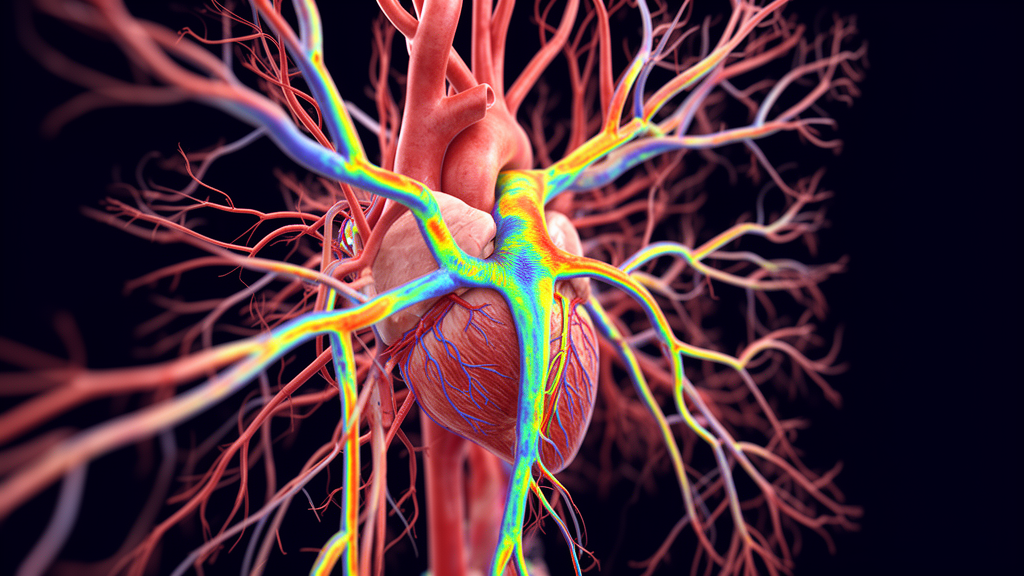
A novel computational fluid dynamics model derived from invasive coronary angiography demonstrates moderate correlation and fair diagnostic accuracy when evaluated against continuous thermodilution, according to findings from a clinical validation study. Coronary microvascular dysfunction carries an established association with myocardial ischaemia and an adverse clinical prognosis, yet accurate invasive evaluation of the coronary microvasculature has remained technically demanding. Standard invasive assessments currently necessitate dedicated intravascular hardware, which increases overall procedural duration and financial cost. While three-dimensional computational fluid dynamics modeling has offered an alternative approach to assessing microvascular physiology, the technique has previously lacked robust in vivo validation against continuous invasive measurements.
To establish clinical validity, investigators compared the computational approach directly against invasive continuous thermodilution measurements. The clinical validation trial prospectively recruited patients presenting with either acute coronary syndromes or chronic coronary syndromes across two tertiary cardiac centres. Each recruited participant underwent continuous thermodilution alongside angiography-derived physiological assessment. Researchers acquired invasive coronary angiographic images during catheterization and utilized these projections to reconstruct patient-specific three-dimensional arterial anatomy in silico.
The computational workflow calculated microvascular resistance reserve alongside absolute vessel flow across the reconstructed coronary arterial geometries. Boundary conditions for the three-dimensional computational fluid dynamics simulations were defined using patient-specific invasive pressure recordings obtained during routine fractional flow reserve assessments. Following data collection and quality review, paired flow evaluations were successfully completed and analyzed for 131 coronary arteries obtained from 89 recruited patients. Within the analyzed arterial cohort, the median fractional flow reserve was 0.81, with an interquartile range spanning from 0.70 to 0.89, and 108 of the 131 vessels, representing 81 percent, exhibited an epicardial stenosis.
Hemodynamic calculations revealed measurable differences between simulated and invasively measured resistance indices. The median computational microvascular resistance reserve was calculated at 2.31, with an interquartile range of 1.83 to 3.00. This computed median value was significantly lower than the continuous thermodilution measurement, which recorded a median microvascular resistance reserve of 2.79 and an interquartile range of 2.21 to 3.52. Statistical comparison confirmed that the computational model yielded significantly lower resistance reserve estimations than continuous thermodilution, documented by a test statistic of z equals 3.57 and a p-value of 0.0004.
Correlation analyses revealed a statistically significant moderate relationship between computational predictions and continuous thermodilution recordings. For microvascular resistance reserve, the comparison between calculated values and invasive measurements yielded a Spearman correlation coefficient of rho equals 0.58, with a p-value below 0.0001.
Investigators also assessed hyperaemic blood transport through the coronary tree, documenting a moderate relationship between computed and directly measured hyperaemic vessel inlet flow. This flow comparison demonstrated a correlation coefficient of rho equals 0.44, with statistical significance established at a p-value below 0.0001.
The prospective study demonstrated that angiography-derived computational fluid dynamics yields moderate correlation alongside fair diagnostic classification when validated against continuous thermodilution. The authors concluded that this computational method may serve as a useful, cost-effective, and less-invasive tool for coronary microvascular physiology assessment. By utilizing routine angiographic images and standard fractional flow reserve pressures, the in silico technique offers a potential clinical pathway to complement established invasive diagnostic procedures without requiring specialized microvascular sensor hardware.
Subject of Research: Clinical validation of an invasive angiography-derived computational fluid dynamics model against continuous thermodilution for assessing coronary microvascular physiology
Article Title: Agreement of an invasive angiography-derived computational model of coronary microvascular physiology against continuous thermodilution
Article References: Taylor, D. J., Newman, T., Tlałka, K., Yones, E., Anigboro, K., Saxton, H., Xu, X., Biancardi, A. M., Gosling, R., Czechowicz, K., Narracott, A., Hose, D. R., Ciupek, D., Maino, A., Marin, F., Fawaz, S., Halliday, I., OxAMI Investigators, Gunn, J. P., … Morris, P. D. (2026). Agreement of an invasive angiography-derived computational model of coronary microvascular physiology against continuous thermodilution. PLOS Digital Health, 5(11), e0001830. https://doi.org/10.1371/journal.pdig.0001830
Image Credits: AI Generated
DOI: 10.1371/journal.pdig.0001830
Keywords: coronary microvascular dysfunction, computational fluid dynamics, continuous thermodilution, microvascular resistance reserve, fractional flow reserve, coronary angiography, in silico modeling, myocardial ischaemia, hyperaemic vessel flow, acute coronary syndrome, chronic coronary syndrome, epicardial stenosis, hemodynamic assessment, interventional cardiology, microvascular physiology, receiver operating characteristic
News Source: Ophelia Keating. (November 13, 2026). Angiography Computational Model Shows Fair Diagnostic Accuracy for Coronary Microcirculation. Scienmag.