


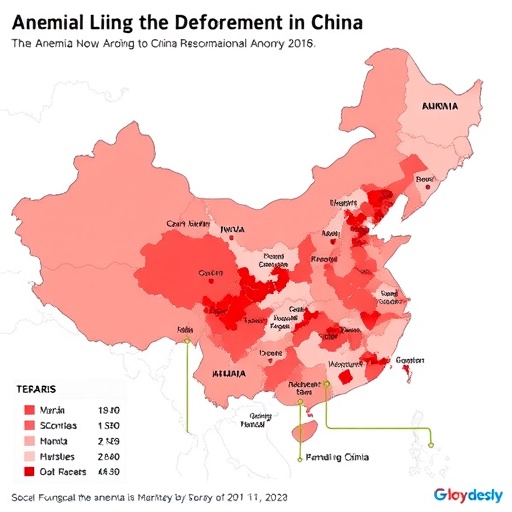
Anemia has long been known as a global health issue, but recent findings shed new light on its prevalence and causes, particularly in China. In an extensive study conducted by researchers Long et al., the national and subnational burden of anemia from 1990 to 2023 has been meticulously analyzed, revealing alarming trends and factors contributing to this widespread deficiency. The study highlights the need for targeted interventions to address the root causes of anemia, which can lead to serious health complications if left unaddressed.
Anemia, characterized by a decrease in the number of red blood cells or hemoglobin, can affect individuals of all ages, but its impact is particularly pronounced in vulnerable populations. The new research underscores the disproportionate burden of anemia borne by women and children in China, which aligns with global data but also emphasizes unique local factors that exacerbate this public health issue. One of the critical findings of the study is the alarming prevalence of anemia in pregnant women, which can adversely affect maternal and child health outcomes.
A detailed analysis of the data from the Global Burden of Disease Study 2023 shows that the factors driving the anemia epidemic in China are complex and multifaceted. Nutritional deficiencies, particularly of iron, vitamin B12, and folate, have been identified as primary contributors to the rising rates of anemia. The research also points to socioeconomic factors, including poverty and lack of education, which create barriers to accessing proper nutrition and healthcare services.
In addition to nutritional inadequacies, the study reveals that chronic diseases and infections significantly contribute to the anemia burden. Conditions such as diabetes, kidney disease, and chronic inflammation can impair the body’s ability to produce healthy red blood cells. Furthermore, the high incidence of parasitic infections in certain regions within China exacerbates the prevalence of anemia, particularly in rural areas where healthcare access is limited.
The researchers employed advanced analytical techniques to assess the impact of various risk factors on anemia prevalence. Utilizing a combination of statistical models and extensive datasets, they were able to identify trends and correlations over the past three decades. This rigorous approach underscores the importance of continuous monitoring and evaluation of health issues like anemia to inform public health policies and interventions.
One of the significant implications of the study is the call for a targeted public health response to mitigate the anemia burden. This includes increasing awareness of the importance of nutrition, particularly among women and children, and improving access to healthcare services in underserved communities. The authors advocate for comprehensive strategies that integrate nutritional education, supplementation programs, and disease management to effectively combat anemia.
Health policy makers must also recognize the interconnectivity of anemia with broader health and development issues. Addressing anemia requires a multifaceted approach that includes promoting women’s empowerment, enhancing educational opportunities, and fostering economic development. By tackling the underlying determinants of health, China can make significant progress in reducing the prevalence of anemia.
Another crucial aspect highlighted by the study is the importance of collaborative efforts among various stakeholders. Government agencies, non-governmental organizations, healthcare providers, and communities must work together to implement effective strategies to combat anemia. This collective effort will not only enhance health outcomes but also contribute to overall social and economic development.
The findings indicate that while progress has been made in some areas, substantial work remains to be done in the fight against anemia in China. Continuous investment in research is essential to understand the evolving nature of anemia and its risk factors. The study also emphasizes the need for innovative solutions, such as using digital health technologies to track and manage anemia cases effectively.
Looking ahead, researchers advocate for the establishment of robust national surveillance systems that can monitor anemia prevalence in real-time. This would enable quicker responses to emerging trends and targeted interventions to address the needs of affected populations. Furthermore, increasing public awareness campaigns aimed at educating the general population about anemia’s risks and prevention strategies could significantly impact public health.
The study not only contributes valuable knowledge to the field of epidemiology but also serves as a call to action for researchers, policymakers, and healthcare practitioners. The alarming statistics presented in the research underscore the urgency of addressing anemia as a pressing public health challenge. Timely interventions and sustained efforts can reverse the trends and improve the health and well-being of millions.
Finally, addressing anemia is not only vital for the individuals affected but for society as a whole. Reducing the burden of anemia can enhance productivity, economic stability, and overall community health. As the findings from Long et al. illustrate, the battle against anemia in China demands a concerted and collaborative effort to promote health equity and ensure that every individual has the opportunity to thrive.
In summary, the findings from the Global Burden of Disease Study 2023 provide crucial insights into the prevalence and causes of anemia in China over the past three decades. The detailed analysis offers a roadmap for targeted interventions, emphasizing the importance of addressing nutritional deficiencies, chronic diseases, and socio-economic barriers to effectively combat this public health issue.
Subject of Research: Anemia prevalence and causes in China from 1990 to 2023.
Article Title: National and subnational burden and causes of anemia in China from 1990 to 2023: findings from the Global Burden of Disease Study 2023.
Article References:
Long, Z., Yu, LL., Yan, FS. et al. National and subnational burden and causes of anemia in China from 1990 to 2023: findings from the Global Burden of Disease Study 2023.
Military Med Res 12, 91 (2025). https://doi.org/10.1186/s40779-025-00681-5
Image Credits: AI Generated
DOI: https://doi.org/10.1186/s40779-025-00681-5
Keywords: Anemia, Public Health, China, Nutritional Deficiencies, Chronic Diseases, Global Burden of Disease Study.
Tags: anemia complications and health outcomesanemia impact on vulnerable populationsanemia prevalence in Chinaanemia research and analysiscauses of anemia in women and childrenGlobal Burden of Disease Study findingsmaternal health and anemianational burden of anemia 2023nutritional deficiencies leading to anemiapublic health issues in Chinatargeted interventions for anemia



