

• HOME
  • NEWS
  • EXPLORE
    • CAREER
      • Companies
      • Jobs
    • EVENTS
    • iGEM
      • News
      • Team
    • PHOTOS
    • VIDEO
    • WIKI
  • BLOG
  • COMMUNITY
    • FACEBOOK
    • INSTAGRAM
    • TWITTER
Tuesday, December 16, 2025
BIOENGINEER.ORG
No Result
View All Result
  • Login
  • HOME
  • NEWS
  • EXPLORE
    • CAREER
      • Companies
      • Jobs
        • Lecturer
        • PhD Studentship
        • Postdoc
        • Research Assistant
    • EVENTS
    • iGEM
      • News
      • Team
    • PHOTOS
    • VIDEO
    • WIKI
  • BLOG
  • COMMUNITY
    • FACEBOOK
    • INSTAGRAM
    • TWITTER
  • HOME
  • NEWS
  • EXPLORE
    • CAREER
      • Companies
      • Jobs
        • Lecturer
        • PhD Studentship
        • Postdoc
        • Research Assistant
    • EVENTS
    • iGEM
      • News
      • Team
    • PHOTOS
    • VIDEO
    • WIKI
  • BLOG
  • COMMUNITY
    • FACEBOOK
    • INSTAGRAM
    • TWITTER
No Result
View All Result
Bioengineer.org
No Result
View All Result
Home NEWS Science News Science

Among antidementia drugs, memantine is associated with the highest risk of pneumonia

Bioengineer by Bioengineer
November 21, 2016
in Science
Reading Time: 2 mins read
0
Share on FacebookShare on TwitterShare on LinkedinShare on RedditShare on Telegram

A recent study from the University of Eastern Finland shows that among users of antidementia drugs, persons using memantine have the highest risk of pneumonia. The use of rivastigmine patches is associated with an increased risk as well.

The study found that persons using donepezil or galantamine had the lowest risk of pneumonia. However, persons using memantine or rivastigmine patches had a 1.6 and 1.15 times higher risk of pneumonia, respectively, but no elevated risk was observed among patients using rivastigmine in capsule form. The real risk increase may be even higher, as only cases of pneumonia leading to hospitalisation or death were taken into account.

The study is the first to compare the risk of pneumonia associated with different antidementia drugs and drug forms. The results are not likely to be explained by differences between drug molecules, as rivastigmine was associated with an increased risk of pneumonia in patch form only. The increased pneumonia risk among persons using memantine or rivastigmine patches may be explained at least partly by the fact that these medications are often used in more advanced states of dementia. However, all participants were home-dwelling persons.

The study is based on data from a nationwide register-based study (MEDALZ) conducted at the University of Eastern Finland. The risk of pneumonia was compared among users of different antidementia drugs. The study population consisted of 65,481 persons diagnosed with Alzheimer's disease during 2005-2011 in Finland.

No cure for Alzheimer's diseases currently exists, but the progression of the disease can be slowed down by antidementia drugs, such as memantine and acetylcholinesterase inhibitors such as donepezil, galantamine, and rivastigmine. Persons with Alzheimer's disease have an elevated risk of pneumonia, and it is one of the most common causes of hospitalisation among persons with Alzheimer's disease. Pneumonia is also a common cause of death in this population.

The findings published in the Annals of Medicine. In addition to researchers from the University of Eastern Finland, also researchers from the University of Turku and Karolinska Institutet participated in the study.

###

For further information, please contact: Heidi Taipale, Postdoctoral researcher, School of Pharmacy, University of Eastern Finland, heidi.taipale(at)uef.fi
Sirpa Hartikainen, Professor, School of Pharmacy, University of Eastern Finland, sirpa.hartikainen(at)uef.fi

Research article: Lampela P, Tolppanen AM, Tanskanen A, Tiihonen J, Lavikainen P, Hartikainen S, Taipale H. Use of antidementia drugs and risk of pneumonia in older persons with Alzheimer's disease. Annals of Medicine, published online October 27, 2016, http://dx.doi.org/10.1080/07853890.2016.1254349

Media Contact

Heidi Taipale
[email protected]
@UniEastFinland

http://www.uef.fi

############

Story Source: Materials provided by Scienmag
Share12Tweet8Share2ShareShareShare2

Related Posts

Five or more hours of smartphone usage per day may increase obesity

July 25, 2019
IMAGE

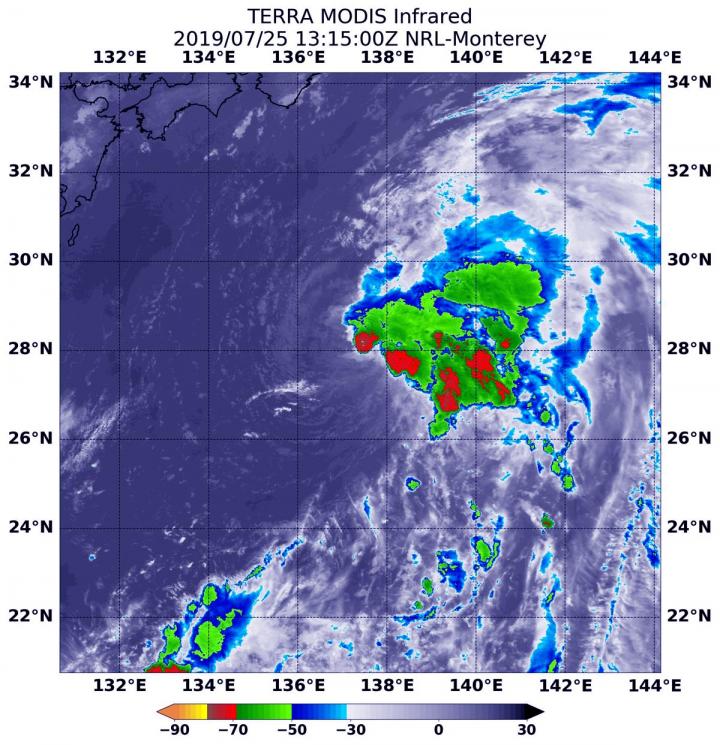
NASA’s terra satellite finds tropical storm 07W’s strength on the side

July 25, 2019

NASA finds one burst of energy in weakening Depression Dalila

July 25, 2019

Researcher’s innovative flood mapping helps water and emergency management officials

July 25, 2019
Please login to join discussion

POPULAR NEWS

  • Scientists Uncover Chameleon’s Telephone-Cord-Like Optic Nerves, A Feature Missed by Aristotle and Newton

    Scientists Uncover Chameleon’s Telephone-Cord-Like Optic Nerves, A Feature Missed by Aristotle and Newton

    122 shares
    Share 49 Tweet 31
  • Nurses’ Views on Online Learning: Effects on Performance

    69 shares
    Share 28 Tweet 17
  • NSF funds machine-learning research at UNO and UNL to study energy requirements of walking in older adults

    70 shares
    Share 28 Tweet 18
  • MoCK2 Kinase Shapes Mitochondrial Dynamics in Rice Fungal Pathogen

    71 shares
    Share 28 Tweet 18

About

We bring you the latest biotechnology news from best research centers and universities around the world. Check our website.

Follow us

Recent News

Evaluating Medications in Older Adults at Discharge

Ultra-Fast V-Band Tunable Lithium Niobate Oscillator

How Premed Curriculum Shapes Physician Specialty Choices

Subscribe to Blog via Email

Enter your email address to subscribe to this blog and receive notifications of new posts by email.

Join 70 other subscribers
  • Contact Us

Bioengineer.org © Copyright 2023 All Rights Reserved.

Welcome Back!

Login to your account below

Forgotten Password?

Retrieve your password

Please enter your username or email address to reset your password.

Log In
No Result
View All Result
  • Homepages
    • Home Page 1
    • Home Page 2
  • News
  • National
  • Business
  • Health
  • Lifestyle
  • Science

Bioengineer.org © Copyright 2023 All Rights Reserved.
