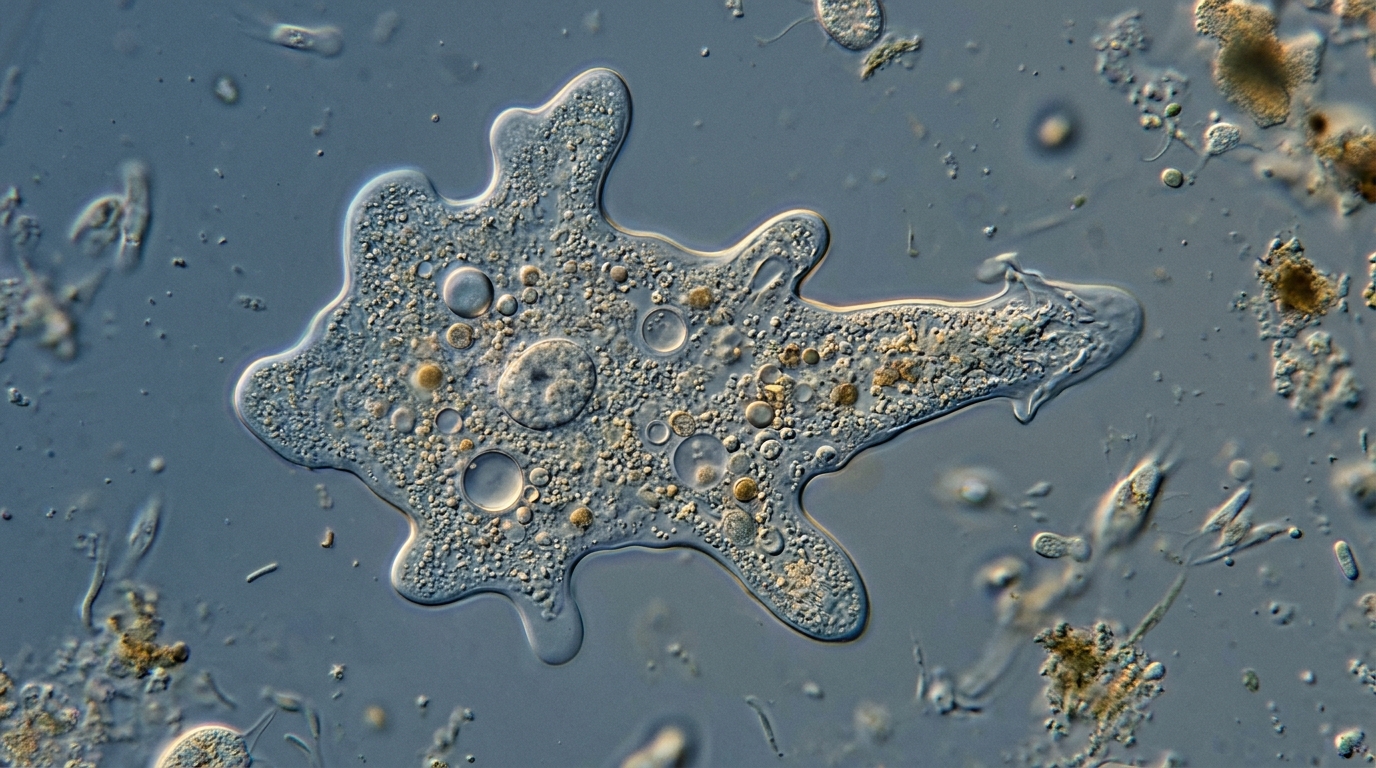
A comprehensive reanalysis of genomic, epigenomic, and transcriptomic datasets from the social amoeba Dictyostelium discoideum reveals that the organism regulates its transfer RNA pools through an unexpected combination of non-canonical wobble pairings and early biosynthetic silencing rather than selective gene shutoff. Transfer RNAs, or tRNAs, act as essential molecular decoders during translation, transferring corresponding amino acids to growing polypeptide chains according to the genetic instructions encoded within messenger RNAs. While protein synthesis rates have long been recognized to depend not only on messenger RNA abundance but also on the concentration and composition of available tRNA molecules, the upstream mechanisms that govern the availability of tRNA pools during developmental transitions have remained poorly understood. In Dictyostelium discoideum, acute starvation triggers an aggregative multicellular program known as the social cycle, or developmental morphogenesis, transforming solitary unicellular amoebas into differentiated fruiting bodies. By examining publicly available high-throughput sequencing data across this developmental cycle, researchers uncovered that nearly all tRNA genes remain open for transcription throughout morphogenesis, while the actual composition of the mature tRNA pool is dictated by extensive post-transcriptional processing and sharp expression shifts during the initial onset of starvation.
The study, which reanalyzed the reference genome assembly A×4 v2.7 along with chromatin accessibility and sequencing libraries, first evaluated whether the amoeba genome conforms to classical evolutionary models of translational selection. In typical genomes operating under translational selection, codon usage within protein-coding regions closely mirrors the abundance and diversity of encoded tRNA anticodons, ensuring efficient translation through direct Watson-Crick base pairing. The nuclear genome of Dictyostelium discoideum contains 407 tRNA genes that mature into 75 distinct sequence clusters called isodecoders, which collectively represent 42 distinct anticodon groups termed isoacceptors. These tRNAs are capable of charging all 20 standard amino acids in addition to selenocysteine, forming 21 functional isotypes. Although the amoeba protein-coding sequences actively utilize all 62 available codons, 20 possible anticodons are completely absent from the nuclear genome. When assessing the correspondence between genomic amino acid usage and tRNA copy number across isotypes, researchers observed a strong, statistically significant positive Pearson correlation of 0.77. However, when evaluated at the finer resolution of specific isoacceptors and individual codons, this correlation collapsed to 0.32, exposing severe genomic mismatches where abundant codons lack cognate tRNAs while rarely used codons correspond to overrepresented tRNA genes.
To resolve how Dictyostelium discoideum maintains efficient protein translation despite these profound genomic disparities, the researchers constructed a mathematical decoding potential graph linking 61 possible anticodons based on wobble interaction rules established by Francis Crick and subsequent structural discoveries. In this framework, anticodons capable of forming non-canonical pairings—such as guanine-uracil, uracil-guanine, and inosine-modified interactions—are mapped to the codons they can functionally replace during translation. The analysis revealed that the amoeba genome specifically expanded a restricted repertoire of anticodons capable of post-transcriptional wobble base modifications, effectively compensating for missing cognate sequences. Pairing mechanisms involving guanine-uracil and inosine-cytosine alone rescue 16 of the 20 absent anticodons, while uracil-guanine interactions rescue the remaining four. Inosine-adenine pairings connect existing anticodons to other existing gene copies, with only a single non-synonymous substitution identified wherein an isoleucine anticodon decodes a methionine codon through guanine-uracil pairing. When tRNA copy numbers and codon usages were grouped according to the edges of this decoding potential graph, the correlation between gene frequency and codon demand was fully restored to 0.74, demonstrating that non-canonical decoding explains the genomic architecture of the amoeba.
Beyond anticodon composition, the structural organization of tRNA genes across the Dictyostelium discoideum genome shows non-random evolutionary patterns that deviate from uniform spacing. Nuclear tRNA gene lengths display a bimodal distribution, spanning from 69 to 95 base pairs in genomic sequence and settling between 69 and 87 nucleotides following the removal of intervening intronic regions. The genes are distributed across all six nuclear chromosomes, yet chromosome 6 exhibits the highest gene density relative to its length. A multivariate hypergeometric test confirmed that specific tRNA isotypes are significantly clustered and expanded on particular chromosomes. In addition to the primary nuclear repertoire, the genome contains eight dedicated gene copies encoding the initiator methionine tRNA, while the mitochondrial genome encodes 18 tRNAs spanning 16 amino acids, implying that the remaining mitochondrial tRNA requirements are met through the cellular import of nuclear-encoded transcripts. The nuclear genome also harbors three sequences categorized as pseudogenes, two of which belong to the expanded serine and leucine isotype families, indicating either copy number limits or evolutionary sequence variation under relaxed selection pressures.
To establish which segments of the tRNA repertoire are accessible to the transcriptional machinery throughout development, the investigation examined assay for transposase-accessible chromatin sequencing data across four defined morphological stages: the initial vegetative state, streaming cells, aggregated mounds, and culminating fruiting bodies. Because tRNAs are shorter than the approximately 140 base pairs required for a full DNA wrap around a histone octamer, transcription by RNA polymerase III strictly requires the gene loci to reside within nucleosome-free regions. Peak-calling pipelines filtering for reproducible nucleosome-free chromatin revealed that 95.5 percent of the nuclear tRNA genes, representing 389 of the 407 loci, are transcriptionally accessible in at least one developmental stage. Strikingly, 89.2 percent of these accessible genes remain positioned within nucleosome-free regions constitutively across all four evaluated phases of development. This constitutive openness includes every gene copy encoding methionine, tyrosine, histidine, and tryptophan isotypes, demonstrating that chromatin condensation does not serve as the primary mechanism regulating overall tRNA expression during social morphogenesis.
Only a small minority of tRNA genes demonstrated stage-dependent chromatin access, with four genes restricted to the vegetative phase, one specific to streaming, four exclusive to the mound stage, and none unique to the fruiting body. The eighteen tRNA genes that remained excluded from nucleosome-free regions across all developmental stages appear to be constitutively silenced. Notably, this constitutively repressed fraction includes the sole gene encoding selenocysteine tRNA, an observation consistent with the fact that Dictyostelium discoideum expresses only five known selenoproteins, each incorporating a single selenocysteine residue. The three identified pseudogenes also remain permanently trapped outside nucleosome-free regions, indicating that stable histone-mediated chromatin repression actively prevents the transcription of defective or spurious non-coding transcripts. This widespread, persistent chromatin accessibility across the remainder of the genome aligns with previous structural studies showing an absence of classical euchromatin and heterochromatin compartments during the early transitions of the amoeba social cycle.
Because chromatin accessibility indicated that nearly the entire tRNA gene repertoire is constitutively available for transcription, researchers evaluated RNA sequencing data to examine whether the protein machinery responsible for tRNA biogenesis is dynamically regulated across morphogenesis. In eukaryotic cells, the synthesis of functional tRNAs requires transcription by RNA polymerase III, guided by transcription factors TFIIIC and TFIIIB, followed by enzymatic cleavage of 5-prime leader and 3-prime trailer sequences, intron excision, terminal CCA trinucleotide addition, and diverse chemical base modifications. Differential expression analysis across developmental transitions demonstrated a coordinated, genome-wide down-regulation of tRNA biogenesis enzymes during the initial transition from vegetative growth to streaming. Transcripts encoding components of the RNA polymerase III core, end-processing nucleases, modification enzymes, and aminoacyl-tRNA synthetases fell significantly within six hours of starvation. Rather than gradually decreasing as cells progress toward dormant spores in the terminal fruiting body, the enzymatic machinery governing tRNA synthesis undergoes its primary repression immediately upon entry into the developmental pathway.
Despite this pervasive early shutdown of biosynthetic machinery, specific molecular elements bypass the down-regulation to sustain ongoing translation during cellular aggregation. The study identified that the RNA polymerase III assembly factor TFIIIC, encoded by gtf3c5, maintains stable expression, while the transcription initiation factor TFIIIB, encoded by tbpA, is significantly up-regulated during the transition from vegetative to streaming cells. Because RNA polymerase III can sustain multiple re-initiation transcription cycles when TFIIIB remains positioned at promoters, this factor retention allows basal transcription of accessible tRNA genes to proceed. Furthermore, while the primary CCA-adding enzyme cca1 declines, the recently identified secondary paralog cca2 escapes silencing and peaks in expression during the initial hours of starvation. Key uridine wobble modification enzymes, including elp1, elp6, and ctu1, as well as four distinct aminoacyl-tRNA synthetases, also maintain steady transcription, providing a compensatory mechanism that preserves translation elongation capacity under acute nutrient limitation.
To determine how these upstream transcriptional and enzymatic dynamics alter the abundance of mature, functional decoding molecules, the researchers analyzed LOTTE-seq data, which selectively captures mature tRNA transcripts possessing intact 3-prime CCA tails. Read counts across three overlapping transitions confirmed that 51 out of 54 nuclear isodecoders were actively represented in the mature pool, while unexpressed pseudogenes yielded no detectable mature transcripts. Paralleling the down-regulation of processing enzymes, the transition from vegetative to streaming amoebas exhibited the highest proportion of decreased mature tRNA levels across all examined stages. Mature tRNA regulation showed considerably greater variation at the level of individual isodecoders than at broader isoacceptor or isotype groupings. In the case of valine tRNAs, for example, two isodecoder clusters decreased while a third increased, masking regulatory dynamics when evaluated as an entire isotype. The subsequent progression from streaming amoebas to mature fruiting bodies displayed significant compositional remodeling, exhibiting the largest overall increase in mature tRNA abundances across classes and paralleling the partial recovery of biogenesis enzymes.
The finding that tRNA biosynthesis is suppressed upon the initiation of starvation rather than during final spore dormancy offers fresh insight into the evolutionary history of aggregative multicellularity. In Dictyostelia, ancestral clades formed solitary survival cysts upon starvation, and the researchers propose that the immediate silencing of the tRNA biogenesis pathway represents a conserved, ancestral encystation response. When starving amoebas aggregate instead of encysting as single cells, compensatory factors such as TFIIIB recruitment, secondary CCA additions, and stable initiator methionine tRNA levels prevent total translational arrest, supporting the synthesis of developmentally essential proteins. The study authors emphasize that using independent sequencing datasets derived from separate laboratory conditions introduces baseline experimental variance, noting that future tightly controlled experiments will be necessary to resolve tRNA dynamics during spore germination. Nevertheless, the integration of genomic, epigenomic, and transcriptomic evidence confirms that Dictyostelium discoideum relies on extensive wobble modifications to bypass gene-codon disparities and modulates its tRNA pool through early post-transcriptional silencing during social development.
Subject of Research: Regulation of tRNA expression and wobble decoding mechanisms during Dictyostelium discoideum social development
Article Title: Regulation of tRNA expression during the social cycle of the amoeba Dictyostelium discoideum
Article References: Valdivia, D. I., & Stadler, P. F. (2026). Regulation of tRNA expression during the social cycle of the amoeba Dictyostelium discoideum. BMC Molecular and Cell Biology, 27(1), Article 19. https://doi.org/10.1186/s12860-026-00580-0
Image Credits: AI Generated
DOI: 10.1186/s12860-026-00580-0
Keywords: Dictyostelium discoideum, tRNA regulation, wobble pairing, anticodon evolution, social amoeba, transcriptomics, ATAC-seq, LOTTE-seq, RNA polymerase III, developmental morphogenesis, Regulation, tRNA
News Source: Drew Townsend. (November 7, 2026). Amoeba tRNA Pools Shift During Development Through Wobble Pairing and Early Silencing. Scienmag.