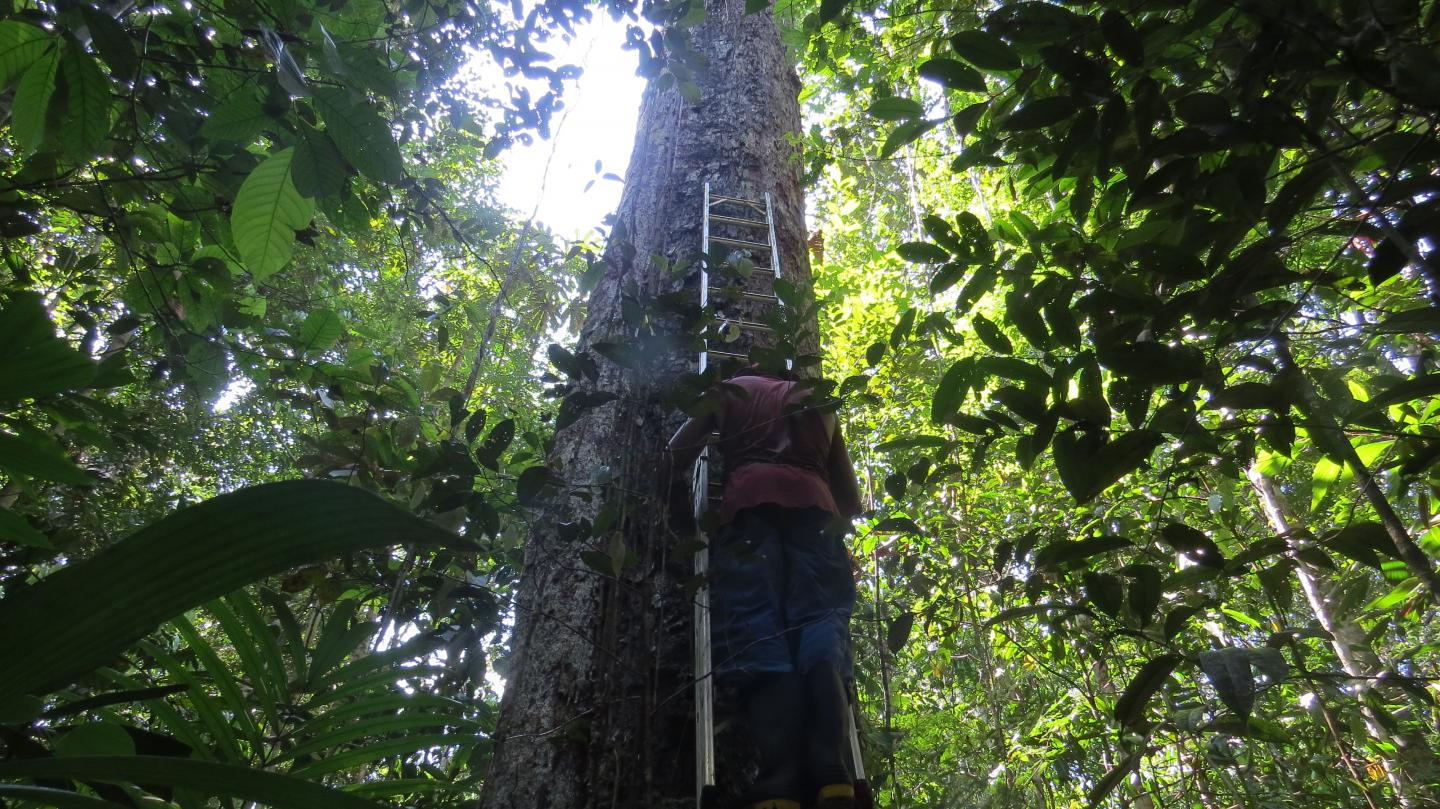
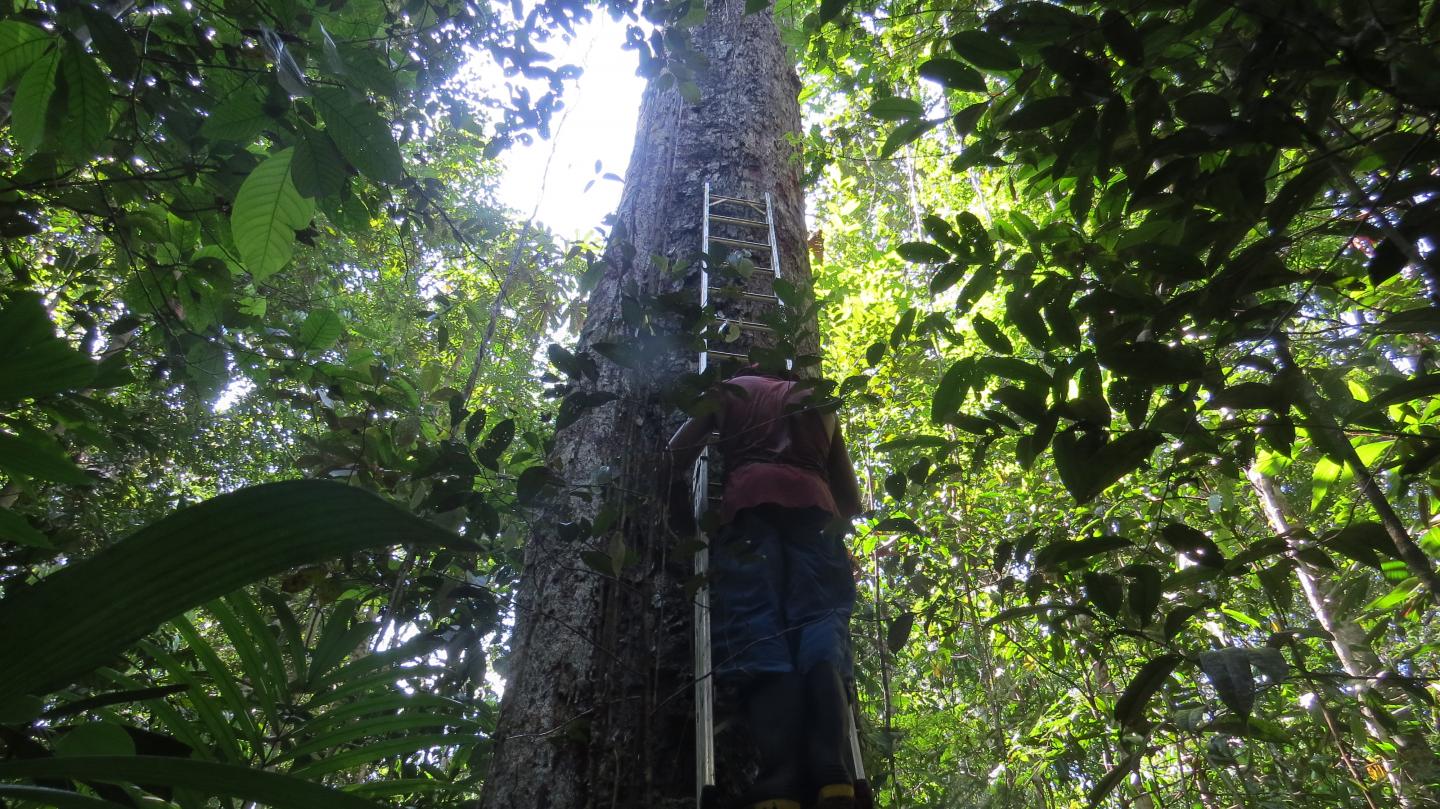
Credit: Adriane Esquivel Muelbert, University of Leeds
A team of more than 100 scientists has assessed the impact of global warming on thousands of tree species across the Amazon to discover the winners and losers from 30 years of climate change. Their analysis found the effects of climate change are altering the rainforest's composition of tree species but not quickly enough to keep up with the changing environment.
The team, led by University of Leeds in collaboration with more than 30 institutions around the world, used long-term records from more than a hundred plots as part of the Amazon Forest Inventory Network (RAINFOR) to track the lives of individual trees across the Amazon region. Their results found that since the 1980s, the effects of global environmental change – stronger droughts, increased temperatures and higher levels of carbon dioxide in the atmosphere – has slowly impacted specific tree species' growth and mortality.
In particular, the study found the most moisture-loving tree species are dying more frequently than other species and those suited to drier climates were unable to replace them.
Lead author Dr Adriane Esquivel Muelbert, from the School of Geography at Leeds, said: "The ecosystem's response is lagging behind the rate of climate change. The data showed us that the droughts that hit the Amazon basin in the last decades had serious consequences for the make-up of the forest, with higher mortality in tree species most vulnerable to droughts and not enough compensatory growth in species better equipped to survive drier conditions."
The team also found that bigger trees – predominantly canopy species in the upper levels of the forests – are outcompeting smaller plants. The team's observations confirms the belief that canopy species would be climate change "winners" as they benefit from increased carbon dioxide, which can allow them to grow more quickly. This further suggests that higher carbon dioxide concentrations also have a direct impact on rainforest composition and forest dynamics – the way forests grow, die and change.
In addition, the study shows that pioneer trees – trees that quickly spring up and grow in gaps left behind when trees die – are benefiting from the acceleration of forest dynamics.
Study co-author Oliver Phillips, Professor of Tropical Ecology at Leeds and founder of the RAINFOR network said: "The increase in some pioneer trees, such as the extremely fast growing Cecropia, is consistent with the observed changes in forest dynamics, which may also ultimately be driven by increased carbon dioxide levels."
Co-author Dr Kyle Dexter, from the University of Edinburgh, said: "The impact of climate change on forest communities has important consequences for rain forest biodiversity. The species most vulnerable to droughts are doubly at risk, as they are typically the ones restricted to fewer locations in the heart of the Amazon, which make them more likely to be extinct if this process continues.
"Our findings highlight the need for strict measures to protect existing intact rainforests. Deforestation for agriculture and livestock is known to intensify the droughts in this region, which is exacerbating the effects already being caused by global climate change."
###
Further information:
Images available for download: https://drive.google.com/open?id=1wSZrOfPyWdINxdswdNqFinbW44AMWloj
The paper Compositional response of Amazon forests to climate change is published in Global Change Biology 8 November 2018 (DOI: 10.1111/gcb.14413)
RAINFOR website: http://www.rainfor.org/
For more information or to arrange interviews, contact press officer Anna Harrison at the University of Leeds [email protected] or +44(0)113 343 4031.
University of Leeds
The University of Leeds is one of the largest higher education institutions in the UK, with more than 33,000 students from more than 150 different countries, and a member of the Russell Group of research-intensive universities.
We are a top ten university for research and impact power in the UK, according to the 2014 Research Excellence Framework, and are in the top 100 of the QS World University Rankings 2019. Additionally, the University was awarded a Gold rating by the Government's Teaching Excellence Framework in 2017, recognising its 'consistently outstanding' teaching and learning provision. Twenty-six of our academics have been awarded National Teaching Fellowships – more than any other institution in England, Northern Ireland and Wales – reflecting the excellence of our teaching. http://www.leeds.ac.uk
Media Contact
Anna Harrison
[email protected]
44-011-334-34031
@universityleeds
http://www.leeds.ac.uk
Related Journal Article
http://dx.doi.org/10.1111/gcb.14413