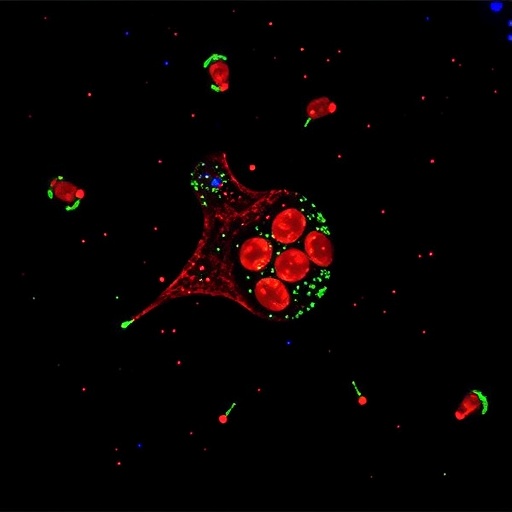
A recent breakthrough from the German Center for Neurodegenerative Diseases (DZNE) and the Hertie Institute for Clinical Brain Research (HIH) at the University of Tübingen unravels a surprising new role for phosphorylated tau protein (pTau), traditionally regarded as a hallmark of Alzheimer’s disease. This novel understanding emerges from a comprehensive observational study involving 280 elderly participants across Germany, Italy, and the Netherlands, shedding light on the broader biomedical implications of elevated pTau levels beyond neurodegenerative pathology.
Phosphorylated tau protein has long been associated with Alzheimer’s disease, primarily identified as an early biomarker that signifies the presence or progression of the neurodegenerative condition. The abnormal accumulation and hyperphosphorylation of tau within neuronal cells lead to the formation of neurofibrillary tangles, a pathological hallmark of Alzheimer’s. However, the latest research from Tübingen reveals that the elevation of pTau is not confined to Alzheimer’s but is also evident in systemic amyloidoses, disorders characterized by the aggregation of misfolded proteins in organs outside the brain.
The study focuses on two major forms of systemic amyloidosis: transthyretin amyloidosis (ATTR) and immunoglobulin light-chain amyloidosis (AL). These entities are fundamentally distinct from Alzheimer’s disease in terms of the proteins involved and the organs primarily affected, with amyloid deposits concentrating within the heart and kidneys rather than cerebral tissues. Despite these differences, Tübingen researchers observed that individuals suffering from these amyloid disorders exhibited increased blood levels of phosphorylated tau protein, suggesting a physiological link between amyloid pathology and pTau that transcends neuronal damage.
This unexpected discovery prompts a paradigm shift in how clinicians and researchers interpret pTau blood tests, traditionally used as specific biomarkers for Alzheimer’s diagnostics. According to Prof. Mathias Jucker, who spearheaded the investigation, elevated pTau levels represent a biomolecular stress response rather than a disease-specific marker. His team hypothesizes that pTau is released into the bloodstream as a systemic cellular reaction to amyloid-driven stress, potentially serving as a protective or signaling mechanism across different organ systems afflicted by protein misfolding.
From a diagnostic perspective, this research opens a promising avenue for utilizing pTau assays in the realm of systemic amyloidosis diagnosis. The relative ease and non-invasiveness of measuring pTau in peripheral blood could transform clinical practices, enabling earlier and more accurate detection of these serious disorders. Given the often subtle clinical presentation of systemic amyloidoses, especially in their initial stages, pTau testing might complement or even expedite diagnosis, ensuring timely therapeutic intervention and improved patient outcomes.
The implications extend further into the nuanced field of polyneuropathy (PNP) diagnosis. PNP manifests as peripheral nerve damage resulting in sensory disturbances such as numbness and tingling, symptoms that overlap among diverse pathological origins. Systemic amyloidosis is a known etiological factor for certain forms of PNP. The study’s findings posit that measuring pTau levels can help differentiate amyloidosis-associated polyneuropathy from other etiologies, refining diagnostic accuracy and enabling targeted treatment strategies.
Critically, the evidence urges caution in the interpretation of pTau levels when diagnosing Alzheimer’s disease, particularly during its early phases. PTau should not be considered a standalone diagnostic criterion, as elevated levels may reflect systemic amyloid-related stress rather than isolated cerebral pathology. This insight necessitates integration of comprehensive clinical and neuropsychological assessments alongside biomarker data, thereby enhancing the diagnostic precision for Alzheimer’s and reducing the risk of misclassification.
At the molecular level, phosphorylated tau functions in normal physiology by stabilizing microtubules within neurons. Under pathological conditions, such as in Alzheimer’s, abnormal phosphorylation disrupts tau’s function, contributing to cytoskeletal collapse and neuronal death. The revelation that peripheral tissues also elevate pTau in response to amyloid deposition invites further exploration into the systemic biology of tau phosphorylation. It suggests that the tau protein might engage in broader cytoprotective mechanisms or cellular communication pathways during amyloid stress than previously recognized.
Moreover, the observation that increased pTau may serve as a ‘stress signal’ aligns with findings from animal studies, including hibernating mammals, wherein transient elevation of tau phosphorylation appears to protect neurons from metabolic shutdown. Extrapolating this phenomenon to humans, pTau elevation in systemic amyloidoses could be an adaptive, albeit complex, physiological response to mitigate cellular injury inflicted by amyloid fibrils outside the nervous system.
This refined understanding challenges the traditional narrow framing of tau pathology solely within neurodegeneration. It calls for multidisciplinary research integrating neurology, cardiology, nephrology, and molecular biology to dissect the mechanisms orchestrating tau phosphorylation and secretion under varying pathological contexts. Uncovering these pathways could yield novel biomarkers and therapeutic targets effective across a spectrum of amyloid-related diseases.
In practical terms, the study’s insights have immediate clinical relevance. As systemic amyloidoses often remain underdiagnosed due to overlapping symptoms with other cardiovascular and renal conditions, incorporating pTau measurements into diagnostic algorithms could revolutionize screening practices. Early recognition and differentiation from neurologic or other systemic illnesses would facilitate appropriate management plans, potentially improving survival and quality of life for affected patients.
Future investigations, driven by these findings, will likely focus on delineating the specificity and sensitivity of pTau as a biomarker in various amyloid disorders. Longitudinal studies could assess how pTau levels correlate with disease progression, treatment response, and clinical outcomes. Additionally, exploring the molecular triggers and pathways governing tau phosphorylation in peripheral organs may unlock novel insights into systemic proteostasis and cellular defense mechanisms.
In summary, the research conducted by DZNE and HIH researchers represents a significant advancement in our understanding of phosphorylated tau protein’s role beyond the brain. By illuminating its elevation in systemic amyloidosis affecting heart and kidneys, the study challenges entrenched conceptions and opens new vistas for diagnosis and therapeutic innovation across neurodegenerative and systemic protein misfolding diseases.
Subject of Research: People
Article Title: Blood phosphorylated Tau elevation in immunoglobulin light chain and transthyretin amyloidosis
News Publication Date: 11-Mar-2026
Web References: http://dx.doi.org/10.1038/s41591-026-04272-2
Keywords: Biomarkers, Alzheimer disease, Amyloidosis, Medical diagnosis, Neurological disorders, Nephropathies, Cardiovascular disease
Tags: Alzheimer’s biomarker cardiovascular riskAlzheimer’s disease early detectionamyloid protein aggregation disorderscross-country neurodegenerative researchelderly population biomedical studyimmunoglobulin light-chain amyloidosis kidney impactneurodegenerative disease biomarkersnon-neurological implications of pTauphosphorylated tau protein biomarkersystemic amyloidosis diagnosistau protein in organ-specific amyloidosistransthyretin amyloidosis heart involvement