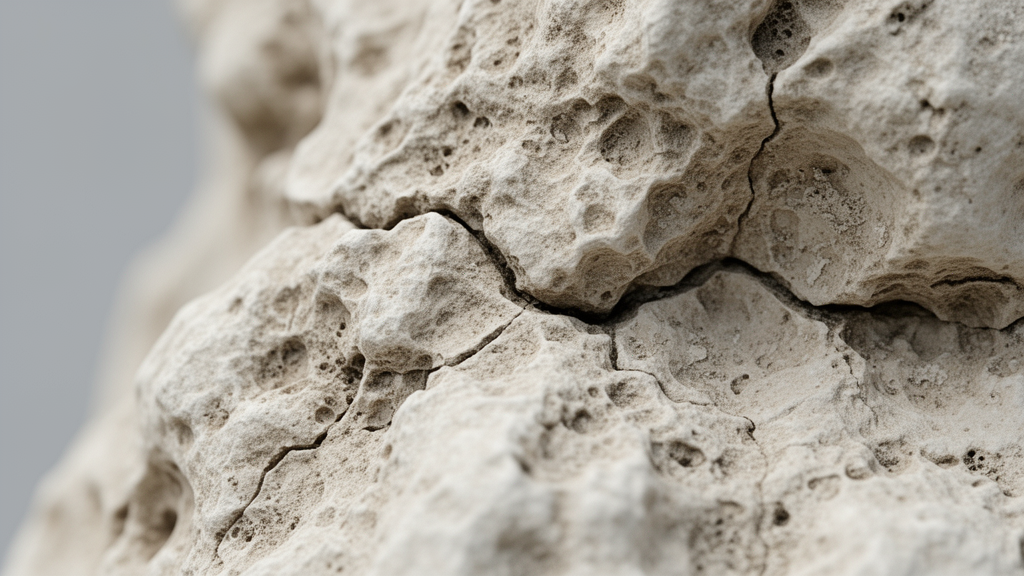
Laboratory experiments evaluating the structural degradation of carbonate rock under extreme chemical exposures have demonstrated that alternating cycles of acidic and alkaline solutions trigger the most aggressive mechanical weakening and microstructural breakdown in limestone. When subjected to sequential immersion in sulfuric acid and sodium hydroxide, dense sedimentary limestone experienced accelerated loss of compressive strength, rapid expansion of internal void space, and pervasive propagation of interconnected microcracks. Across a thirty-day comparative testing framework, the cumulative deterioration of the rock followed a consistent hierarchy where acid-alkali alternation caused significantly greater structural degradation than acidic wet-dry cycling, which in turn exceeded the damage caused by continuous acid immersion alone. In contrast, alkaline immersion and neutral distilled-water environments exhibited negligible erosive effects, with specimens maintaining intact internal structures and baseline mechanical properties. These experimental measurements demonstrate that alternating chemical regimes activate a dynamic chemical fatigue mechanism that compounds microscopic distress far more rapidly than prolonged exposure to single acidic solutions.
The investigation focused on dense, greyish-white limestone core specimens collected from an underground engineering project located in Selangor, Malaysia. Representative mineralogical screening using X-ray diffraction confirmed that the rock matrix is predominantly composed of calcite, which constitutes approximately 98.7 percent of the material, alongside minor traces of quartz and clay minerals, with an average natural density of approximately 2.67 grams per cubic centimeter. Following standardized testing protocols established by the International Society for Rock Mechanics, cylindrical test specimens were machined to uniform dimensions of 100 millimeters in height and 50 millimeters in diameter, with diameter tolerances maintained within 0.3 millimeters and end-face non-parallelism limited to within 0.05 millimeters. To minimize initial material variability and ensure baseline consistency across all experimental batches, ultrasonic measurements were conducted on oven-dried samples at 105 degrees Celsius, allowing researchers to select only those specimens displaying baseline longitudinal compressional wave velocities within a tight envelope of 5800 plus or minus 200 meters per second.
To simulate aggressive subterranean conditions such as acid precipitation, industrial chemical runoff, and alkaline groundwater, the researchers established five distinct experimental regimes. The acidic test medium consisted of an analytical-grade sulfuric acid solution diluted with deionized water to a target pH of 2.0 plus or minus 0.1, corresponding to a concentration of approximately 0.01 moles per liter, while the alkaline medium comprised analytical-grade sodium hydroxide pellets dissolved to achieve a pH of 12.0 plus or minus 0.1. Solution acidity and alkalinity were monitored on a daily basis using calibrated pH meters and refreshed as necessary to maintain stable exposure conditions. Group one served as an untreated baseline control immersed in distilled water for thirty days. Groups two and three underwent continuous immersion in either the acidic or alkaline solution for durations of ten, twenty, and thirty days. Group four investigated cyclic wet-dry conditions, subjecting specimens to twenty-four hours of immersion followed by twenty-four hours of oven drying at 60 degrees Celsius for five, ten, and fifteen cycles. Group five evaluated acid-alkali alternation, where specimens were immersed in acid for twenty-four hours, rinsed in deionized water to clear pore residues, and subsequently submerged in alkaline solution for twenty-four hours per cycle across identical cumulative intervals.
Physical measurements revealed contrasting evolutionary patterns among the different chemical environments over the thirty-day testing duration. Baseline porosity determined through the water-saturation method stood at 0.10 percent in the distilled-water control group, where mass loss remained at zero percent throughout the month-long period. Under continuous alkaline exposure, porosity hovered near the initial 0.10 percent value and mass changes fluctuated around zero, showing that sodium hydroxide causes minimal alterations to internal pore configurations. Conversely, continuous sulfuric acid immersion steadily dissolved calcite, driving porosity from 0.10 percent to 0.19 percent at ten days and 0.30 percent at thirty days, accompanied by an overall specimen mass loss of 0.11 percent. Acidic wet-dry cycling amplified this trend further, expanding porosity from 0.25 percent to 0.37 percent and increasing cumulative mass loss from 0.22 percent to 0.45 percent as cyclic drying and wetting progressed across fifteen intervals. The most pronounced physical disruption occurred in the acid-alkali alternation group, where porosity climbed from 0.29 percent at ten cycles to 0.42 percent after thirty days, while cumulative mass loss reached 0.92 percent as measured on an analytical balance sensitive to 0.001 grams.
Non-destructive ultrasonic testing demonstrated that compressional wave transmission is highly sensitive to the internal microstructural degradation caused by chemical erosion. In the continuous acid exposure group, longitudinal wave velocity dropped progressively from 5949 meters per second at ten days to 5683 meters per second at thirty days, reflecting the formation of internal voids and microcrack propagation. Under acidic wet-dry cycling, velocity attenuation became even more severe, declining from 6000 meters per second to 5539 meters per second. Continuous alkali immersion and alkaline wet-dry cycles caused virtually no measurable changes in wave velocity, confirming the mechanical stability of the rock framework in high-pH environments. However, specimens subjected to alternating acid and alkali exposure displayed the steepest velocity decline observed in the study, plunging from 5796 meters per second at ten days down to 5268 meters per second at thirty days. Regression analysis across all experimental groups revealed a clear non-linear relationship between porosity and wave speed: below a porosity of 0.10 percent, velocity variations remained negligible, but once chemical corrosion expanded porosity into the range of 0.30 to 0.40 percent, wave velocity dropped sharply, validating elastic wave attenuation as an accurate indicator of internal damage.
Mechanical testing conducted on oven-dried specimens using an INSTRON 5582 universal testing frame operated at a controlled displacement rate of 0.6 millimeters per minute demonstrated significant degradation of load-bearing properties. Continuous acid immersion caused uniaxial compressive strength to decrease from 46.60 megapascals at ten days to 41.36 megapascals after thirty days, representing an overall reduction of 13.1 percent, while Brazilian splitting tensile strength fell from 6.20 megapascals to 5.12 megapascals. Acidic wet-dry cycling aggravated this mechanical weakening, driving compressive strength down to 38.76 megapascals and tensile strength down to 4.83 megapascals. In stark contrast, specimens exposed to continuous alkali immersion and alkaline wet-dry cycles retained strength values virtually identical to the untreated baseline control. The most severe mechanical deterioration occurred under acid-alkali alternation, where compressive strength plunged from 43.93 megapascals at ten days to 33.73 megapascals at thirty days—a cumulative decline of 29.1 percent—while tensile capacity decreased from 5.87 megapascals to 4.45 megapascals, demonstrating that alternating chemical stress profoundly impairs bulk compressive resistance.
High-resolution microstructural imaging using scanning electron microscopy paired with digital image processing via ImageJ clarified the morphological mechanisms underpinning these macroscopic mechanical declines. In untreated control samples, baseline crack density measured 0.241 micrometers per square micrometer with an average crack width of 1.14 micrometers, while alkaline-treated specimens showed only minor increases in crack density to 0.267 micrometers per square micrometer under continuous immersion and 0.397 micrometers per square micrometer under wet-dry cycling, alongside modest width expansions to 1.38 and 1.44 micrometers. Continuous acid immersion produced pronounced surface corrosion, wrinkled surface textures, and widened fissures, raising crack density to 0.993 micrometers per square micrometer and average width to 2.25 micrometers. Under acidic wet-dry cycling, crack width expanded dramatically to an average of 5.67 micrometers—nearly five times the control value—forming deep, penetrating primary fractures. Most distinctively, acid-alkali alternation induced a high-density network of narrower fractures averaging 2.72 micrometers in width but reaching an unprecedented crack density of 1.395 micrometers per square micrometer, characterized by densely interconnected Y-shaped branching configurations that severely fragmented the rock matrix.
Chemical and mineralogical characterization using energy-dispersive spectroscopy and X-ray diffraction confirmed the precise phase transformations governing these microstructural changes. In continuous acid and acidic wet-dry specimens, area-scan elemental analyses revealed substantial calcium depletion in crack zones, where calcium concentrations dropped to 5.50 and 6.29 atomic percent compared to baseline matrix values exceeding 8.0 percent, alongside localized sulfur accumulation reaching 0.23 and 0.29 atomic percent. Semi-quantitative X-ray diffraction based on reference intensity ratios demonstrated that thirty days of continuous acid exposure reduced calcite content to 93.7 percent while precipitating 4.7 percent secondary gypsum, or calcium sulfate dihydrate. Acidic wet-dry cycling accelerated this chemical transformation, lowering calcite content to 87.4 percent and precipitating 11.6 percent gypsum within internal pores. In the acid-alkali alternation group, calcium depletion persisted at 6.47 atomic percent with coexisting trace levels of sulfur at 0.13 percent and sodium at 0.28 percent, yet diffraction scans detected no crystalline gypsum peaks. The researchers deduced that acidic cycles generate poorly crystalline gypsum that subsequently redissolves during alkaline exposure, preventing crystalline accumulation while exerting repeated crystallization-dissolution stresses that drive progressive chemical fatigue.
Synthesizing these multiscale observations, the study categorized the degradation of limestone into four distinct geochemical regimes. In single acidic environments, degradation is dissolution-dominated, governed by the classic reaction between sulfuric acid and calcite to produce calcium sulfate, water, and carbon dioxide, which selectively widens pre-existing fissures and enlarges pore throats. Under alkaline conditions, the system experiences weak chemical reactions and surface passivation, as sodium hydroxide exhibits minimal reactivity with calcite and causes negligible microstructural damage. In acidic wet-dry cycling, a synergistic dissolution-crystallization mechanism operates: calcite dissolves during acid immersion, and subsequent evaporation during oven drying supersaturates pore fluids, generating expansive crystal growth pressures that force open primary fractures before subsequent acid cycles dissolve the weakened crack tips. Under acid-alkali alternation, the dynamic shifts from mineral accumulation to cyclic chemical fatigue, wherein alternating phases of gypsum precipitation and alkaline dissolution repeatedly generate and relieve localized internal stresses, promoting crack branching, Y-shaped network propagation, and severe macroscopic softening.
To translate these physical and chemical observations into an engineering tool, the researchers formulated a predictive damage model based on ultrasonic wave velocity. Rooted in continuum damage mechanics, a chemical damage variable D was defined as one minus the squared ratio of damaged compressional wave velocity to baseline undamaged velocity. Across three experimental stages, D successfully captured low damage with microcrack initiation below 0.05, moderate damage with crack coalescence between 0.05 and 0.10, and high damage above 0.10 where pervasive cracking causes rapid strength loss. By coupling this damage parameter to uniaxial compressive strength through a power-law formulation, the authors established the empirical relation expressing compressive strength as 47.6 multiplied by the quantity one minus D raised to the power of 1.15, which translates directly to the wave velocity ratio raised to the 3.15 power. This predictive relationship achieved a coefficient of determination of 0.928 across parallel experimental batches, demonstrating high predictive accuracy for laboratory testing.
While the proposed model establishes a robust, non-destructive method for inferring rock degradation directly from portable ultrasonic measurements, the authors noted several important constraints regarding field application. Because the mathematical coefficients were calibrated specifically on high-purity Malaysian limestone containing approximately 98.7 percent calcite, the model requires recalibration before being applied to other lithologies, impure carbonates, or divergent geochemical settings. Furthermore, the mathematical formulation focuses exclusively on the direct relationship between wave speed and compressive strength, without explicitly incorporating quantitative parameters for porosity evolution, crack aperture geometry, or phase transformation kinetics. In practical underground engineering environments such as tunnel excavations, foundation pilings, and rock slopes, ultrasonic velocity is also sensitive to environmental moisture, ambient temperature, and surrounding in-situ stress states. Managing these environmental variables during acoustic testing will be essential for applying this non-destructive framework to monitor rock durability, anticipate catastrophic failures, and optimize support structures in chemically aggressive underground settings.
Subject of Research: Multiscale damage mechanisms and ultrasonic strength prediction of limestone under chemical environments
Article Title: Multiscale damage mechanisms of limestone under acid, alkali, and cyclic conditions
Article References: Zihao, H., Suhatril, M., Hashim, H., Sari, P. A., & Xi, Z. (2026). Multiscale damage mechanisms of limestone under acid, alkali, and cyclic conditions. Bulletin of Engineering Geology and the Environment, 85(5), Article 337. https://doi.org/10.1007/s10064-026-04989-x
Image Credits: AI Generated
DOI: 10.1007/s10064-026-04989-x
Keywords: limestone degradation, chemical damage, acid-alkali alternation, wet-dry cycling, sulfuric acid corrosion, sodium hydroxide, uniaxial compressive strength, P-wave velocity, calcite dissolution, gypsum crystallization, chemical fatigue, ultrasonic testing, scanning electron microscopy, energy-dispersive spectroscopy, X-ray diffraction, rock engineering, underground structures
News Source: Denise Maddox. (November 25, 2026). Alternating Acid and Alkali Exposures Accelerate Structural Damage in Limestone Formations. Scienmag.