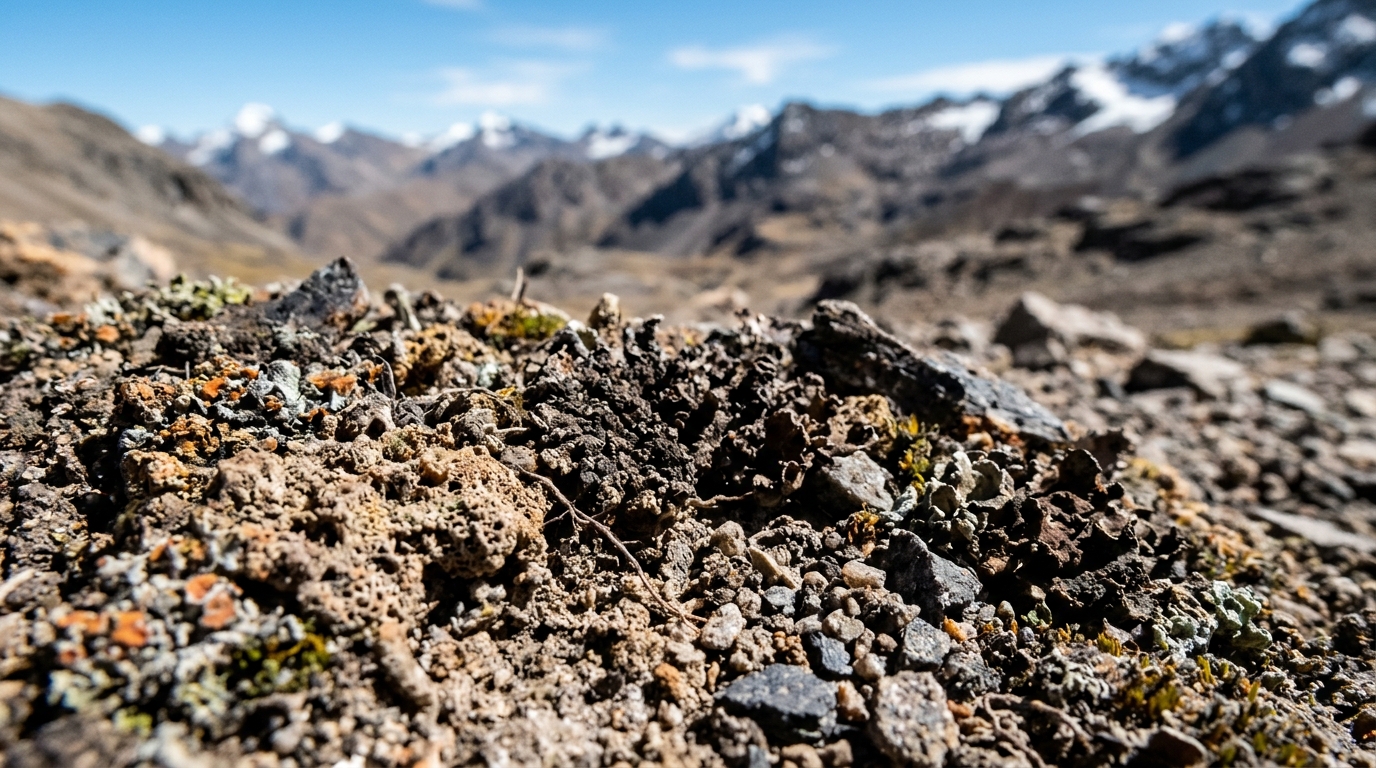
In the high-altitude desert of the Qinghai-Xizang Plateau, soil microbial communities exhibit remarkable functional resilience to climate stress, preserving their nutrient-cycling potential despite experiencing sharp declines in taxonomic richness. Reporting from a three-year field manipulation experiment in an alpine desert grassland in Rutog County within the Xizang Autonomous Region of China, researchers found that warming and watering act as distinct ecological drivers that restructure subterranean ecosystems. Located at an elevation of 4,238 meters, this fragile habitat experiences extreme cold and aridity, with mean annual precipitation under 100 millimeters, temperatures ranging from minus 6 to 9 degrees Celsius, and sparse vegetation below 30 percent coverage dominated by Ajania tibetica and Ceratoides compacta. While classic ecological assumptions suggest that climate-induced biodiversity loss undermines ecosystem multifunctionality, this study demonstrates that alpine desert microbiomes decouple functional potential from taxonomic diversity, maintaining vital nutrient transformations through abundance compensation, network reorganization, and pathway-specific genetic shifts.
To determine how concurrent warming and altered precipitation impact these vulnerable dryland microbiomes, the research team established a factorial field manipulation experiment covering approximately 2,000 square meters in a randomized block design. Initiated in June 2021, the experiment comprised 32 treatment plots across eight distinct treatment combinations with four replicates each. Experimental warming was achieved using year-round open-top chambers with a base diameter of 1.5 meters and a top opening of 0.75 meters. To simulate a continuous thermal gradient, researchers deployed chambers of three distinct heights, measuring 0.6, 0.8, and 1.0 meters, alongside unheated control plots separated by two-meter buffer zones. Simultaneously, an altered precipitation regime was applied to four randomly selected replicates across each warming level and control.
Continuous environmental monitoring documented the precise microclimatic changes generated across all 32 experimental plots throughout the multi-year study. Decagon ECT, 5TM, and EC-TM sensors attached to EM50 dataloggers recorded measurements at 30-minute intervals, tracking air temperature at five centimeters above ground, soil temperatures at depths of 10 and 20 centimeters, and volumetric water content. Open-top chambers elevated annual average soil temperatures by 1.31 to 3.24 degrees Celsius, creating a strong linear temperature gradient across both non-watered and watered plots. In contrast, watering did not significantly increase mean soil volumetric water content compared to control plots, reflecting the severe evaporative demand and rapid drainage typical of alpine desert soil. Despite the lack of persistent moisture accumulation, water addition significantly altered available nitrogen and available phosphorus concentrations. In July 2023, soil cores were collected with a five-centimeter auger to capture cumulative treatment impacts while avoiding plant root crowns, with extraction holes promptly refilled to minimize disturbance.
To profile both taxonomic composition and functional gene repertoires at high resolution, the researchers combined dual-marker amplicon sequencing with deep shotgun metagenomics. Total genomic DNA was extracted from preserved low-temperature soil samples using dedicated magnetic extraction kits, and DNA purity and concentration were verified by spectrophotometry. Bacterial and archaeal communities were characterized by amplifying the V3 to V4 hypervariable regions of the 16S ribosomal RNA gene, while fungal assemblages were profiled across the ITS1 region on the Illumina NovaSeq 6000 platform. Shotgun metagenomic sequencing was performed on the Illumina NovaSeq X platform using paired-end 150-base-pair reads. Metagenomic tags were quality-filtered with fastp and assembled with MEGAHIT, discarding contigs under 300 base pairs. Non-redundant gene catalogs predicted by MetaGeneMark were clustered with MMseqs2 and annotated against KEGG, eggNOG, Pfam, and SwissProt. Linear mixed-effects models evaluated treatment effects, while differential abundance of functional genes was quantified using negative binomial generalized linear models in DESeq2.
Ecological analyses revealed that rising soil temperature served as the primary abiotic filter shaping microbial community assembly across the alpine desert plots. Warming enriched stress-adapted taxa, including the phyla Bacteroidota, Basidiomycota, and Mortierellomycota, while reducing the relative abundance of Chloroflexi, Deinococcota, Sumerlaeota, and Chytridiomycota. Concurrently, supplemental watering enriched Proteobacteria irrespective of temperature and mitigated the thermal decline of Deinococcota, showing that moisture modulates heat sensitivity. Cross-kingdom co-occurrence networks constructed using the SparCC algorithm demonstrated that moderate warming increased network complexity, elevating both edge numbers and average node degree. While bacterial phyla maintained numerical dominance across the networks, key fungal taxa from Ascomycota and Basidiomycota displayed high betweenness centrality, serving as vital topological bridges and hub nodes that integrated diverse bacterial clusters under persistent climatic stress, while increased soil temperature raised the node counts and connectivity of Actinobacteria and Bacteroidota.
Metagenomic analysis identified broad shifts across differentially abundant KEGG Orthology genes, revealing coordinated metabolic reprogramming to sustain cellular integrity under thermal and arid stress. Pathway enrichment analysis identified significant rearrangements within the top 15 enriched KEGG pathways, encompassing flagellar assembly, Caulobacter cell cycle control, aminoacyl-tRNA biosynthesis, two-component signal transduction systems, fatty acid metabolism, and atrazine degradation. Regression models evaluating pathway abundances along the soil temperature gradient uncovered contrasting biological responses. The relative abundance of genes mediating oxidative phosphorylation showed a significant negative correlation with increasing soil temperature. Conversely, the abundances of the pentose phosphate pathway and atrazine degradation pathways were positively correlated with temperature.
Gene-level assessments revealed that microbial nitrogen cycling in alpine desert soils is maintained by a cooperative, multi-phylum consortium exhibiting shared functional redundancy. Differentially abundant nitrogen-related genes spanned nitrogen fixation (nifU), nitrate transport (nrtC), urea hydrolysis (ureC, ureD, urtA), conversion enzymes (UC/AH, gltB, GLUD1), and regulatory systems. Taxonomic profiling indicated that ureolysis was driven cooperatively by Proteobacteria, Actinobacteria, and Bacteroidetes, which collectively accounted for more than 97 percent of functional gene abundance. Biological nitrogen fixation was led primarily by Actinobacteria, contributing 51 percent of the nifU gene pool and confirming this phylum’s critical role in nitrogen input in nutrient-poor desert soils.
In contrast to the broadly shared organization of nitrogen transformations, phosphorus and potassium cycles exhibited greater taxonomic specialization and environmental contingency. Phosphorus acquisition genes, including phosphatase mineralization enzymes (phoX, phy, appA, phoN) and phosphonate transporters (phnD, phnM), generally declined under intermediate to high warming without water. Proteobacteria dominated most phosphorus transformations, while phytase phy received contributions from Actinobacteria, Bacteroidetes, and Cyanobacteria, with Cyanobacteria supplying approximately five percent of phytate degradation capacity. Core potassium and osmotic regulation genes, including KefB, mdoH, and xagB, were overwhelmingly associated with Proteobacteria, which represented 98 to 100 percent of these families. Stress-response pathways also reflected functional partitioning: Proteobacteria contributed 92 percent of glutathione synthesis genes (gshB) to alleviate oxidative stress under combined treatments, whereas Bacteroidetes and Actinobacteria governed proline degradation (PRODH), demonstrating specialized divisions of metabolic labor across taxa.
To synthesize these multivariable interactions into a coherent ecological framework, the authors constructed piecewise mixed-effects structural equation models linking nutrient pathway principal components with environmental and community factors. The structural modeling confirmed that experimental warming drove a direct, robust increase in soil temperature (standardized path coefficient 0.94, P < 0.001), which significantly reduced microbial alpha-diversity as measured by the Simpson index. Crucially, this diversity loss exerted no significant direct negative effect on the overall functional potentials for nitrogen, phosphorus, or potassium cycling. Instead, composite scores of microbial abundance positively influenced nutrient-cycling functions, demonstrating that functional capacity was safeguarded by biomass maintenance and functional redundancy rather than taxonomic richness. The model supported a dual-axis regulatory framework: temperature acted primarily as a physical filter reshaping community composition, while watering operated indirectly through short-lived wetting pulses that altered available soil nitrogen and phosphorus pools. Mantel tests confirmed that soil chemistry significantly covaried with abundances of Proteobacteria, Chloroflexi, and Armatimonadota.
By linking taxonomic identity directly to functional gene abundance, this field manipulation study provides a mechanistic foundation for predicting how cold-arid drylands respond to advancing climate change. The evidence demonstrates that alpine desert microbiomes sustain biogeochemical stability through abundance-based compensation, enhanced network cooperation, and an ecological division of labor between widely distributed core processes and specialized regulatory pathways. However, the authors emphasize critical scientific qualifications: metagenomic gene abundance reflects metabolic potential rather than realized in situ biogeochemical transformation rates, and plant-microbe feedbacks were not independently resolved in this analysis.
Subject of Research: Functional mechanisms and stability of soil microbiomes under climate warming and precipitation manipulation in alpine deserts
Article Title: Beyond diversity: the functional mechanisms of microbial adapations under climate change in alpine deserts
Article References: Gan, L., Yang, Z., Zhang, Y., Wang, S., Meng, F., Liu, Y., & Dorji, T. (2026). Beyond diversity: the functional mechanisms of microbial adapations under climate change in alpine deserts. Environmental Microbiome, 21(1), Article 106. https://doi.org/10.1186/s40793-026-00928-1
Image Credits: AI Generated
DOI: 10.1186/s40793-026-00928-1
Keywords: Alpine desert grassland, Qinghai-Xizang Plateau, Soil microbiome, Climate warming, Precipitation manipulation, Functional redundancy, Co-occurrence networks, Open-top chambers, Nitrogen cycling genes, Phosphorus mineralization, Potassium homeostasis, Structural equation modeling, Shotgun metagenomics, Abundance compensation, Proteobacteria, Actinobacteria, Bacteroidota, Rutog County
News Source: Chloe Pearson. (November 11, 2026). Alpine Desert Soil Microbiomes Maintain Nutrient Cycling Potential Despite Climate Diversity Loss. Scienmag.