


In the new study, published in the journal Chinese Medicine, the researchers show that it improves lipopolysaccharide-induced acute lung injury in mice by acting on the IL-17A/NF-κB signaling pathway, a circuit that drives much of the inflammation in this condition.
The work began with chemistry rather than biology. The tubers of Alisma orientale were collected in Fujian Province, China, in June 2022 and extracted with 50 percent acetone, then fractionated with solvents of increasing polarity. The dichloromethane fraction was pushed through silica gel columns, purified on Sephadex LH-20 and finally polished by semi-preparative high-performance liquid chromatography, yielding AAD with a retention time of 33.7 minutes. Nuclear magnetic resonance spectroscopy confirmed the structure: ten methyl signals in the proton spectrum, a carbonyl carbon at 223.6 ppm, a pair of olefinic carbons and two acetyl groups, the fingerprint of a protostane-type triterpene carrying acetate esters at positions 23 and 24.
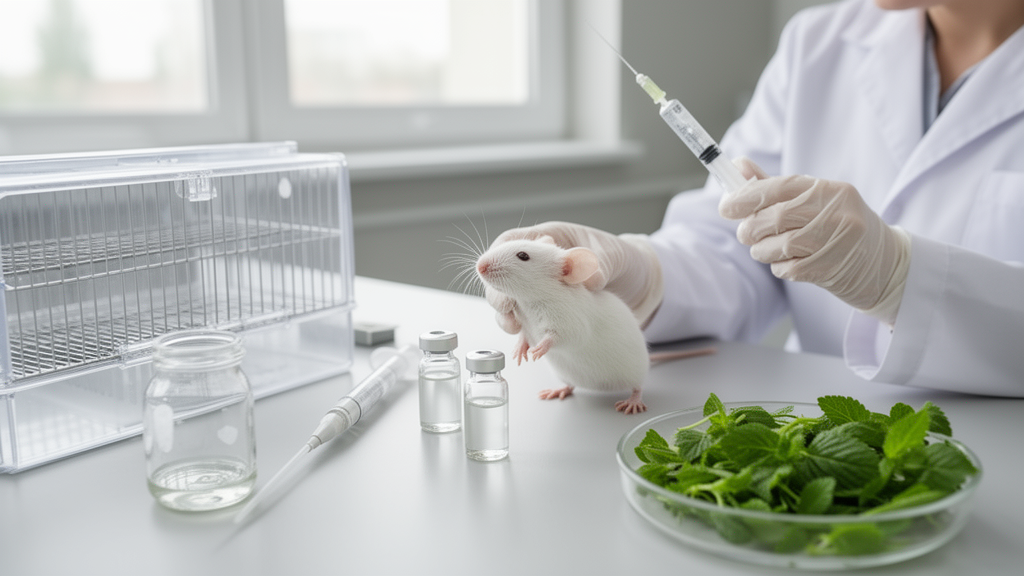
Safety came first. Zebrafish exposed to different concentrations of AAD showed bright, uniform body color, normal body shape and no deformities such as spinal curvature, pericardial edema or yolk sac edema, matching the blank control animals. With that baseline established, the team turned to mice. Male BALB/c mice were divided into five groups of ten: untreated controls, a model group given LPS directly into the trachea, a resveratrol reference group at 30 milligrams per kilogram, and two AAD groups receiving 10 or 20 milligrams per kilogram by gavage for three days before modeling. The tracheal instillation of LPS at 5 milligrams per kilogram produced the expected picture of acute lung injury, and AAD treatment was then tested against it.
Model mice developed marked pulmonary edema, with significantly increased lung water content and wet-to-dry weight ratio, and histology revealed dense inflammatory infiltration and thickened alveolar septa. AAD significantly reduced the edema and eased the tissue damage. Flow cytometry and biochemical kits showed that apoptosis and oxidative stress, measured through reactive oxygen species, malondialdehyde, superoxide dismutase and glutathione peroxidase, were all elevated in the model group and significantly reduced by the compound. Spirometry in a whole-body plethysmography chamber added a functional dimension: AAD significantly increased minute volume, peak expiratory flow, peak inspiratory flow and respiratory rate, indicators that had all fallen after LPS exposure.
Metabolomics added a systems-level view. Using ultra-high-performance liquid chromatography coupled to quadrupole time-of-flight mass spectrometry, the team profiled lung tissue and serum. Principal component analysis separated the groups cleanly, and orthogonal partial least squares discriminant analysis, validated by a 200-permutation test, showed that the metabolic signature of AAD-treated mice clustered first with the normal group rather than the injured one. Biomarkers screened at a variable importance in projection score above 3 and a p-value below 0.05 pointed to arachidonic acid metabolism as the primary disrupted pathway, and correlation analysis linked arachidonic acid-related metabolites to inflammatory cytokine markers, tying the metabolic shift back to the inflammatory cascade.
Differential expression analysis at a threshold of p below 0.05 and log2 fold change above 1, followed by KEGG enrichment of the top 30 genes, placed the IL-17 signaling pathway at the top of the list. Genes such as IL-6 and PTGS2 were significantly elevated in the injured samples and correlated positively with lung water content, wet-to-dry ratio and malondialdehyde levels, supporting the idea that IL-17 and NF-κB signaling sits at the center of the disease process.
Molecular docking then tested AAD against four members of the IL-17 family. The compound docked best to IL-17A, and quantitative PCR of mouse lung tissue confirmed that IL-17A was the subtype most significantly changed by the disease. A cellular thermal shift assay provided direct physical evidence: AAD improved the thermal stability of the IL-17A protein, consistent with a direct binding interaction. Western blotting and immunofluorescence completed the picture. In model mice, the protein levels of IL-17A and phosphorylated NF-κB p65 rose significantly in lung tissue; after AAD intervention, both doses of the compound significantly reduced them.
The immune consequences followed the same axis. Bioinformatic immune infiltration of the GSE40885 data showed that M1 macrophages and neutrophils were significantly increased in the injured samples, and flow cytometry confirmed the same expansion in the blood and lungs of ALI mice. AAD treatment significantly restored the immune cell balance and lowered the inflammatory factors, consistent with the pathway model in which activated NF-κB recruits macrophages and neutrophils that then amplify inflammation through cytokine release.
Primary lung organoids grown from fresh tissue to a diameter of 200 to 300 micrometers were injured with LPS; AAD improved the shrunken nuclei and incomplete alveolar structure seen on staining, reduced IL-17A and p-NF-κB p65 immunofluorescence, and lowered IL-6, IL-1β and TNF-α in the supernatant. In Beas-2B human bronchial epithelial cells, AAD at 10 micromolar suppressed LPS-induced ROS, apoptosis, pathway protein expression and cytokine release, mimicking the IL-17 antagonist Brodalumab. Critically, the RORγt agonist SR0987, which pushes cells toward IL-17 signaling, reversed the benefit of AAD, while the antagonist enhanced it.
Larvae at three days post-fertilization were exposed to LPS at 100 micrograms per milliliter, and the researchers either silenced or overexpressed the IL-17A gene with injected sgRNA-Cas9 complexes or plasmids. LPS shrank the swim bladder, caused pericardial edema and cut swimming distance; AAD restored all three and lowered IL-17A and inflammatory factor RNA levels.
Subject of Research: Preclinical evaluation of the triterpenoid alisol A 23,24-diacetate against LPS-induced acute lung injury through the IL-17A/NF-κB signaling pathway
Article Title: Alisol A 23,24-diacetate improves LPS-induced acute lung injury through the IL-17A/NF-κB signaling pathway
Article References: Zhang, Y., Guo, P., Zeng, M., Zhu, D., Zhang, Z., Luo, M., Chao, Y., Chang, F., Feng, W., & Zheng, X. (2026). Alisol A 23,24-diacetate improves LPS-induced acute lung injury through the IL-17A/NF-κB signaling pathway. Chinese Medicine, 21(1), Article 213. https://doi.org/10.1186/s13020-026-01487-w
Image Credits: AI Generated
DOI: 10.1186/s13020-026-01487-w
Keywords: alisol A 23,24-diacetate, acute lung injury, lipopolysaccharide, IL-17A, NF-κB, Alisma orientale, lung organoids, zebrafish, Beas-2B cells, inflammation, oxidative stress, metabolomics
News Source: Ophelia Keating. (October 30, 2026). Alisma-Derived Triterpenoid Eases Acute Lung Injury in Mice by Blocking IL-17A/NF-κB Signaling. Scienmag.



