Researchers have proposed an Artificial Intelligence of Things framework combining wearable wireless sensor networks with ensemble machine learning for health and stress monitoring in cave rescue scenarios. Published in Discover Computing, the study presents an architecture tailored to the operational constraints of underground caverns, where search teams and victims face confined spaces, temperature fluctuations, low oxygen levels, and communication constraints. Conventional medical telemetry systems generally depend on centralized topologies and continuous surface-level network links, architectures that frequently fail in subterranean environments due to rock-wall signal absorption, high latency, and environmental noise. To overcome these barriers, the newly formulated methodology pairs distributed wireless sensing nodes with an ensemble classification pipeline capable of analyzing physiological vital signs and stress markers in real time, delivering automated decision support and timely clinical alerts to rescue coordinators stationed above and below ground.
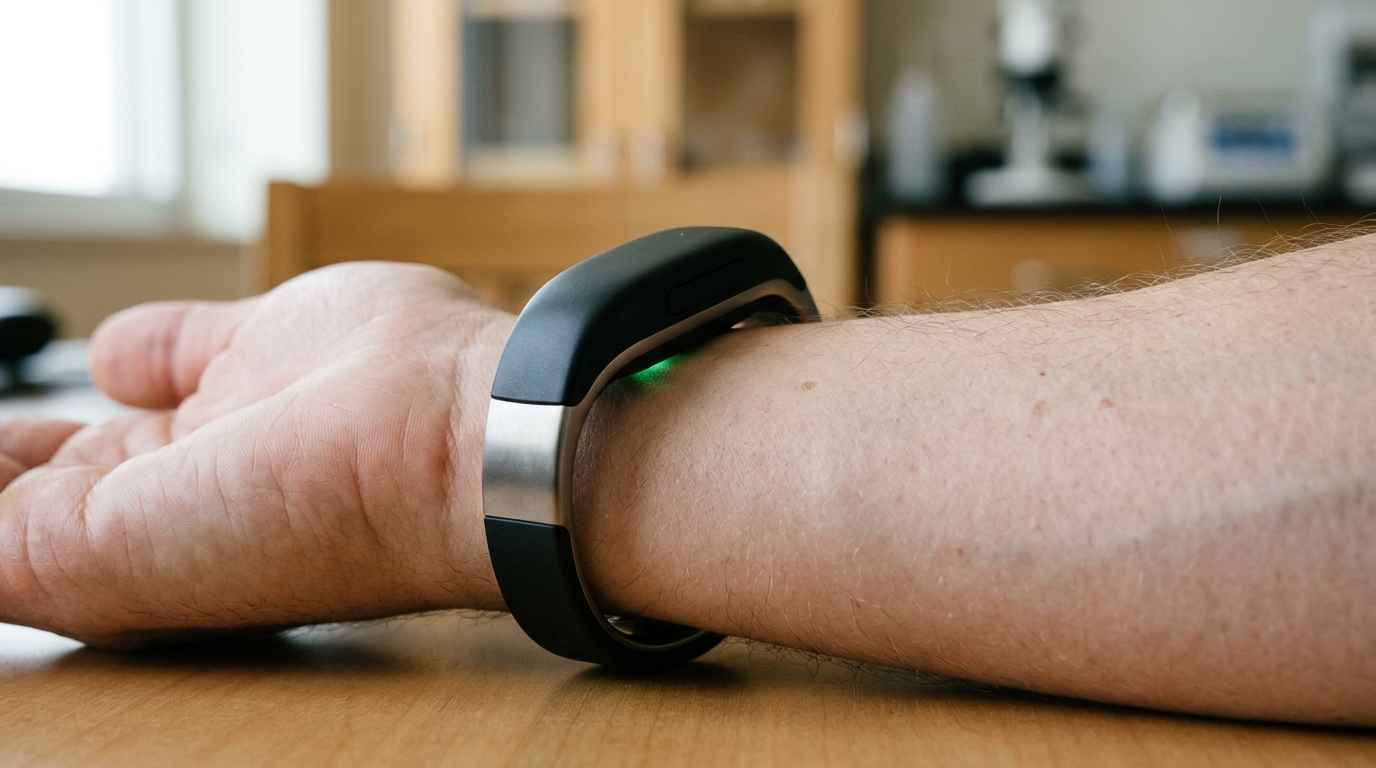
Subterranean cave environments subject human bodies to extreme physical exertion and acute psychological strain, compounding operational risks during extended rescue missions. Rescuers navigating constricted or unstable spaces endure high ambient humidity, temperature fluctuations, low oxygen saturation, and mental fatigue, which can impair critical decision-making and increase accident risks. To address these vulnerabilities, an effective monitoring system must simultaneously capture clinical vitals indicating physical deterioration and continuous neurovegetative signals reflecting acute stress responses. The researchers structured their monitoring concept around wearable sensor nodes deployed across both rescue personnel and recovered survivors. These compact nodes continuously gather multi-parameter physiological indicators, including heart rate, body temperature, peripheral blood oxygen saturation, pulse rate, systolic and diastolic arterial blood pressure, respiratory rate, and electrodermal activity. By tracking these vital metrics alongside motion signals, the framework is designed to provide continuous monitoring and timely alerts for health problems and severe stress conditions during rescue operations.
To overcome the severe propagation challenges of underground caverns, the system incorporates a specialized hybrid wireless sensor network topology engineered to maintain reliable data transmission despite heavy signal obstruction. Direct telemetry links between cave depths and surface monitoring posts are typically unfeasible, so the architecture integrates short-range, low-power communication standards with robust long-range transmission protocols. Sensor nodes situated on individuals communicate with adjacent devices using the IEEE 802.15.4 standard, while long-range transceivers operating on LoRa modulation transmit aggregated biological payloads across extended subterranean passageways toward gateway nodes. In areas where direct communication is not feasible, intermediate relay nodes placed along the rescue path use multi-hop forwarding to transmit data across alternative routes. To prolong operational endurance under strict battery limits, the wearable sensor nodes implement dynamic duty-cycling schedules that switch hardware between active transmission states and low-power sleep modes, while intermediate relay devices perform localized data aggregation to filter redundant biological samples and decrease transmission overhead.
The networking capabilities of the proposed architecture were formally evaluated through discrete-event network simulations conducted within the NS-2 modeling environment. The simulation configuration integrated an IEEE 802.11 media access control layer paired with the Ad hoc On-Demand Distance Vector routing protocol and a Two-Ray Ground radio propagation model. Across comparative performance assessments examining increasing node densities, the proposed communication scheme maintained a superior packet delivery ratio and achieved higher data throughput than conventional Internet of Things topologies, while simultaneously minimizing end-to-end transmission latency and conserving aggregate node energy to extend network operational lifetime. However, the investigators explicitly noted that the Two-Ray Ground formulation serves as a baseline computational assessment and does not reproduce the intricate physical complexities of genuine subterranean rock cavities. True underground propagation involves non-line-of-sight pathways, rock-wall attenuation, multipath fading, and shadowing characteristics of subterranean cave environments, which baseline simulation models do not explicitly reproduce.
The predictive analytical core of the framework processes multi-channel physiological inputs through a multi-stage machine learning pipeline trained to recognize diverse health risks and psychological strain. Experimental validation utilized two distinct, publicly available benchmark datasets: the Healthcare Monitoring Dataset and the Stress Detection Dataset. The Healthcare Monitoring Dataset comprises 858 clinical sample records capturing core indicators such as heart rate, core temperature, blood oxygen saturation, systolic and diastolic blood pressure, pulse, respiratory rate, and systemic pH levels. These records reflect four clinically distinct diagnostic categories: Chronic conditions containing 429 samples, Mild complications with 126 samples, Severe emergencies comprising 275 samples, and Normal physiological states represented by 28 samples. The companion Stress Detection Dataset contains 126 multimodal observations recording electrodermal activity, electrocardiogram waveforms, and acceleration signals, segmented into four balanced stress strata containing 25 to 26 samples per category representing normal, low, medium, and high stress levels.
Because raw physiological datasets exhibit disparate numerical intervals and pronounced class imbalances, the framework applies a rigorous data preprocessing protocol to ensure robust algorithmic training. Continuous numerical parameters are first rescaled to a uniform range between zero and one using Min-Max feature normalization. To prevent majority classes from distorting classifier boundaries, the researchers implemented the Synthetic Minority Over-sampling Technique to generate synthetic feature representations for underrepresented diagnostic classes, particularly the 28-sample Normal cohort within the healthcare repository. Crucially, the authors structured their preprocessing workflow within a strict five-fold cross-validation scheme to eliminate data leakage. The Min-Max scaling parameters and synthetic over-sampling transformations were computed exclusively on the training partitions within each fold. Validation folds and the final held-out twenty percent testing partition remained entirely unmodified, preserving empirical independence and preventing over-optimistic performance estimations that often undermine unstratified medical machine learning models.
In formulating the feature space, the research team deliberately rejected blind dimensionality reduction methods such as Principal Component Analysis, opting instead to retain all physiological parameters in their native measurement domains. Explicit latent projections were avoided because physiological features such as heart rate, body temperature, oxygen saturation, and electrodermal activity have direct clinical significance and interpretability. By preserving the raw feature vector, the framework enables tree-based ensemble algorithms to calculate the relative importance of specific biological markers directly, ensuring that automated classifications remain transparent, traceable, and biologically interpretable for field medics and rescue commanders. Exploratory correlation analyses conducted on the normalized healthcare attributes revealed several meaningful physiological relationships across the dataset, notably a moderate positive correlation of 0.55 between diagnostic causes and respiratory imbalance, as well as an inverse correlation of minus 0.30 between blood oxygen saturation and respiratory rate.
The machine learning inference engine utilizes an ensemble of diversified supervised learning classifiers, uniting individual base models through both soft voting and stacked generalization architectures. The foundational tier encompasses Decision Tree, Random Forest, Gradient Boosting, and AdaBoost models. Hyperparameter optimization was conducted via grid search routines across five-fold cross-validation partitions, configuring Random Forest models with between 100 and 200 trees while systematically modulating tree depth, and refining Gradient Boosting and AdaBoost algorithms across learning rates ranging from 0.01 to 0.1 alongside tuned estimator counts. To synthesize these base learners, the framework deploys a Soft Voting classifier that aggregates posterior class probability vectors and assigns final labels based on the highest average probability. Additionally, a Stacking classifier was constructed by channeling the continuous class predictions of all base models into a second-level Logistic Regression meta-classifier, which learns optimal weighting strategies to counteract individual model biases and minimize generalization error.
When evaluated on the held-out test split of the Healthcare Monitoring Dataset, the ensemble classifiers demonstrated exceptional diagnostic precision across all four medical categories. The Stacking classifier attained the highest overall accuracy at 99.72 percent, accompanied by correspondingly elevated precision, recall, and F1-scores exceeding 99.5 percent. The individual Decision Tree model achieved 99.71 percent accuracy, Random Forest delivered 99.71 percent accuracy, Gradient Boosting reached 99.51 percent, AdaBoost scored 99.00 percent, and the Soft Voting architecture attained 99.45 percent accuracy. Receiver Operating Characteristic curve analyses confirmed high discriminative thresholds across Chronic, Mild, Severe, and Normal classifications, demonstrating that the ensemble models reliably identified acute pathological deviations without exhibiting degradation when processing unbalanced clinical inputs. Similarly, evaluations conducted on the Stress Detection Dataset demonstrated consistent predictive reliability, with all evaluated base and ensemble classifiers converging near 98 percent classification accuracy and achieving macro-averaged precision, recall, and F1-scores surpassing 96 percent across low, medium, high, and normal stress classes.
Beyond predictive accuracy, the researchers conducted computational assessments to determine the practical feasibility of deploying the ensemble architecture in real-time operational environments. Although multi-model ensemble training entails greater computational complexity than single-classifier approaches, model training occurs offline prior to field deployment. During real-time monitoring, the operational system only executes forward inference using stored base-classifier and meta-learner parameters, maintaining modest memory overhead and rapid execution speeds suitable for continuous physiological telemetry. However, the authors explicitly clarified that all computational profiling was conducted purely in software-based experimental environments rather than on embedded physical edge microcontrollers such as Raspberry Pi, Jetson Nano, or ESP32 hardware. Consequently, the reported execution times reflect algorithmic complexity rather than dedicated low-power hardware benchmarks, leaving embedded electrical, thermal, and memory profiles to future field-testing initiatives.
The authors also emphasized the critical operational relationship between physical network stability and downstream machine learning inference. In practical subterranean operations, severe wireless packet loss, radio signal attenuation, and transmission latency can disrupt the arrival of vital sensor measurements, resulting in incomplete or delayed biological feature vectors at the receiver gateway. While the authors conceptualized a sensitivity testing methodology involving the simulated injection of controlled packet drops at rates of five, ten, and twenty-five percent to measure performance degradation under impaired communications, this stress testing was not applied to the empirical inference pipeline in the present study. As a result, the reported 99.7 percent diagnostic accuracy must be interpreted as performance achieved over intact, uncorrupted feature records, leaving the quantitative resilience of the classifiers against severe packet dropout as an open objective for forthcoming investigations.
Ultimately, the researchers framed their findings as an initial, proof-of-concept feasibility study rather than an empirically validated subterranean rescue system. Because the evaluations were conducted on benchmark datasets rather than real subterranean rescue data, the samples do not fully reflect factors such as low oxygen availability, high humidity, temperature variability, physical exertion, restricted movement, and intermittent communication. Furthermore, the study did not incorporate formal statistical hypothesis tests, such as McNemar’s test or Wilcoxon signed-rank evaluations, meaning the slight mathematical margins between individual and ensemble classifiers cannot be claimed as statistically significant improvements. Future research will focus on deploying wearable sensor suites into controlled underground cave environments, embedding lightweight inference models directly onto low-power edge hardware, incorporating federated learning protocols to secure sensitive health data, and conducting rigorous field trials to evaluate system resilience during authentic rescue operations.
Subject of Research: AIoT wireless sensor network and ensemble learning framework for real-time cave rescue health monitoring
Article Title: AloT-enabled wireless sensor network framework with ensemble learning for real-time health monitoring in cave rescue
Article References: Manoj, A., & Athisha, G. (2026). AloT-enabled wireless sensor network framework with ensemble learning for real-time health monitoring in cave rescue. Discover Computing, 29(1), Article 944. https://doi.org/10.1007/s10791-026-10727-4
Image Credits: AI Generated
DOI: 10.1007/s10791-026-10727-4
Keywords: Artificial Intelligence of Things, ensemble learning, cave rescue, wireless sensor networks, real-time health monitoring, stress detection, wearable sensors, Stacking classifier, Soft Voting, Random Forest, Gradient Boosting, AdaBoost, synthetic minority over-sampling technique, electrodermal activity, oxygen saturation, NS-2 simulation, subterranean telemetry, multi-hop routing
News Source: Denise Maddox. (November 27, 2026). AIoT Framework Accurately Classifies Benchmark Health and Stress Data in Feasibility Study. Scienmag.