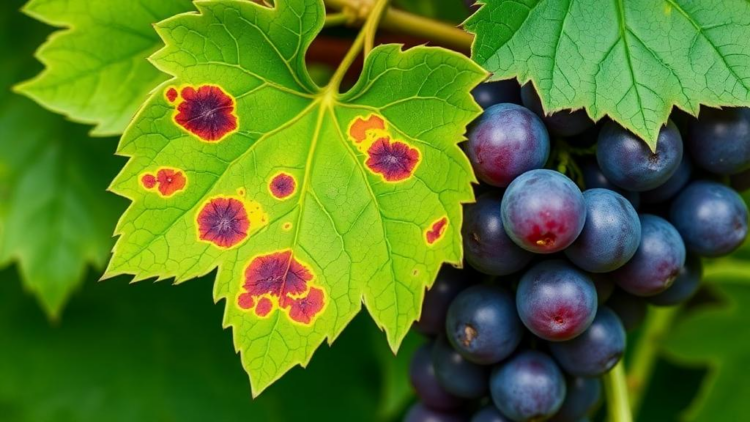
Grapevines are among the most economically and culturally significant crops on Earth, yet they remain under constant siege from fungal, bacterial, and viral pathogens that attack their leaves and, ultimately, their fruit. Traditional disease management depends on trained inspectors walking vineyard rows and visually diagnosing symptoms such as lesions, discoloration, and powdery or downy mildew coatings. That process is slow, costly, and highly susceptible to human error, particularly when subtle early-stage symptoms are involved or when large plantations must be surveyed within a narrow seasonal window. A new study published in the International Journal of Machine Learning and Cybernetics reports that a carefully engineered deep learning model can now identify grape leaf diseases from photographs with better than 99 percent accuracy, even on images captured in uncontrolled field conditions, suggesting that automated diagnosis may be ready to move from the laboratory into the vineyard.
The research, led by Maajid Bashir of Chandigarh University together with colleagues at Taibah University, Imam Mohammad Ibn Saud Islamic University, and the Islamic University of Madinah, tackles a well-known weakness of conventional image classifiers. Standard convolutional neural networks treat every region of an input image with roughly equal importance, which means that when a leaf photograph contains background clutter, uneven lighting, shadows, or healthy tissue surrounding a small lesion, the network can be distracted by irrelevant features. The team’s solution was to graft a Convolutional Block Attention Module, known as CBAM, onto a pretrained ResNet50 backbone, allowing the network to explicitly learn where to look within each image before committing to a classification decision.
CBAM works through two complementary attention mechanisms applied in sequence. The first is channel attention, which asks which feature channels, and therefore which kinds of visual patterns such as color gradients or texture edges, are most informative for the task at hand. The second is spatial attention, which highlights the specific pixel regions where those informative patterns occur. By combining both, the module effectively teaches the network to suppress background noise and concentrate its representational capacity on the pathological signatures of disease, such as the characteristic necrotic spots or chlorotic halos that distinguish one grape pathogen from another. The authors report that attention map visualizations confirm the model localizes genuine disease symptoms rather than latching onto photographic artifacts, an important sanity check for any model intended for real-world deployment.
The backbone of the system is ResNet50, a fifty-layer residual network pretrained on the ImageNet dataset, a collection of more than a million labeled natural images. Transfer learning of this kind is a cornerstone of modern applied deep learning: rather than teaching a network to see from scratch, researchers reuse the rich general-purpose visual features learned on ImageNet, such as edge detectors, texture analyzers, and shape encoders, and then adapt them to a specialized domain like plant pathology. This strategy dramatically reduces the amount of labeled agricultural data required and shortens training time, both critical considerations for research groups without access to massive computing farms.
Equally important to the reported performance is the training regimen the authors adopted. Instead of fine-tuning the entire network at once, they employed a controlled two-phase procedure. In the first phase, the pretrained ResNet50 layers were frozen, and only the newly added CBAM module and a custom classification head were trained. This allows the task-specific components to learn meaningful disease-discriminating features without the risk of large gradient updates corrupting the carefully calibrated pretrained weights. In the second phase, the entire network was unfrozen and fine-tuned end-to-end using a reduced learning rate, a technique that stabilizes convergence and improves the model’s ability to generalize to images it has never seen. This staged approach is widely regarded as best practice in transfer learning, and the results here reinforce its value.
The evaluation was deliberately conducted on two very different benchmarks. The first, PlantVillage, is a widely used public dataset of plant leaf photographs taken under controlled laboratory conditions, with uniform backgrounds and consistent lighting. On this dataset, the CBAM-augmented ResNet50 achieved an accuracy of 99.33 percent. The second, the Niphad Grape Leaf Disease dataset, or NGLD, is a far more demanding collection of 2,726 high-quality grape leaf images gathered between 2023 and 2025 and annotated by agricultural experts, capturing the messy variability of in-the-wild photography. Remarkably, the model maintained an accuracy of 99.32 percent on this challenging dataset, indicating that its performance is not an artifact of easy, curated imagery.
To contextualize these numbers, the researchers benchmarked their model against a lineup of established architectures, including the standard ResNet50 without attention, VGG16, DenseNet121, Xception, InceptionV3, and MobileNetV2. The attention-augmented version outperformed all of these reference models by a substantial margin on both datasets. This comparison isolates the contribution of the attention mechanism: the underlying feature extractor is the same in the plain ResNet50 baseline, so the performance gap can be attributed to the network’s enhanced ability to focus on salient pathological regions. For practitioners, the message is that architectural refinements, not just bigger models or more data, can deliver decisive gains in agricultural image analysis.
The implications for precision agriculture are considerable. Grape leaf diseases, including downy mildew, powdery mildew, black rot, and anthracnose, can devastate yields if not caught early, and the global viticulture sector, which the International Organisation of Vine and Wine values in the hundreds of billions of euros annually, depends on timely intervention. A smartphone-based diagnostic tool powered by a model like this one could allow farmers, agronomists, and extension workers to photograph a suspect leaf and receive an accurate diagnosis within seconds, enabling targeted fungicide application rather than blanket spraying. That shift would reduce chemical inputs, lower costs, limit environmental damage, and slow the development of pesticide resistance in pathogen populations.
The study also highlights a broader trend in machine learning research: the migration of attention mechanisms, first popularized in computer vision through modules like CBAM and later through transformer architectures, into domain-specific applications. Attention gives models a form of interpretability that plain classifiers lack, because the learned attention maps can be inspected to verify that the network is responding to biologically meaningful features. In plant pathology, where a misdiagnosis could trigger unnecessary treatments or missed outbreaks, this transparency is not a luxury but a requirement for trust and regulatory acceptance.
Challenges remain before such systems become routine in the field. Real-world deployment will require handling variable camera quality, occlusion, disease co-occurrence on a single leaf, and disease stages not represented in training data, and the authors note that no new datasets were generated in the current study, meaning future work will need to test generalization across additional regions, cultivars, and pathogens. Nevertheless, the near-identical accuracies achieved on controlled and in-the-wild data represent a striking demonstration that attention-augmented transfer learning can deliver robust, cost-effective, and deployable plant disease diagnostics. As the authors conclude, such models stand ready to serve as effective substitutes for manual inspection, bringing precision agriculture a significant step closer to everyday practice in vineyards worldwide.
Subject of Research: Deep learning-based detection of grape leaf diseases using an attention-augmented ResNet50 model
Article Title: Cbam-augmented ResNet for high-accuracy grape leaf disease detection
Article References: Bashir, M., Reshi, A. A., Shafi, S., Aljubayri, I., & Khan, M. Z. (2026). Cbam-augmented ResNet for high-accuracy grape leaf disease detection. International Journal of Machine Learning and Cybernetics, 17(9), Article 451. https://doi.org/10.1007/s13042-026-03235-w
Image Credits: AI Generated
DOI: 10.1007/s13042-026-03235-w
Keywords: deep learning, transfer learning, attention mechanism, CBAM, ResNet50, grape leaf disease, precision agriculture, convolutional neural networks, computer vision, plant pathology, image classification, viticulture
Cite Scienmag News
APA MLA Chicago
Blake Davidson. (October 4, 2026). AI Spots Grape Leaf Diseases With Over 99 Percent Accuracy. Scienmag. https://scienmag.com/ai-spots-grape-leaf-diseases-with-over-99-percent-accuracy/
Blake Davidson. “AI Spots Grape Leaf Diseases With Over 99 Percent Accuracy.” Scienmag, 4 October 2026, https://scienmag.com/ai-spots-grape-leaf-diseases-with-over-99-percent-accuracy/. Accessed 4 October 2026.
Blake Davidson. “AI Spots Grape Leaf Diseases With Over 99 Percent Accuracy.” Scienmag. October 4, 2026. https://scienmag.com/ai-spots-grape-leaf-diseases-with-over-99-percent-accuracy/
Copy citation Download RIS
Tags: AI-based plant pathogen identificationattention mechanismautomated vineyard disease diagnosisCBAMcomputer visionconvolutional neural networksconvolutional neural networks for plant diseasedeep learningdeep learning in agricultureearly detection of grapevine diseasesfield condition image analysisgrape leaf diseasegrape leaf disease detectionhigh-accuracy disease recognitionimage classificationimage classification in agriculturemachine learning for crop healthplant pathologyprecision agricultureprecision agriculture disease monitoringResNet50technological advancements in viticulturetransfer learningviticulture