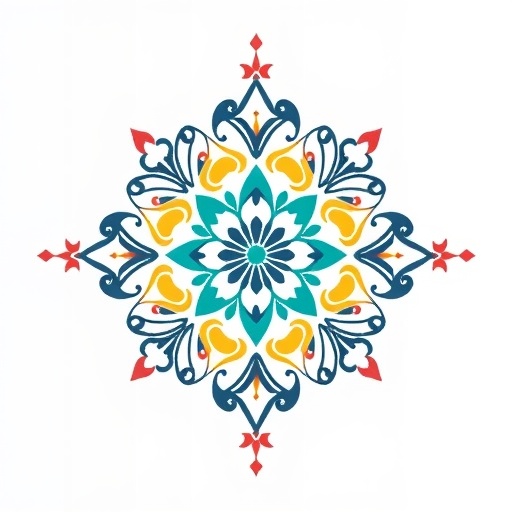
In an era where technology increasingly intertwines with the art world, researchers are exploring innovative strategies to merge traditional craftsmanship with advanced artificial intelligence (AI) techniques. A recent study led by T. Siriborvornratanakul and S. Rittikulsittichai sheds light on how AI can revolutionize the generation and integration of traditional motifs, contributing to a new dimension in artistic expression. Their work, published in Discov Artif Intell in 2026, delves into transformative practices that bridge the gap between heritage artistry and modern technological capabilities.
The concept of utilizing AI to generate traditional motifs is profoundly significant, especially in an age where many cultural practices risk being overlooked or forgotten. Traditional motifs are not merely decorative elements; they represent the rich history and identity of communities and civilizations. With the help of AI, artists can analyze these motifs more profoundly, understanding their origins, meanings, and contextual applications. This technology allows them to recreate or innovate upon these patterns, ensuring that cultural heritage remains accessible and relevant in contemporary contexts.
One key aspect of the research is the exploration of generative algorithms. These algorithms can analyze vast data sets of traditional art forms, identifying core patterns and design principles that have prevailed throughout history. By employing machine learning to recognize these elements, AI can assist artists in generating new works that resonate with traditional aesthetics while embracing modern forms. The blend of old and new creates a dynamic visual language that speaks to cultural continuity and evolution.
Another significant element of the study revolves around the integration process. Siriborvornratanakul and Rittikulsittichai examine the ways in which AI-generated motifs can be seamlessly woven into traditional artistic practices. This integration not only revitalizes age-old techniques but also opens up avenues for collaborative art-making between humans and machines. Traditional artisans and modern designers can collaborate with AI to produce works that are both visually striking and meaningful, enhancing the cultural narratives embedded in their creations.
Moreover, the impact of AI on traditional motifs extends beyond mere visual aesthetics. The researchers highlight how these technologies can democratize art and design practices, making it easier for artists from diverse backgrounds to engage with traditional styles. By providing accessible tools and resources, AI empowers a new generation of creators to explore and reinvent cultural motifs without the barriers that may have previously existed. This inclusivity is essential for the preservation of cultural heritage in an ever-globalizing world.
As the discourse around AI and creativity evolves, ethical considerations come to the forefront. The study addresses potential concerns regarding the authenticity of AI-generated art. The researchers emphasize that while AI can assist in creating new forms, it should not replace the human touch that imbues art with emotional depth and cultural significance. It’s crucial for artists to maintain a sense of agency in the creative process, ensuring that technology serves as a tool for enhancement rather than a replacement for traditional methods.
The study also touches upon the role of AI in educating future generations of artists. By incorporating AI technologies into art education, institutions can provide students with tools that enhance their understanding of traditional motifs. Such educational models promote interdisciplinary learning, allowing students to explore the confluence of technology and artistry. This approach encourages them to think critically about the implications of AI in their creative practices, fostering a new wave of artists who are not only skilled in their craft but also adept at navigating the complexities of modern technology.
An intriguing aspect of the research is its potential to facilitate cultural exchange and collaboration across borders. As AI-generated motifs can be shared and adapted globally, artists from different cultural backgrounds can reinterpret and reinvent traditional designs. This fosters a dynamic artistic dialogue that transcends geographical boundaries, allowing for the evolution of motifs in ways that reflect the diversity of human experience. The ability to remix and recontextualize traditional patterns is a powerful testament to the adaptability of culture in the face of modern advancements.
Furthermore, the researchers explore how AI can aid in documenting and archiving traditional motifs, ensuring that these valuable cultural artifacts are preserved for future generations. By digitizing traditional art forms and creating comprehensive databases, AI technologies can help curators and historians preserve the stories behind these motifs. This process not only enhances our understanding of cultural heritage but also makes it easier for future artists to draw inspiration from rich historical sources.
The collaboration of AI with traditional motifs also glimpses into the future of the arts. It suggests a landscape where artists can experiment with new forms of expression that celebrate and interrogate tradition in meaningful ways. As this research signifies, the integration of AI into cultural practices is not merely about efficiency or production speed; it is a transformative journey that can lead to profound insights about identity, creativity, and heritage.
Looking ahead, the implications of Siriborvornratanakul and Rittikulsittichai’s work could reshape how we perceive art-making and cultural preservation. Their findings beckon a future where traditional motifs can coexist harmoniously with cutting-edge technology, all while inviting the next generation of artists to rethink their roles within this emerging paradigm. As these technologies continue to evolve, so too will the possibilities for artistic expression and the preservation of cultural heritage.
As we move towards this future, the challenge lies in balancing innovation with tradition. Artists, practitioners, and technologists must work collaboratively to ensure that the core values embedded in traditional motifs are not lost amidst the rapid pace of technological advancement. Instead, by integrating AI with respect and understanding, we can create new forms that honor our past while boldly exploring the future of artistry.
The exploration of AI-based techniques to advance traditional motifs is not just a technological feat; it represents a profound commitment to cultural heritage and artistic innovation. As we embrace this intersection of the old and the new, we are reminded that the future of art lies in our ability to adapt, collaborate, and innovate with the tools at our disposal.
Subject of Research: The integration of AI in the generation and adaptation of traditional motifs in art.
Article Title: Advancing the generation and integration of traditional motifs through AI-based techniques.
Article References:
Siriborvornratanakul, T., Rittikulsittichai, S. Advancing the generation and integration of traditional motifs through AI-based techniques.
Discov Artif Intell (2026). https://doi.org/10.1007/s44163-025-00642-w
Image Credits: AI Generated
DOI: https://doi.org/10.1007/s44163-025-00642-w
Keywords: AI, traditional motifs, art integration, cultural heritage, generative algorithms, artistry, technology, collaboration, education.
Tags: AI in traditional art integrationanalyzing traditional art patterns with AIartistic expression through AIbridging heritage and technologycultural identity and modern designgenerative algorithms in designinnovative strategies in craftsmanshipmodern applications of traditional motifspreserving cultural heritage with technologyrevolutionizing design with artificial intelligencesignificance of traditional motifs in arttransformative practices in art